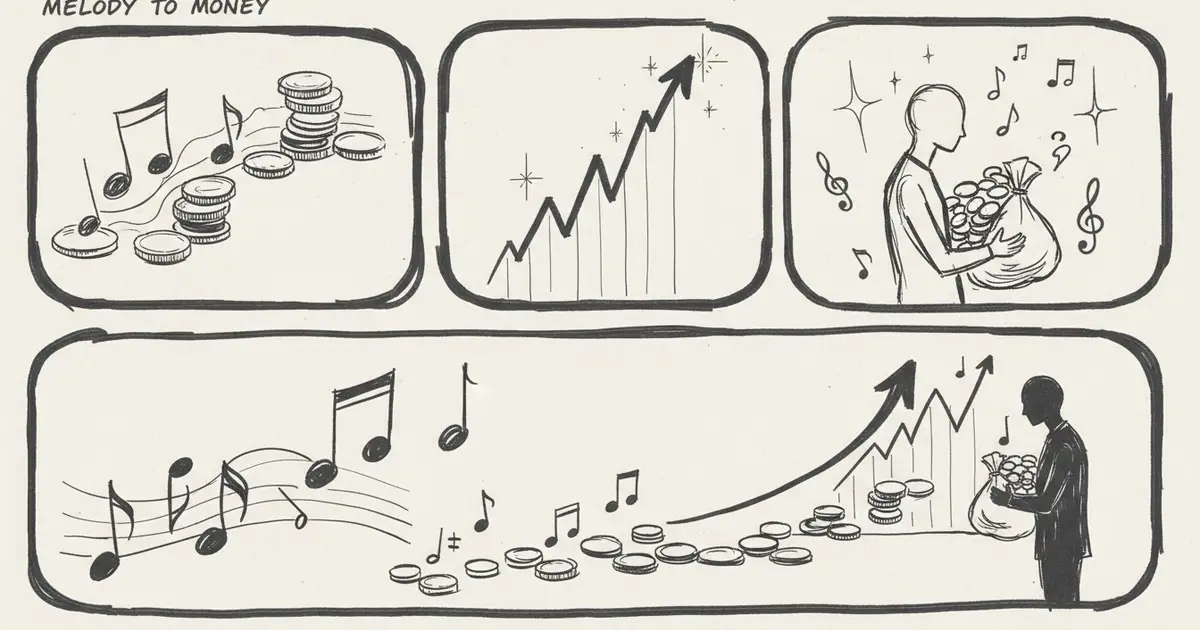
How to Monetize AI Music in 2026: A Practical Commercial Use Guide
Learn realistic ways to monetize AI-generated music in 2026, including licensing checks, YouTube use, client work, streaming releases, and MusicMake.ai workflows.
Quick Answer
You can monetize AI music when three conditions are true:
- Your plan or license allows the exact commercial use.
- You own or have permission for every source input, including uploaded audio, lyrics, vocals, stems, and reference tracks.
- Your publishing destination accepts that use, whether it is YouTube, a client video, a game, a podcast, a stock marketplace, or a streaming distributor.
The risky shortcut is to ask, "Can AI music make money?" The better question is, "Can this specific track be used for this specific project under these specific terms?"
This guide gives you a practical workflow, not income promises.
Why MusicMake.ai Became a Music Agent Workflow
Most AI music generators solve the first step: turning a prompt into a song. MusicMake.ai started there too, with focused tools for AI music generation, lyrics, style tags, cover songs, song extension, add tracks, mashups, section replacement, and vocal removal.
The harder problem is what happens after the first result. Creators usually need to keep the hook, remove a weak section, extend the ending, try a cover voice, add accompaniment, separate vocals, or reuse a song from their library. That is why MusicMake.ai evolved from a normal AI music generator into Music Agent: you describe the outcome, and the agent helps choose the right tool, rewrite unclear instructions, and continue the workflow with approval before spending credits.
For product evidence, see the MusicMake.ai changelog, especially the Music Agent 2.5 updates around final-result tracking, recoverable failure repair, editable approval cards, Smart Next Actions, and Agent Pro.
What "Commercial Use" Actually Means
Commercial use is not one thing. A plan that works for a YouTube background track may not automatically work for a stock-audio marketplace or a streaming release.
Common commercial use cases include:
- Monetized YouTube, TikTok, Reels, and Shorts
- Podcasts, intros, outros, and ad reads
- Client videos, social ads, and brand explainers
- Game, app, and product background music
- Streaming releases through a distributor
- Beat leases, sample packs, and production libraries
- Custom music services for clients
Before publishing, match the track to the use case. If the plan page says "commercial use" but the terms restrict Content ID, resale, stock distribution, or unmodified exports, those restrictions matter.
Choose the Tool and Plan Before You Monetize
Do the tool decision before you create the commercial version of the track. It is much cleaner to generate release candidates under the right plan than to discover later that the draft came from a free tier or an unclear license.
| Monetization goal | Tool and plan decision |
|---|---|
| Test a hook, lyric idea, or genre direction | Use free or trial access only for exploration, then regenerate or finish under a plan that allows the final use |
| Monetized YouTube or social background music | Confirm commercial use, synthetic-content disclosure rules, and whether the destination needs attribution or extra notes |
| Client video, ad, app, or game work | Use a plan that covers commercial delivery, keep receipts, and save source-audio permissions with the project |
| Fast Suno-style drafts | Suno's Free plan is useful for testing, but its public pricing and help pages checked June 14 and refreshed in Chrome on June 15, 2026 say free-plan songs are non-commercial by default; use Pro or Premier for new commercial songs |
| Iterative revision and tool routing | Use Music Agent when the value is turning feedback into better prompts, edit actions, covers, extensions, add tracks, mashups, stems, or section replacement |
| Comparing tool-stack alternatives | Review Meloflow, Udio, AIVA, and similar tools by commercial license, credits, exports, stems, source-audio rules, and whether rights survive cancellation |
The winner is not always the cheapest subscription. For monetization, the winner is the plan that gives you the rights, tools, export quality, and records needed for the specific buyer.
For MusicMake.ai, start from the current pricing page: Basic is enough for many original generation and MP3-download workflows, while Pro/Max matter when the job needs WAV, AI Cover, Add Tracks, uploaded-audio workflows, Agent Pro, higher creation capacity, or expanded commercial records. Then check the Terms of Service for the boundary: plan rights do not clear third-party source material, and certificates are documentation for your records rather than legal guarantees.
| MusicMake.ai monetization need | Plan/tool signal to check |
|---|---|
| Original background music for a channel | Basic may be enough if MP3 and standard commercial-use rights fit the job. |
| Client work with WAV delivery | Compare Pro or Max because the pricing page lists MP3 & WAV downloads there. |
| Cover, Add Tracks, or uploaded audio | Compare Pro/Max access because advanced tools and uploaded-audio workflows can be plan-gated. |
| Repeat client revisions | Use Music Agent when feedback needs to become prompts, edits, extensions, or source-based actions. |
| Higher-risk release or team work | Keep plan receipts, terms date, exports, source-rights proof, and generation certificates together. |
MusicMake.ai Commercial Use Checklist
Use this checklist before you monetize a MusicMake.ai track:
- Choose the current pricing plan that covers your intended use and credit volume.
- Keep the generation record, prompt, date, account, and any available certificate.
- If you used source audio with Cover, Extend, Add Tracks, Mashup, Replace Section, or Vocal Remover, keep proof that you own or licensed the source.
- Save the final exported audio file and the project where it is used.
- Do not describe the work as fully human-made if AI materially contributed.
- For client work, put the AI tool, license scope, revision scope, and source-audio responsibility in the contract.
Starter or trial access is best treated as evaluation until the current terms say otherwise. Paid plans are a better fit for client work, monetized channels, and public release, but the current plan terms still decide the exact scope.
The Best Monetization Paths
1. Client and creator background music
This is often the most practical first path. A YouTuber, podcaster, coach, local business, or SaaS company needs music that fits a specific video, not a generic catalog track.
Strong offer:
Custom background music for one video series:
- 3 mood directions
- 2 final tracks
- clean loop or intro/outro version
- license record included
Music Agent helps here because clients rarely give perfect music briefs. They say, "less corporate," "make it warmer," "too much percussion," or "keep the guitar but remove the beat." The agent can convert that feedback into stricter prompts and follow-up actions.
2. YouTube and social video libraries
You can build a small internal library for your own channel or for recurring clients:
- soft tutorial beds
- upbeat vlog music
- product-demo loops
- podcast intros
- short transition stingers
- ambient background tracks for voiceover
The business value is speed and fit. You are not trying to flood platforms with random tracks. You are reducing editing time and making each piece of content feel more intentional.
3. Streaming releases
Streaming can work, but it is not passive by default. Uploading hundreds of anonymous AI tracks is not a durable strategy.
A stronger approach is to build a recognizable project:
- one artist name
- one genre lane
- consistent artwork and metadata
- clear human creative direction
- enough editing and curation to make the releases coherent
Before distribution, check your AI music plan, your distributor's AI policy, and any platform-specific rules. Keep records for every release.
4. Games, apps, and interactive projects
AI music is useful for small games, prototypes, meditation apps, language-learning apps, and internal tools because each screen or state may need a slightly different loop.
Plan for:
- loopable versions
- calm and intense variants
- short stingers for success or failure states
- volume targets that do not fight sound effects or voiceover
- clean source records for the build archive
If the project uses a known melody, uploaded song, client-provided voice, or copyrighted reference, verify rights before generation.
5. Custom music services
You can sell a service around taste, speed, and revision handling. The product is not "AI pressed a button." The product is a usable track with clear constraints, edited versions, and licensing records.
Good service boundaries:
- Define how many concepts and revisions are included.
- Say whether source audio is accepted.
- Require clients to confirm rights for any uploaded reference.
- Deliver license notes with the audio.
- Avoid promising copyright registration or platform acceptance.
What About Copyright?
Copyright rules are still evolving. In the United States, the Copyright Office has said that copyright protects human authorship and that applicants should disclose AI-generated content when relevant. It also treats the human contribution case by case, especially selection, arrangement, editing, and other creative control.
That means you should avoid broad claims like "AI music is always copyrightable" or "AI music can never be protected." A safer position is:
- The AI output itself may have limited protection depending on law and facts.
- Your human contributions may matter: selection, editing, arrangement, lyrics, performance, production, and final assembly.
- Registration questions should be handled with the official Copyright Office guidance or a lawyer.
For U.S. creators, start with the Copyright Office AI registration guidance. For platform publishing, also read each platform's disclosure and synthetic media policies, such as YouTube's guidance on altered or synthetic content disclosure.
Common Mistakes
Mistake 1: Monetizing trial outputs
Do not assume free or trial access gives commercial publishing rights. Use trial access to test style, workflow, and quality. Upgrade or choose the proper plan before creating the public commercial version.
Mistake 2: Ignoring source rights
If you upload a song, vocal, stem, melody, or reference track, the AI platform's license does not magically clear that source material. You need rights to the input and the output workflow.
Mistake 3: Assuming a later upgrade fixes old outputs
Some tools distinguish songs made before and after subscription. For example, Suno's help center says a Pro or Premier subscription does not grant retroactive commercial-use licensing for songs made on the free plan by default. Check this before reusing old drafts.
Mistake 4: Treating "royalty-free" as "no rules"
Royalty-free usually means no per-use royalties inside the license scope. It does not mean resale, Content ID, stock distribution, unlimited clients, or exclusive rights are automatically allowed.
Mistake 5: Publishing too much low-value music
Search engines, marketplaces, and streaming platforms do not reward volume alone. Thin AI catalogs with generic names, generic covers, and no audience are easy to ignore. Build around a use case or listener, then improve from feedback.
Mistake 6: Selling rights you do not have
Do not promise exclusive ownership, copyright registration, or platform acceptance unless your license and contract support it.
A Practical 7-Day Starter Plan
Day 1: Pick one buyer
Choose one target:
- YouTube educators
- podcasters
- small SaaS product demos
- meditation creators
- indie game developers
- local brand videos
Do not start with everyone.
Day 2: Build a sound brief
Write the constraints:
Use case: voiceover-heavy product demos
Mood: modern, calm, confident
Avoid: heavy drums, vocals, busy lead melodies
Length: 45-75 seconds
Need: loopable and low-volume-friendly
Day 3: Generate and refine
Use Music Agent. If the first result is wrong, give direct feedback:
The melody is too busy. Keep the soft pulse, remove the lead synth, and make it sit behind speech.Day 4: Create versions
Make:
- a full version
- a 30-second version
- a loopable bed
- a short intro or outro
Day 5: Document rights
Save the generation records, plan information, prompt, exports, and any source-audio proof. For MusicMake.ai projects, also save the current pricing and terms references you relied on, plus any generation certificate available for that track.
Day 6: Package the offer
Create a simple deliverable:
Custom background music pack:
2 finished tracks
1 loopable version
1 intro/outro cut
license notes included
Day 7: Test demand
Offer it to a small group of real creators. Track what they ask for: more subtle, less repetitive, no percussion, better loop, faster delivery, clearer license notes. Those requests should shape your next batch.
FAQ
Can I sell AI-generated music?
Yes, when your platform plan, source inputs, and destination policies allow it. Keep records and do not rely on a generic "AI music is commercial" claim.
Can I monetize AI music on YouTube?
Yes, if you have the right license and the content follows YouTube's policies. If the video includes realistic synthetic or altered content, review YouTube's disclosure rules.
Can I upload AI music to Spotify or Apple Music?
Often yes through a distributor, but check your distributor's current AI policy, your music generator's license, and your source rights before release.
Can I register copyright for AI music?
It depends on human authorship and jurisdiction. For U.S. registration, review the Copyright Office guidance and disclose AI-generated material when required.
What is the safest first monetization path?
Client or creator background music is usually safer than mass streaming because the use case is specific, the value is clear, and you can deliver license notes with each track.
Conclusion
AI music monetization is real, but it is not automatic income. The durable path is narrower and more professional: pick a use case, generate with the right plan, refine with human judgment, keep records, and deliver music that solves a specific problem.
MusicMake.ai's advantage is the workflow around the track. Music Agent helps turn rough feedback into better prompts and next actions, while the rest of the platform supports generation, lyrics, style tags, cover workflows, extension, add-tracks, mashups, section replacement, and vocal removal.
Start with one buyer, one use case, and one clean licensing process. Scale only after real users ask for more.
Choose the current MusicMake.ai plan for commercial use
Autor

Mais posts
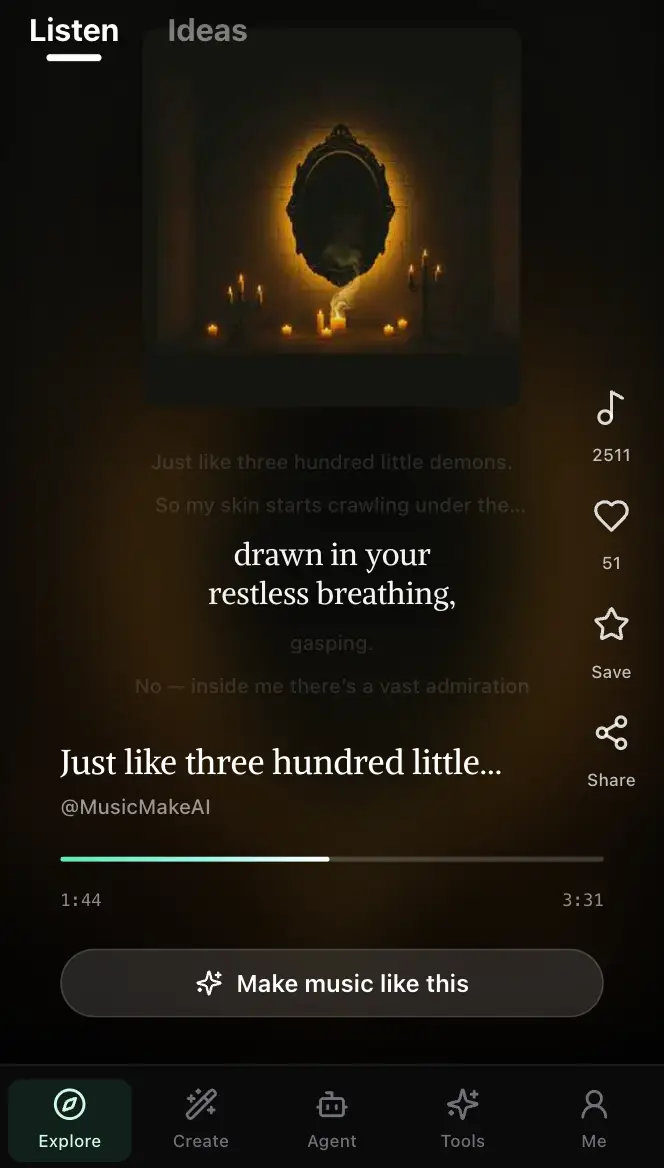
MusicMake.ai Mobile Update: Create Music From Your Phone Like an App
MusicMake.ai now gives creators a complete mobile flow for listening, generating, refining with Music Agent, opening tools, and managing songs from a phone.
AI Songwriting Guide: How to Write Songs with AI in 2026
Learn how to use AI songwriting tools to write better songs faster. Step-by-step guide covering lyrics, melody, arrangement, and production with AI assistance.
how to become a music producer with ai tools - MusicMake.ai Guide
Learn about how to become a music producer with ai tools with this comprehensive guide from MusicMake.ai.