AI Music Copyright 2026: Legal Guide for Creators and Teams
A practical 2026 guide to AI music copyright, human authorship, commercial-use terms, source-audio rights, and documentation for creators using AI music tools.
Introduction
AI music has made creation faster, but copyright is still not automatic. A finished track may involve platform terms, human creative contribution, source-audio rights, and destination rules from YouTube, distributors, clients, or marketplaces.
The safest way to think about AI music copyright in 2026 is layered:
- copyright law decides whether the work has legal protection
- platform terms decide whether you can use the output commercially
- source rights decide whether your inputs were cleared
- documentation decides whether you can explain the workflow later
This guide is informational, not legal advice. For U.S. registration, use the U.S. Copyright Office's AI guidance as the starting point.
The Core Question
Do not ask only, "Can AI music be copyrighted?"
Ask these four questions instead:
- What did the human creator contribute?
- What does the AI platform license allow?
- Did the project use any copyrighted source material?
- What does the publishing destination require?
If one layer fails, the project may still be blocked even if the music sounds original.
Human Authorship
Most copyright systems put weight on human authorship. Purely machine-generated output can be harder to protect. AI-assisted work becomes stronger when a person makes meaningful creative choices.
Examples of human contribution:
- writing original lyrics
- creating a detailed creative brief
- selecting among multiple outputs
- arranging song sections
- editing melody, structure, or instrumentation
- mixing, mastering, or producing in a DAW
- adding live vocals or instruments
- combining AI-generated parts with human performance
Prompting can be part of the record, but prompt text alone may not be enough in every jurisdiction. The more you can show selection, editing, arrangement, and authorship, the stronger your position usually becomes.
Platform Terms Are Not Copyright Law
A commercial-use license from an AI platform is contract permission. Copyright is legal protection. They are related, but not the same.
| Layer | Practical question |
|---|---|
| Copyright | Does the law protect this work or the human-authored parts? |
| Platform terms | Does the plan allow this commercial use? |
| Source material | Do I own or license the audio, lyrics, voice, stem, melody, or reference used? |
| Destination policy | Will YouTube, a distributor, a client, or a marketplace accept it? |
Music creators need all four layers to align.
MusicMake.ai Workflow and Records
MusicMake.ai is useful because the workflow can show more than a one-line prompt.
Creators can use Generate, AI Lyrics, AI Style Generator, Cover, Extend, Add Tracks, Mashup, Replace Section, Vocal Remover, and Music Agent. Music Agent can help rewrite unclear feedback, choose the right tool, and show approval before paid actions.
For commercial work, keep:
- the original brief
- prompt and lyric drafts
- generation records
- source-audio proof
- approval-card details when using agent actions
- exported files
- plan receipt and license notes
- client approval or delivery notes
Check the current pricing page before publishing commercially, and review the changelog for product updates that affect workflows and records.
Source Audio Is a Separate Rights Problem
If you upload, reference, extend, cover, mash up, separate, or replace parts of existing audio, you need rights to that source. The AI platform's license for the output does not clear the input for you.
High-risk inputs include:
- copyrighted songs
- artist vocals
- acapellas or stems from unofficial sources
- famous melodies
- client-provided files without written permission
- soundalike references that imitate a protected artist too closely
Use source-based tools only with material you own, created, licensed, or have permission to use.
International Notes
Copyright law varies by country, so avoid global claims like "AI music is always copyrightable" or "AI music is always public domain."
Practical patterns:
- The United States focuses on human authorship and disclosure of AI-generated material during registration.
- The European Union is adding transparency and copyright obligations for general-purpose AI model providers under the AI Act.
- The United Kingdom has a specific computer-generated works provision, but practical rights questions still depend on facts and contracts.
- Other jurisdictions continue to develop case law and administrative practice.
If the project is important, get local legal advice.
Current Policy Signals to Watch
Reliable sources are better than viral screenshots.
- U.S. Copyright Office AI reports and registration guidance
- European Commission AI Act and GPAI guidance
- RIAA and label litigation involving music-generation services
- platform terms from Suno, Udio, AIVA, MusicMake.ai, and distributors
- YouTube and marketplace disclosure policies
Avoid old blog posts that claim fixed ownership rules, fixed prices, or guaranteed Content ID eligibility.
Risk Management for Creators
Use this checklist:
- Generate under the correct plan.
- Save the plan and license terms.
- Keep prompt, lyric, and edit records.
- Add human creative contribution where possible.
- Do not use copyrighted source audio without permission.
- Do not sell exclusive rights unless the license and contract allow it.
- Do not claim the work is fully human-made if AI materially contributed.
- Review distributor and marketplace policies before release.
Risk Management for Teams
Businesses should add more structure:
- approved AI tools list
- source-audio permission workflow
- client contract language for AI-assisted music
- review process for ads, games, and public campaigns
- record retention for generation and licensing
- escalation path for legal review
This is especially important when music goes into paid ads, games, apps, broadcast, or client deliverables.
FAQ
Is AI music public domain?
Not necessarily. Even when copyright protection is uncertain, platform terms may still control how the output can be used.
Can I copyright AI-assisted music?
Possibly, especially when there is meaningful human authorship. Pure AI output is weaker. Jurisdiction matters.
Can I sell AI-generated music?
Yes, when the platform plan, source rights, and destination policies allow it. Keep records.
Can I register AI music with the U.S. Copyright Office?
You may register human-authored elements and must disclose AI-generated material when required. Follow the Copyright Office guidance.
Can I use AI music in client projects?
Often yes, but use a commercial plan, clear source inputs, document the license, and put AI usage and rights boundaries in the client contract.
Conclusion
AI music copyright in 2026 is manageable if you stop treating it as a single label.
The creator's job is to align law, platform terms, source rights, and publishing rules. MusicMake.ai helps because Music Agent and the platform's generation/editing tools can support a documented workflow instead of a one-shot prompt.
Start with clean inputs, generate under the right plan, keep records, and get legal review for important commercial projects.
Create AI music with Music Agent
作者

分类
更多文章
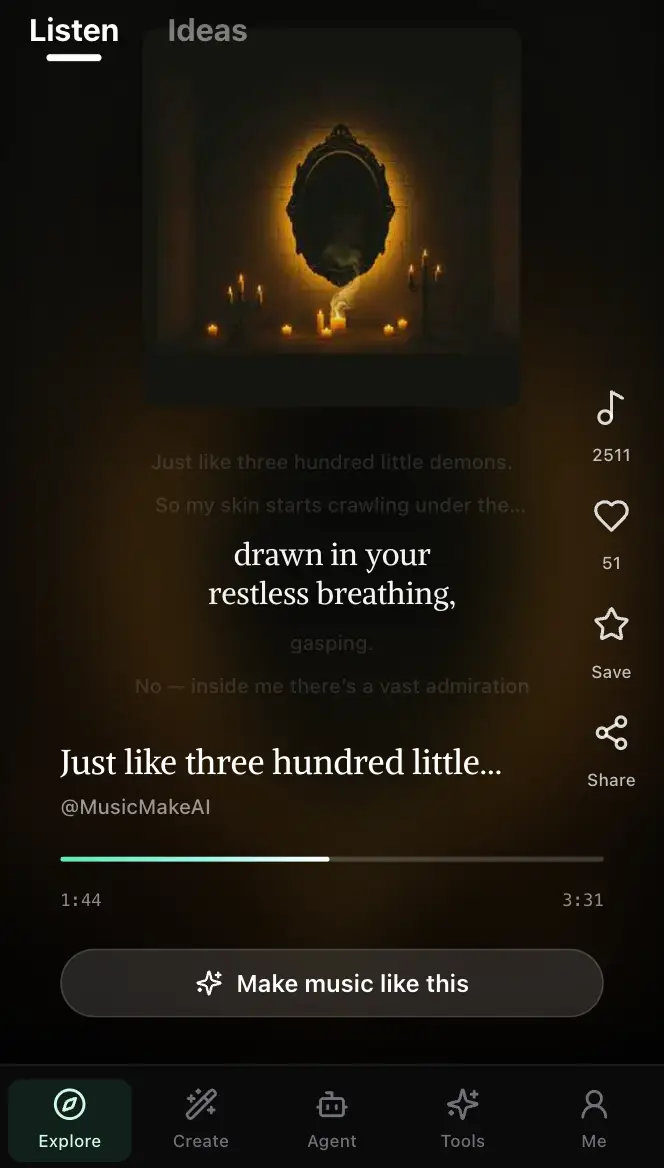
MusicMake.ai Mobile Update: Create Music From Your Phone Like an App
MusicMake.ai now gives creators a complete mobile flow for listening, generating, refining with Music Agent, opening tools, and managing songs from a phone.
AI Songwriting Guide: How to Write Songs with AI in 2026
Learn how to use AI songwriting tools to write better songs faster. Step-by-step guide covering lyrics, melody, arrangement, and production with AI assistance.
how to become a music producer with ai tools - MusicMake.ai Guide
Learn about how to become a music producer with ai tools with this comprehensive guide from MusicMake.ai.