Middle Eastern Music Style: Complete Guide to AI Music Creation
Explore Middle Eastern music styles and subgenres, and master AI music creation techniques. Create professional Middle Eastern music with MusicMake.ai.
What Is Middle Eastern Music?
Middle Eastern music is a collective term for the diverse musical traditions originating from the Middle East and North Africa (MENA) region. Characterized by its distinctive Maqam scale system, ornamental melodies, complex rhythms, and unique instruments, it is one of the world's oldest and most refined musical traditions.
At the heart of Middle Eastern music lies the Maqam system. Maqam is a unique scale and mode system comprising hundreds of different scales, each with its own specific emotional color and usage context. Unlike Western music's major-minor system, Maqam uses quarter tones, creating a distinctive exotic beauty.
For AI music creation, Middle Eastern music is a fascinating domain. Understanding the Maqam system and Middle Eastern rhythmic patterns (such as iqa'at) is key to generating high-quality Middle Eastern music.
Core Characteristics of Middle Eastern Music
- Maqam Scale System: A unique scale system incorporating quarter tones
- Ornamental Melodies: Extensive use of vibrato, glissando, turns, and other ornamental techniques
- Complex Rhythmic Patterns (Iqa'at): Unique meter cycles such as 10/8, 7/8, etc.
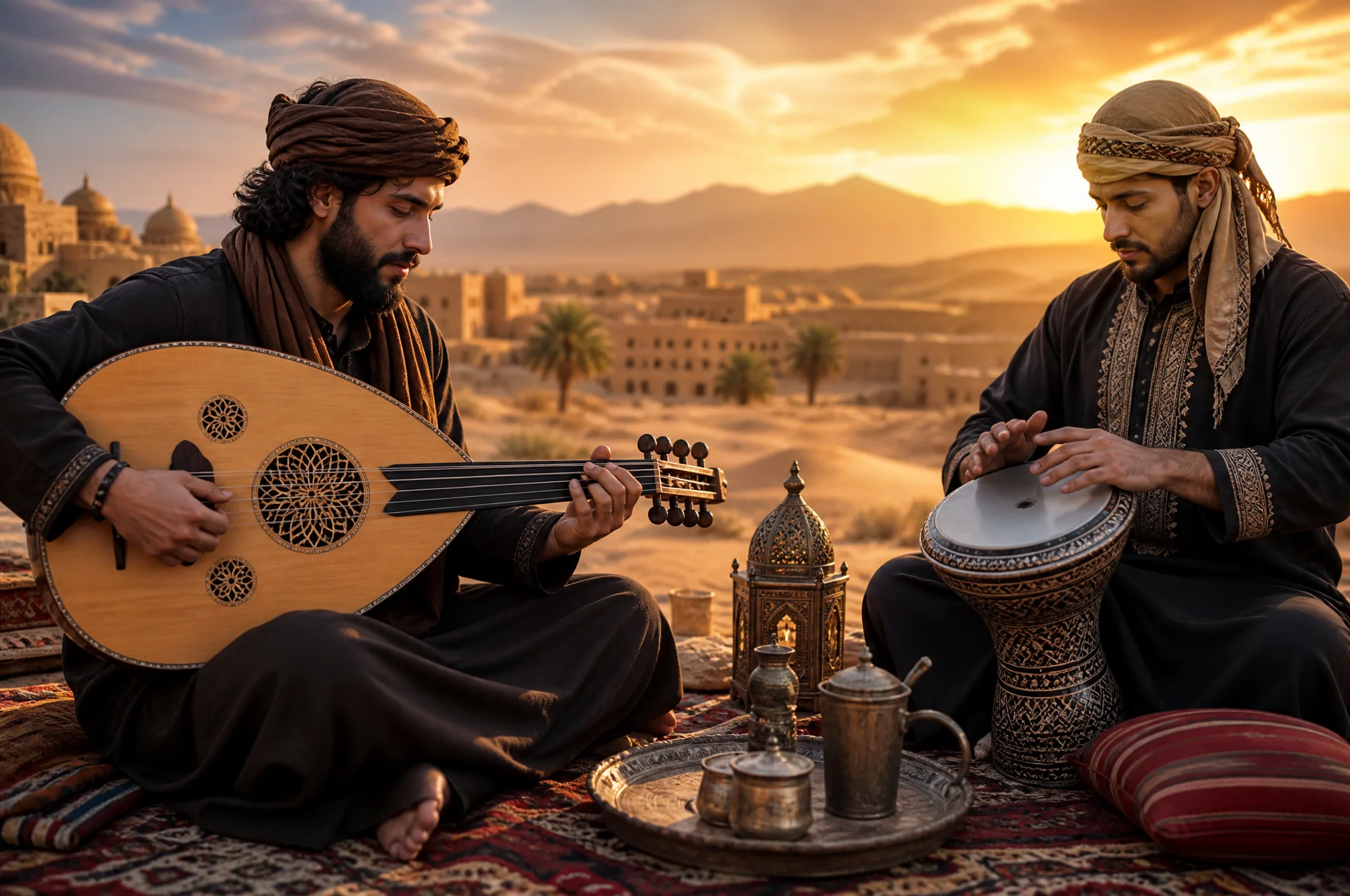
- Traditional Instruments: Oud, qanun, ney, darbuka, and more
- Improvisation (Taqsim): Improvised melodic composition within the Maqam framework
- Vocal Tradition: Distinctive vocal techniques and ornamental singing
- Use of Quarter Tones: Quarter-tone intervals that create unique timbres
- Repetition and Variation: Building musical structure through repetition and variation
History of Middle Eastern Music
The history of Middle Eastern music dates back to ancient Mesopotamian and Egyptian civilizations. Archaeological discoveries show that highly developed musical traditions existed here thousands of years ago. The music theory of ancient Babylon, the harps and flutes of ancient Egypt—all bear witness to the long history of Middle Eastern music.
The Islamic Golden Age (8th–13th centuries) was a pivotal period for the development of Middle Eastern music theory. Music theorists such as Al-Farabi and Ibn Sina systematically studied scales, rhythm, and musical aesthetics, laying the foundation for the modern Maqam system. The oud became the most important instrument during this era and was introduced to Europe, evolving into the lute and eventually the guitar.
In the 20th century, Middle Eastern music underwent modernization and globalization. Cairo, Egypt, became the center of Arab music, with legendary artists like Umm Kulthum elevating Arab music to the pinnacle of artistry. Meanwhile, the musical traditions of Turkey, Iran, and Persia also continued to evolve and innovate through the modernization process.
Creating Middle Eastern Music with MusicMake.ai
MusicMake.ai offers several ways to create Middle Eastern music:
Method 1: Using AI Music Generator
Visit the Generate page and enter your desired Middle Eastern style description. The built-in AI Style Generator can help you transform vague ideas into precise Middle Eastern style descriptions.
Method 2: Using Music Agent
Tell the Music Agent about the Middle Eastern style you want, for example:
- "Create an Arabic-style Taqsim with oud and ney"
- "Compose a piece of Turkish style music with 9/8 time and qanun"
- "Make something in Persian classical style with santur and tar"
Method 3: Using AI Style Generator
The AI Style Generator helps you explore various Middle Eastern music subgenres, automatically generating style descriptions that include details about Maqam, instruments, rhythm, and more.
Middle Eastern Music Subgenres
| Subgenre | Region | Characteristics | Representative Artists |
|---|---|---|---|
| Arabic Classical | Arab World | Maqam system, oud, ney | Umm Kulthum, Fairuz |
| Turkish Classical | Turkey | Turkish Maqam, qanun | Müzeyyen Senar, Neşe Karaböcek |
| Persian Classical | Iran | Dastgah system, santur | Mohammad Reza Shajarian |
| Andalusian Music | North Africa | Arab-Andalusian tradition | Cheikh El Hasnaoui |
| Tarab | Egypt/Lebanon | Urbanized Arab pop music | Sabah Fakhri, Wadih El Safi |
| Dabke | Levant | Dance music, darbuka | Traditional wedding music |
| Kurdish Music | Kurdish Region | Kurdish scales, santur | Shahram Nazeri |
| Bedouin Music | Desert Regions | Nomadic tradition, poetry chanting | Traditional Bedouin music |
| Sufi Music | Pan-Middle East | Spiritual ceremonies, whirling dance | Traditional Sufi music |
| Middle Eastern Electronic | Modern | Electronic and Middle Eastern traditional fusion | Omar Souleyman |
| Arab Pop | Arab World | Modern Arab pop music | Amr Diab, Nancy Ajram |
| Persian Pop | Iran | Modern Iranian pop music | Googoosh, Ebi |
| Turkish Pop | Turkey | Turkish pop music (Arabesque) | Tarkan, Sezen Aksu |
| North African Music | North Africa | Berber, Arab, Mediterranean fusion | Khaled, Cheb Mami |
Middle Eastern Music Prompt Examples
Here are reference prompts for generating Middle Eastern music with MusicMake.ai:
Arabic Taqsim:
"An Arabic Taqsim improvisation, oud lead, Maqam Bayati scale, ney accompaniment, soft darbuka percussion, traditional Arabic atmosphere."
Turkish Classical:
"A piece of Turkish classical music, qanun lead, Turkish Maqam scale, 9/8 rhythmic pattern, delicate ornamental notes, traditional Ottoman court style."
Persian Classical:
"A piece of Persian classical music, santur lead, tar accompaniment, Dastgah Shur system, meditative atmosphere, in the style of Mohammad Reza Shajarian."
Middle Eastern Electronic:
"A Middle Eastern electronic track, electronic beats fused with Maqam melodies, darbuka samples, modern production techniques, in the style of Omar Souleyman."
MusicMake.ai Has No Commercial Risk
Middle Eastern music created with MusicMake.ai carries no commercial risk. All AI-generated music can be used for personal projects, commercial purposes, video soundtracks, game audio, and more—without worrying about copyright disputes. This allows you to freely use generated Middle Eastern music in all kinds of creative and commercial projects.
Recommended MusicMake.ai Features
| Feature | Use Case | Link |
|---|---|---|
| AI Music Generator | Quickly generate Middle Eastern music clips | Generate |
| Music Agent | Conversational creation with precise style control | Chat |
| AI Style Generator | Explore Middle Eastern subgenre combinations | Style Generator |
| AI Prompt Enhancer | Expand simple ideas into full descriptions | Generate |
Fusion of Middle Eastern Music with Other Genres
The unique scales and rhythms of Middle Eastern music make it a creative source for cross-genre fusion:
- Middle Eastern + Electronic: Electro Arab fuses electronic beats with Maqam melodies
- Middle Eastern + Jazz: Middle Eastern jazz combines improvisation with quarter tones
- Middle Eastern + Rock: Middle Eastern rock blends distorted guitars with oud
- Middle Eastern + Pop: Arab pop music merges modern production with traditional elements
- Middle Eastern + Classical: Fusion of Middle Eastern and Western classical music creates unique soundscapes
In MusicMake.ai, you can explore these fusion styles by combining descriptions, such as "Maqam + electronic beats" or "oud + jazz piano."
Best Practices for AI Middle Eastern Music Creation
-
Understand the Maqam System: Maqam is the soul of Middle Eastern music. Specifying Maqam names in your prompts (such as "Maqam Rast," "Maqam Bayati") can yield more accurate scales and emotional colors.
-
Describe Ornamental Techniques: The beauty of Middle Eastern music largely comes from ornamental notes. Use terms like "ornamented melody," "vibrato," "grace notes," and "slides."
-
Specify Rhythmic Patterns: Middle Eastern rhythmic patterns (Iqa'at) are unique and complex. Specifying particular meter patterns (such as "Maqsoum 4/4," "Samai 10/8") can help the AI generate more accurate rhythms.
-
Choose Traditional Instruments: The timbres of instruments like the oud, qanun, ney, and darbuka are highly distinctive. Specifying instruments in your prompts can produce more authentic results.
-
Consider Regional Differences: The musical styles of Arab, Turkish, Persian, and North African regions differ significantly. Be clear about the specific regional style you want.
FAQ
Can AI generate correct quarter tones?
MusicMake.ai's models are trained to simulate the effect of quarter tones. Specifying "quarter tones" or specific Maqam names in your prompts can help the AI generate music that more closely matches Middle Eastern scale characteristics.
What is the relationship between Middle Eastern music and Indian music?
Both share historical roots—originating from ancient Mesopotamian musical traditions. The Maqam system and the Raga system have similarities, both emphasizing scales and improvisation. Silk Road exchanges also facilitated mutual influence between the two musical traditions.
Which Middle Eastern traditional instruments does MusicMake.ai support?
MusicMake.ai can simulate the timbres of various Middle Eastern traditional instruments, including the oud, qanun, ney, darbuka, santur, and more. Specifying instrument names in your prompts can yield more accurate results.