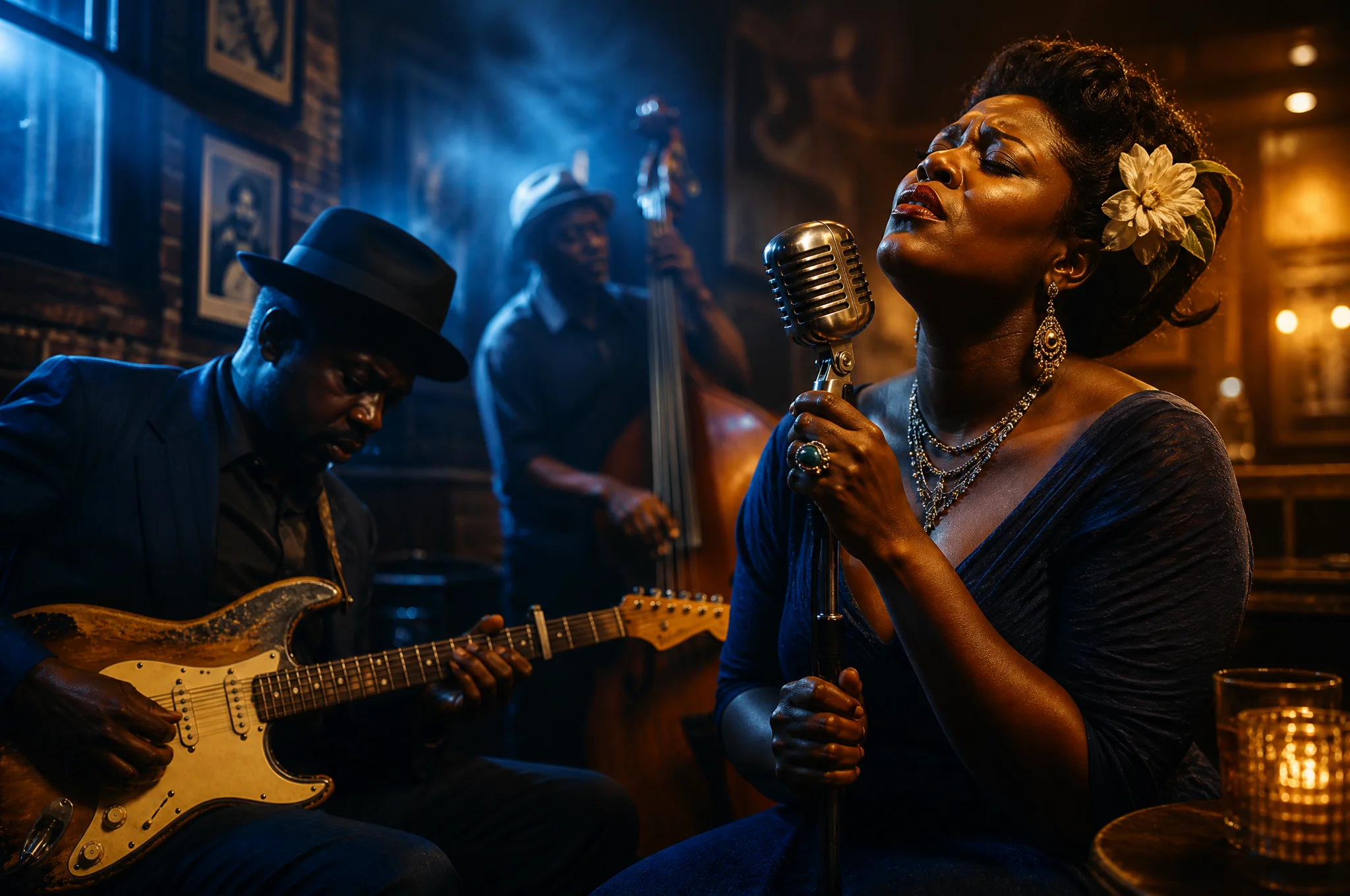
Blues Music Styles: The Complete Guide to AI Music Creation
Explore blues music styles and subgenres, and master AI music creation techniques. Create professional-grade blues music with MusicMake.ai.
What Is Blues Music?
Blues music originated in the late 19th century in African American communities in the southern United States and is one of the most important foundations of modern popular music. Its core features are melancholic emotional expression, a unique twelve-bar harmonic framework, and the blues scale, which have profoundly influenced almost all modern music genres including jazz, rock, R&B, and soul.
The most essential feature of blues music is authentic emotional expression. Whether it's the sorrow of lost love, the hardships of life, or the longing for freedom, blues conveys the deepest human emotions in the most direct way. The flattened third, fifth, and seventh degrees of the blues scale (the "blue notes") give this music its unique melancholy color and tension.
Musically, blues is built on the twelve-bar blues progression, a simple combination of the I‑IV‑V chords. This seemingly simple structure contains infinite expressive power, and each generation of blues musicians has created new variations within this framework. The call‑and‑response vocal style and guitar techniques like slides and bends give blues music a conversational quality and a vocal‑like expression.
MusicMake.ai's AI model has deeply learned various blues styles from Delta Blues to modern Blues Rock, enabling it to generate music with authentic blues flavor, whether traditional acoustic blues or powerful electric blues.
Core Characteristics of Blues Music
- Twelve-Bar Blues: The classic blues harmonic framework, I‑IV‑V chord progression
- Blues Scale: Flat third, flat fifth, and flat seventh – creates the signature melancholic color
- Call‑and‑Response: Antiphonal interplay between instruments and voice
- Slides and Bends: Guitar slides and string bends are the iconic sounds of blues
- Emotional Authenticity: Blues emphasizes genuine emotional expression and improvisation
- Shuffle Rhythm: The swinging shuffle feel is the groove foundation of blues
- Economy of Notes: Expressing the deepest emotions with the fewest notes
- Improvisation: Free improvisation within a fixed structure is the core spirit of blues
- Vocalized Instrumentals: Instruments mimic the cries, sighs, and shouts of the human voice
- Harmonica: The harmonica is one of the most recognizable instruments in blues
The History of Blues Music
The roots of blues music can be traced back to 19th‑century slave work songs, spirituals, and field hollers in the American South. These musical forms blended African musical traditions with Western harmony and gradually evolved into early blues. The Mississippi Delta region is considered the cradle of blues music.
In the early 20th century, Delta Blues pioneers like Robert Johnson, Charley Patton, and Son House brought blues from the fields to the stage. Robert Johnson’s legendary 29 recordings established the classic paradigm of blues music; his guitar technique and emotional depth remain the standard for blues musicians today.
In the 1940s, blues followed African Americans’ migration north to Chicago. Muddy Waters, Howlin’ Wolf, and Willie Dixon electrified the blues, creating the powerful sound of Chicago Blues. Electric guitars, amplified harmonicas, and full band lineups turned blues from a solo art into a powerful ensemble music.
From the 1950s to the 1960s, B.B. King, Albert King, and Freddie King (the three “Kings”) brought blues guitar to its peak. B.B. King’s signature vibrato and precise single‑note playing influenced almost every blues and rock guitarist who followed. At the same time, blues deeply influenced the British rock movement; artists like Eric Clapton and The Rolling Stones brought blues back into the mainstream.
Creating Blues Music with MusicMake.ai
MusicMake.ai offers multiple ways to create blues music, from traditional Delta Blues to modern Blues Rock, catering to different style needs:
Using AI Music Generator
Visit the Generate page and enter your blues music ideas. The AI Style Generator helps you precisely select subgenre parameters like Delta Blues, Chicago Blues, Electric Blues, and more.
In Simple mode, you can just enter a simple description like "make a traditional blues," and the AI will automatically expand it into a full music description. In Custom mode, you can precisely control parameters such as guitar type, harmonica setup, shuffle intensity, and more.
Using Music Agent
Chat with Music Agent and describe the blues music you want in natural language:
- "Make a Delta Blues track with acoustic guitar and harmonica"
- "Give me a Chicago Blues with the gritty feel of electric guitar and amplified harmonica"
- "Generate a powerful guitar solo in the style of Blues Rock"
- "Play a slow blues with B.B. King-style vibrato guitar"
Music Agent supports multi-turn conversations; you can continue to adjust instruments, rhythm, and emotional expression based on the generated results.
Use AI Style Generator
Explore various blues subgenre combinations in AI Style Generator. You can try cross-genre combinations like "Blues + Jazz" or "Blues + Rock" to discover unique blues styles.
Blues Music Subgenres
Blues music subgenres are rich and diverse, from traditional acoustic blues to modern fusion styles, each with distinctive musical characteristics:
| Subgenre | Description | Key Features |
|---|---|---|
| Delta Blues | Delta blues, the earliest blues style | Acoustic guitar, slide playing, solo form |
| Chicago Blues | Chicago blues, electrified blues | Electric guitar, amplified harmonica, full band |
| Texas Blues | Texas blues | Smooth guitar lines, jazz influence, strong rhythm |
| Piedmont Blues | Piedmont blues | Fingerpicking guitar, upbeat rhythm, East Coast style |
| Jump Blues | Jump blues | Brass instruments, dance rhythm, big band influence |
| British Blues | British blues | Blues performed by British rock musicians |
| Blues Rock | Blues rock | Rock energy, blues harmony, electric guitar solos |
| Country Blues | Country blues | Acoustic guitar, folk elements, country influence |
| Memphis Blues | Memphis blues | Brass band influence, varied rhythms, relaxed vibe |
| West Coast Blues | West Coast blues | Sophisticated arrangements, jazz influence, mellow tone |
| Louisiana Blues | Louisiana blues | Zydeco influence, organ elements, Southern flavor |
| Soul Blues | Soul blues | Soul vocals, blues guitar, gospel influence |
| Piano Blues | Piano blues | Piano-driven, boogie-woogie rhythm |
| Slide Guitar Blues | Slide guitar blues | Slide guitar, crying tone |
| Modern Blues | Modern blues | Contemporary production, diverse fusion, innovative expression |
| Acoustic Blues | Acoustic blues | Acoustic instruments, traditional playing, intimate atmosphere |
| Blues Funk | Blues funk | Funk rhythm, blues harmony, dance groove |
| Swamp Blues | Swamp blues | Louisiana flair, slow tempo, dark atmosphere |
Best Practices for Blues Music Creation
- Master the Twelve-Bar Progression: The twelve-bar blues progression is the foundation of blues; master the I-IV-V chord cycle.
- Use Blue Notes Effectively: The flattened third, flattened fifth, and flattened seventh are the soul notes of blues.
- Focus on emotional expression: The core of blues music is emotional authenticity; don't overdo technical showmanship.
- Shuffle rhythm is key: The shuffle feel is the foundation of blues groove; pay attention to the rhythmic swing.
- Guitar tone selection: For electric guitar, choose a warm overdrive tone; for acoustic guitar, choose a full, woody tone.
- The art of space: Blues is about "less is more" — the spaces between notes are just as important.
- Learn classic tunes: Get familiar with blues standards like "Sweet Home Chicago" and "The Thrill Is Gone."
Frequently Asked Questions
Common questions and answers about blues music creation:
Can AI-generated blues music be used commercially?
Yes. Music generated by MusicMake.ai carries no commercial risk, so you can confidently use it for commercial projects, film scores, advertising music, and more. All music created through the platform comes with full commercial licensing.
Can AI generate authentic blues guitar solos?
MusicMake.ai's AI model can generate guitar solos with blues flavor, including signature techniques like slides, bends, and vibrato. You can specify in your prompt descriptions such as "a vibrato guitar solo in the style of B.B. King" or "a slide guitar passage" to make the AI produce playing that's more in line with blues tradition.
How can I make AI-generated blues music more emotional?
Emphasize emotional atmosphere in your prompt (e.g., "melancholic," "deep," "powerful"), specify the exact subgenre and instrumentation, and describe the emotional intensity you want. For example: "A deep, melancholic slow blues with a crying electric guitar solo."
What scenes is blues music suitable for?
Blues music is suitable as background music in bars, restaurants, cafes, and other venues. It's also commonly used in film scores, documentaries, game soundtracks, and other creative projects. Blues music generated by MusicMake.ai can be used directly in these commercial scenarios.
What's the difference between blues music and jazz music?
Blues music and jazz music share common roots, both originating from African American musical traditions. Blues emphasizes emotional expression and simple structure, based on the twelve-bar progression; jazz focuses more on harmonic complexity and improvisation. The blues scale is an important element shared by both, but jazz has more expansion and variation in harmony and rhythm.
Can I get more blues creation credits by signing in daily?
Yes, MusicMake.ai supports daily log-in check-ins to earn points and get free credits, allowing you to keep creating more blues music.
Blues Music Instrumentation
The choice of instruments for blues music has a significant impact on the overall tone and atmosphere. Below are the most common instrument configurations in blues music:
| Instrument | Role | Common Tone Characteristics |
|---|---|---|
| Electric Guitar | Lead Instrument | Warm overdrive, slide bends, wah-wah effect |
| Acoustic Guitar | Traditional Blues | Fingerpicking, slide technique, woody tone |
| Harmonica | Signature Instrument | Crying tone, bending technique, amplifier effect |
| Piano | Accompaniment/Lead | Boogie-woogie rhythm, blues harmony |
| Bass | Foundation | Walking bass line, blues scale progression |
| Drums | Rhythm Backbone | Shuffle rhythm, dynamics (light and heavy contrast) |
| Organ | Accompaniment/Atmosphere | Hammond organ, warm harmony |
| Brass Section | Color Accents | Trumpet Solo, Sax Improvisation |
Blues Modes and Harmony
Blues harmony may seem simple on the surface, but it's packed with expressive power. Understanding these harmonic building blocks helps you describe the blues style you want more precisely in MusicMake.ai:
- Twelve-bar progression: I-I-I-I | IV-IV-I-I | V-IV-I-V is the most basic blues harmonic framework
- Blues scale: Add the flattened fifth blue note to the minor pentatonic scale
- Dominant seventh chords: Blues music leans heavily on dominant seventh chords to create tension and color
- Quick changes: Two chords per bar in fast succession add rhythmic drive
- Minor blues: Use minor harmonic progressions for a more melancholic, somber feel