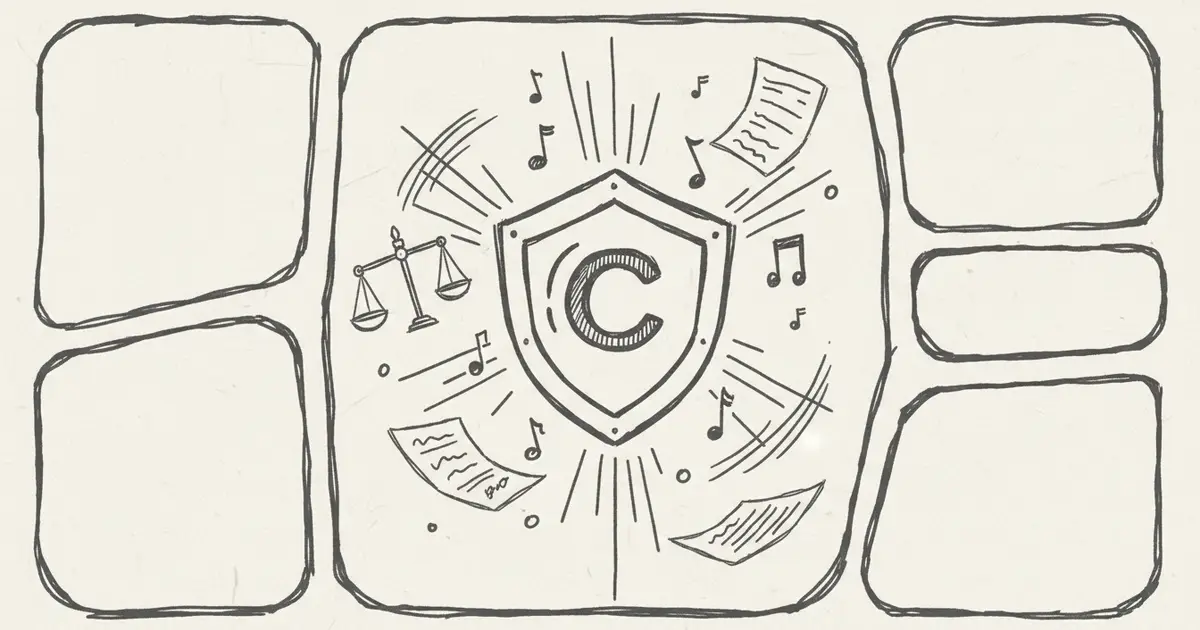
AI Music Copyright Guide 2026: Ownership, Commercial Use, and Records
Understand AI music copyright, commercial-use licenses, source-audio rights, and the records creators need before publishing or selling songs.
Quick Answer
AI music copyright is not one simple yes-or-no question.
For any AI-generated song, separate three issues:
- Copyright: whether the work contains enough human authorship to be protected under the law in your country.
- Commercial license: whether your AI music platform plan allows your intended use.
- Source rights: whether you own or licensed any lyrics, vocals, stems, melodies, reference tracks, or uploaded audio used in the workflow.
You may be able to sell, publish, or monetize AI-assisted music, but only when all three layers support the use.
This article is general information, not legal advice. For U.S. registration questions, start with the U.S. Copyright Office's AI policy guidance.
Why MusicMake.ai Tracks More Than the First Prompt
MusicMake.ai started as an AI music generator, but serious creators need more than a first draft. They need AI music generation, lyrics, style tags, cover songs, song extension, add tracks, mashups, section replacement, vocal removal, and Music Agent in one workflow.
That matters for copyright and commercial use because a finished track is often the result of multiple decisions:
- the original brief
- prompt rewrites
- selected outputs
- edited sections
- source audio choices
- approval cards before paid actions
- follow-up actions after the result
Those records make the workflow easier to explain later. See the MusicMake.ai changelog for product updates around Music Agent 2.5, Smart Next Actions, editable approval cards, and Agent Pro.
Copyright vs Commercial-Use Terms
Creators often mix these up.
| Question | Source of answer | What it controls |
|---|---|---|
| Is the work copyrightable? | National copyright law | Whether there is legal copyright protection |
| Can I use it commercially? | Platform plan and terms | Whether the platform lets you publish or monetize |
| Can I use this source audio? | Your ownership or license | Whether the input material is cleared |
| Can I distribute it on a platform? | YouTube, distributor, marketplace, client contract | Whether the destination accepts the use |
A platform can give you commercial-use rights even if copyright protection is uncertain. The reverse can also be true: a work may include human-authored elements, but your plan may not allow the commercial use you want.
Compare Tools Before Commercial Use
The best AI music tool for a commercial project is not always the tool with the lowest monthly price. Compare the plan, the workflow, and the records you can keep.
| Need | Better fit | Why |
|---|---|---|
| Testing melodies, styles, and prompt direction | Free or trial access | Good for evaluation, but treat the result as non-commercial until the terms say otherwise |
| Fast song drafts with clear paid commercial rights | A paid plan from a generator such as Suno | Suno's pricing page, checked June 14 and refreshed in Chrome on June 15, 2026, says the Free plan has no commercial use and paid Pro/Premier plans grant commercial rights for new songs made under the plan |
| Iteration, tool selection, and source-based editing | MusicMake.ai with the right plan | Music Agent helps turn vague feedback into generation or edit actions, while the broader toolset supports covers, extensions, add tracks, mashups, section replacement, and stems |
| A tool-stack workflow with covers, extensions, and stems | Meloflow or a similar multi-tool platform | Useful to compare, but commercial license, WAV access, and tool limits can differ by plan |
| Client delivery, ads, games, or streaming release | A paid plan plus saved records | You need plan proof, source-rights proof, exports, and a release folder, not just a good-sounding audio file |
For serious releases, do this comparison before generation, not after. Upgrading later may not automatically fix the rights for a track created under a free or trial plan.
For MusicMake.ai specifically, the public pricing page is the current plan source for credits, export formats, Pro tools, commercial-use rights, and generation certificates. The public Terms of Service add the boundary: outputs are owned by you as between you and MusicMake.ai to the extent permitted by law and subject to plan limits, third-party input rights, and compliance with the terms. Certificates are product records, not government registration or legal advice.
MusicMake.ai Commercial-Use Checklist
Before using a MusicMake.ai track commercially, save:
- account and plan active at generation or download time
- generation record or task ID
- prompt, lyrics, style tags, and human edits
- approval-card details when an agent action used credits
- final exported audio
- any available certificate or plan receipt
- source-audio ownership or license documents
Use starter or trial access to test prompts, styles, and workflow. For monetized YouTube videos, client work, public release, games, apps, ads, or streaming distribution, review the current pricing and plan terms.
If you use Cover, Extend, Add Tracks, Mashup, Replace Section, or Vocal Remover, the source audio is a separate rights question. The AI platform does not clear a copyrighted song, vocal, or stem for you.
Release-Ready Tool Choice Matrix
| Release need | Better MusicMake.ai path | What to verify first |
|---|---|---|
| Simple original background track | Generate plus plan check | Plan allows the use, export format is enough, and no uncleared source audio was used. |
| Track based on your own lyrics | AI Lyrics or lyrics-to-music workflow | You own the lyrics and save the lyric draft with the generation record. |
| Cover, remix, or stem workflow | Cover, Mashup, Vocal Remover, or Add Tracks | The uploaded song, vocal, stem, melody, or reference is yours or licensed. |
| Client revision work | Music Agent plus the relevant editing tool | The client contract matches the plan scope, source responsibility, revision scope, and delivered files. |
| Higher-quality export or advanced workflow | Pro/Max plan comparison on pricing | WAV/export needs, Agent Pro, AI Cover, Add Tracks, upload limits, and commercial-use records. |
Human Authorship Still Matters
Many copyright systems require human authorship. The practical question is not "Did AI touch this?" but "What did the human contribute?"
Human contribution can include:
- writing original lyrics
- designing the creative brief
- selecting among outputs
- arranging sections
- editing melody, structure, or mix
- recording live parts
- combining AI output with human performance
- deciding what to reject and why
Prompting alone may not always be enough. More documented creative control usually gives you a stronger position.
Platform Notes
MusicMake.ai
MusicMake.ai provides a workflow for generation, refinement, and source-based editing. Commercial use depends on the current plan terms. Keep records, especially when the agent helps route follow-up actions or when you use source audio.
Suno
Suno is useful to check because many creators compare AI music tools against it. As of the June 15, 2026 Chrome refresh, Suno's public pricing page says the Free plan includes daily credits but no commercial use, while Pro and Premier include commercial use rights for new songs made under those plans. Suno's help center also says subscribing later does not grant retroactive commercial-use licensing for songs made on the free plan by default.
That makes the decision concrete: use free access for tests, but generate release candidates under the plan that actually covers the release.
Meloflow
Meloflow is another tool-stack competitor to review for covers, generation, extension, and audio tools. Its pricing page exposes Free, Lite, and Pro-style packaging with different credit, export, and tool access. Before using a Meloflow output commercially, check the current pricing and terms for the exact plan because commercial license wording and tool access can be plan-specific.
Udio
Udio terms and industry relationships have been a moving target because major-label disputes and platform policies are still evolving. Verify the current terms before any commercial release, Content ID use, or client delivery.
AIVA and other tools
Some tools distinguish personal, standard, creator, pro, or enterprise use. Check attribution, commercial-use scope, resale restrictions, stock-audio marketplace rules, and whether the license survives cancellation.
Can You Sell AI-Generated Music?
Sometimes, yes. Use this test:
- Your platform plan allows commercial release.
- Your source material is owned or licensed.
- Your distributor or marketplace accepts the content.
- You do not misrepresent AI involvement when disclosure is required.
- You keep records showing your human creative contribution and license scope.
Common use cases include:
- YouTube background music
- podcast intros and outros
- client video music
- game or app loops
- streaming releases
- custom music services
- production libraries, if the license allows resale
The highest-risk cases are stock-audio resale, Content ID registration, exclusive-rights sales, and music based on copyrighted source material.
How to Document an AI Music Work
Keep a simple project folder:
project/
  prompt-and-brief.md
  lyrics-drafts.md
  generation-records/
  source-audio-rights/
  edits-and-mix-notes.md
  exports/
  license-and-plan/
This is not just legal hygiene. It also helps you reproduce a sound, explain the project to a client, and avoid repeating the same failed prompt.
FAQ
Can AI music be copyrighted?
It depends on jurisdiction and human authorship. Pure AI output may have limited protection. AI-assisted works with meaningful human creative contribution may be stronger.
Can I sell AI-generated music?
Yes, when your platform plan, source rights, and destination policies allow it. Do not assume free access grants commercial rights.
Do I need to credit the AI platform?
Check the current terms. Some plans or tools require attribution; others do not.
Can two people generate similar AI music?
Similar outputs are possible, especially with generic prompts. Records help show when and how you created your version, but they do not guarantee exclusivity.
Should I register copyright?
For important works, consider registration if you added meaningful human authorship. In the U.S., disclose AI-generated material when required and follow the Copyright Office guidance.
Conclusion
The safest way to think about AI music copyright is layered:
- law decides copyright protection
- platform terms decide commercial-use permission
- source rights decide whether your inputs are cleared
- records decide whether you can explain the workflow later
MusicMake.ai is useful because the workflow does not stop at the first prompt. Music Agent helps refine feedback, choose tools, and keep the creative process moving toward a usable result.
Create AI music with Music Agent
Auteur

Plus d'articles
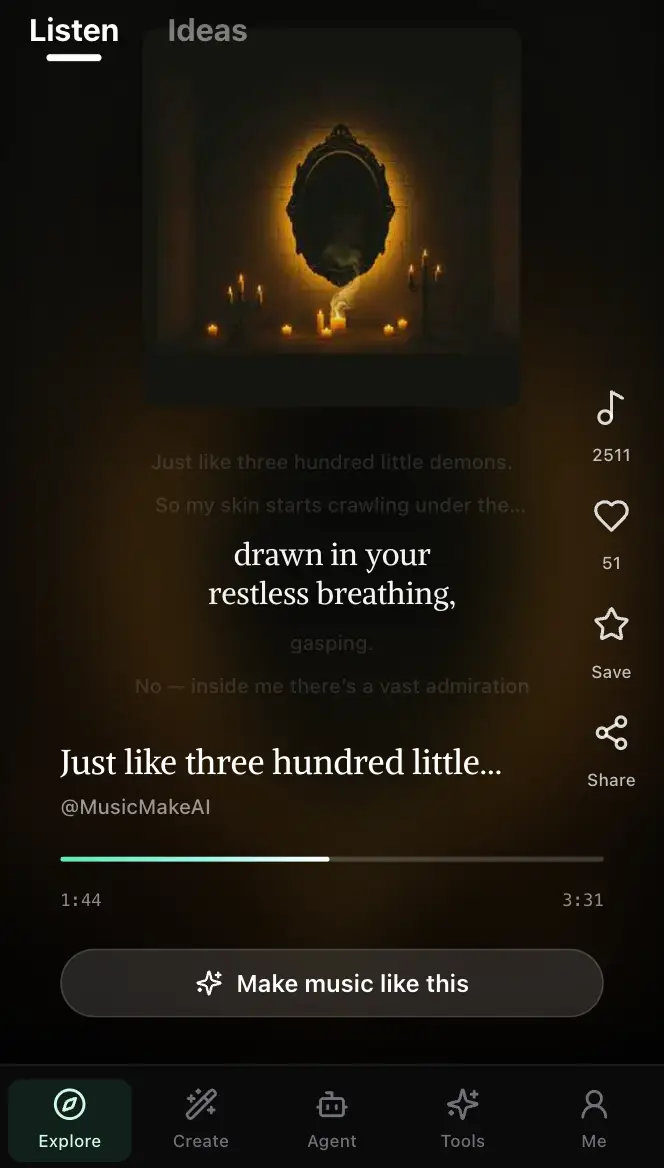
MusicMake.ai Mobile Update: Create Music From Your Phone Like an App
MusicMake.ai now gives creators a complete mobile flow for listening, generating, refining with Music Agent, opening tools, and managing songs from a phone.
AI Songwriting Guide: How to Write Songs with AI in 2026
Learn how to use AI songwriting tools to write better songs faster. Step-by-step guide covering lyrics, melody, arrangement, and production with AI assistance.
how to become a music producer with ai tools - MusicMake.ai Guide
Learn about how to become a music producer with ai tools with this comprehensive guide from MusicMake.ai.