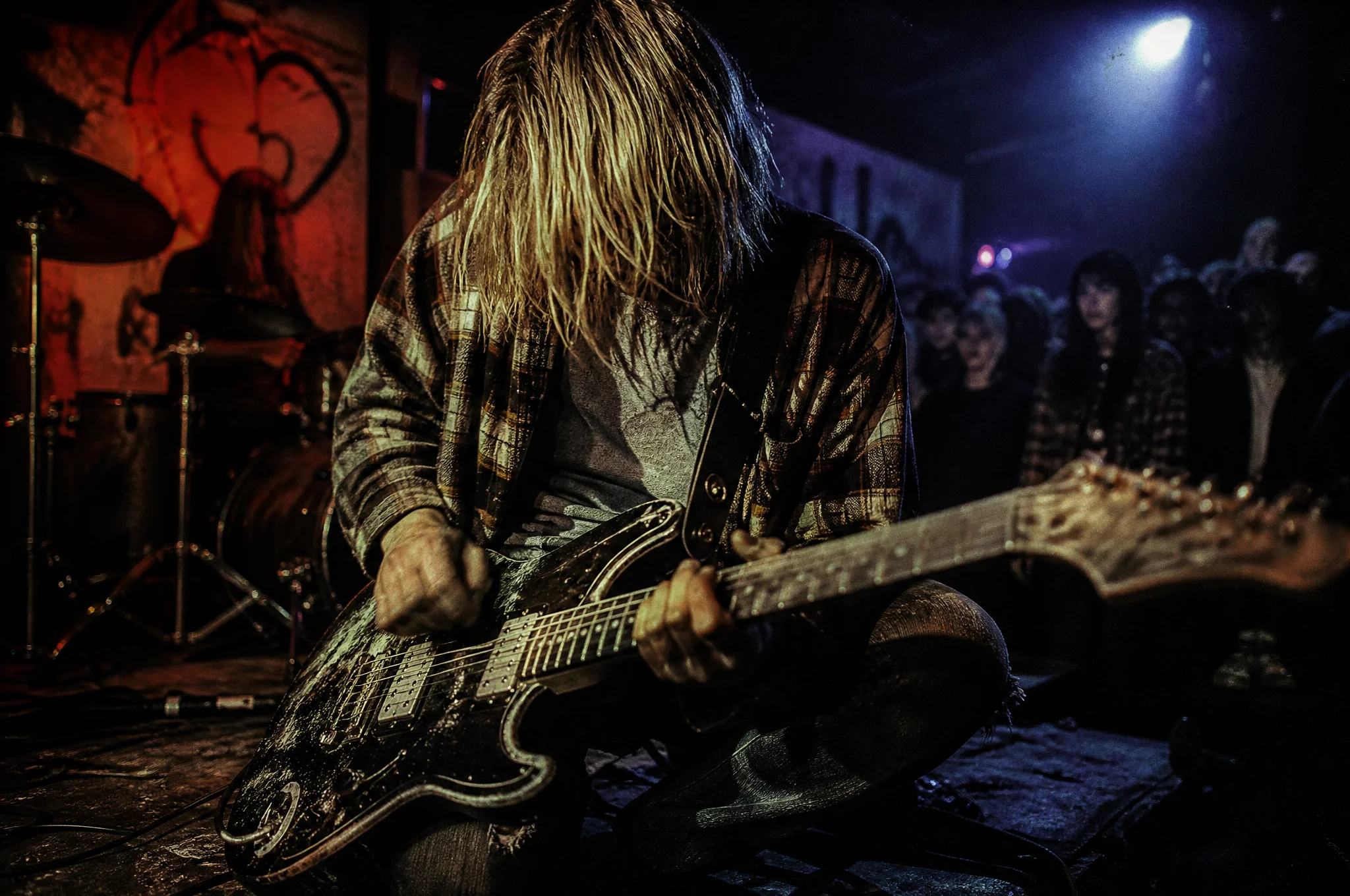
Grunge Music Style: A Complete Guide to AI Music Creation
Explore grunge music styles and subgenres, master AI music creation techniques. Create professional-grade grunge music with MusicMake.ai.
What Is Grunge Music?
Grunge (Grunge) is a rock music genre that emerged in Seattle, USA, in the late 1980s, blending the raw energy of punk rock with the heaviness of heavy metal. Defined by distorted guitars, lethargic vocals, dynamic contrasts (quiet-loud-quiet), and angsty lyrics, it swept the globe in the early 1990s, becoming the musical symbol of a generation.
Grunge’s unique appeal lies in its “imperfect aesthetic.” In stark contrast to the polished production of 1980s glam rock, grunge championed rough recording quality, unrefined instrument tones, and genuine emotional expression. Kurt Cobain's gritty, pained vocals and the roar of distorted guitars conveyed the confusion and rebellion of Generation X.
Musically, grunge is built on power chords and heavy use of distortion pedals. Song structures typically follow a simple verse-chorus framework, but with dynamic shifts creating drama — quiet verses suddenly erupting into thunderous choruses. Guitar riffs are concise and powerful, often based on minor scales to create a brooding atmosphere.
Lyrically, grunge themes revolve around alienation, self-doubt, social critique, and existential anxiety — a stark contrast to the hedonism of mainstream pop music at the time. This authenticity and honesty resonated deeply with countless young people.
MusicMake.ai's AI models have deeply learned a wide range of styles, from the early Seattle scene to post-grunge, and can generate grunge works with raw energy and authentic emotion.
Core Characteristics of Grunge
- Distorted guitar: Heavy guitar distortion is the hallmark grunge sound
- Dynamic contrast: Dramatic quiet-loud-quiet structure
- Lethargic vocals: Slurred, emotionally charged singing style
- Power chords: Simple chord progressions based on power chords
- Raw energy: Unpolished, primal rock power
- Brooding atmosphere: Minor scales and heavy bass create a gloomy feel
- Authentic expression: Honest and unvarnished lyrical themes
- DIY spirit: Inherited from punk — DIY ethos and anti-commercial attitude
- Simple riffs: Concise, powerful guitar riffs with strong repetition
- Punchy drums: Direct, forceful drumming emphasizing bass and snare
History of Grunge
The origins of grunge date back to the mid-1980s in Seattle, Washington. At that time, Seattle’s underground music scene blended punk, hardcore, and indie rock to create a unique musical atmosphere. Green River (which later spawned Mudhoney and Pearl Jam) and The Melvins were the earliest grunge pioneers, fusing punk attitude with metal’s weight.
In 1988, Sub Pop records was founded, becoming the cradle of grunge. In 1989, Nirvana released their debut album Bleach, Mudhoney released Superfuzz Bigmuff, and Soundgarden also emerged around the same time. These early works laid the musical foundation for grunge.
1991 was grunge’s breakout year. Nirvana’s Nevermind album and its lead single “Smells Like Teen Spirit” sparked a musical revolution in the early ’90s, propelling underground rock into the mainstream. Pearl Jam’s Ten, Soundgarden’s Badmotorfinger, and Alice in Chains’ Dirt also became classics. Within just two years, grunge went from underground to global phenomenon.
By the mid-1990s, grunge began to decline. Kurt Cobain’s death in 1994 marked the end of an era. However, grunge’s influence was profound. It changed the face of rock music and paved the way for post-grunge (Post-Grunge), alternative metal, and indie rock. Bands like Foo Fighters, Bush, and Silverchair continued the musical tradition.
Creating Grunge with MusicMake.ai
MusicMake.ai offers multiple ways to create grunge, from classic Seattle sounds to modern post-grunge, meeting different style needs:
Using AI Music Generator
Visit the Generate page and enter your grunge idea. The AI Style Generator can help you precisely select subgenre parameters like Classic Grunge, Post-Grunge, Sludge, and more.
In Simple mode, just enter a description like “make a grunge track” and the AI will automatically expand it into a full musical description. In Custom mode, you can precisely control distortion levels, dynamic range, instrument configuration, and more.
Using Music Agent
Chat with Music Agent and describe the grunge you want in natural language:
- “Make an early 90s Seattle-style grunge track”
- "Make a Nirvana-style track with quiet-loud-quiet dynamics"
- "Make a Post-Grunge style, more polished than traditional grunge"
- "Make a dark, heavy grunge track with an Alice in Chains vibe"
Music Agent supports multi-turn conversations. You can adjust distortion, dynamics, and emotional expression based on the generated output.
Use AI Style Generator
Explore various grunge subgenre combinations with AI Style Generator. Try crossovers like "Grunge + Punk" or "Grunge + Metal" to discover unique grunge styles.
Grunge Subgenres
Grunge subgenres are rich and diverse, from the classic Seattle sound to post-grunge, each with distinct musical characteristics:
| Subgenre | Description | Key Features |
|---|---|---|
| Seattle Sound | Seattle Sound | The original grunge style, raw energy |
| Post-Grunge | Post-grunge | More polished production, more accessible melodies |
| Sludge Metal | Sludge Metal | Slower, heavier, darker grunge |
| Grunge Pop | Pop grunge | More melodic, more commercial grunge |
| Noise Rock | Noise rock | Extreme distortion, noise aesthetics, experimental |
| Alternative Grunge | Alternative grunge | Indie music influence, diverse styles |
| Stoner Grunge | Stoner grunge | Psychedelic elements, slow tempo, heavy bass |
| Punk Grunge | Punk grunge | Punk energy, grunge tone |
| Dark Grunge | Dark grunge | Darker atmosphere, gothic influence |
| Lo-Fi Grunge | Lo-Fi grunge | Rough recording, DIY production, raw texture |
| Grunge Metal | Grunge metal | Metal weight, grunge attitude |
| Indie Grunge | Indie grunge | Indie music aesthetic, underground spirit |
| Progressive Grunge | Progressive grunge | Complex structures, artistry, experimental elements |
| Grunge Revival | Grunge revival | Modern recreation of classic grunge sound |
| Acid Grunge | Acid grunge | Psychedelic effects, experimental timbres |
| Southern Grunge | Southern grunge | Southern rock influence, rugged texture |
Grunge Creation Best Practices
- Master dynamic contrast: Quiet-loud-quiet is the core structural feature of grunge
- Use distortion wisely: Distortion should be thick but not muddy; keep note clarity
- Keep riffs simple and powerful: Guitar riffs don't need to be complex, but they need power and memorability
- Emotion That Hits Hard: At its core, grunge is about raw, honest emotion—no polishing or glossing over the rough edges.
- Drums Punchy and Direct: Keep the drumming straightforward and hard-hitting, with minimal fills or decoration.
- Bass Follows the Guitar: The bass typically locks in with the guitar riff, adding weight and depth to the low end.
- Lyrics That Tell the Truth: Grunge lyrics usually explore alienation, anxiety, and real-life experiences—nothing fake or forced.
Frequently Asked Questions
Common questions and answers about making grunge music:
Can I use AI-generated grunge music for commercial projects?
Yes. Music created with MusicMake.ai comes with no commercial risk — you're free to use it in commercial projects, game soundtracks, film scoring, and more. All tracks generated through the platform include full commercial licensing.
Can AI create authentic distorted guitar tones?
MusicMake.ai 's AI model can generate distorted guitar tones true to the grunge sound. Just include descriptions like "heavy distortion," "fuzz effect," or "vintage distortion" in your prompt, and the AI will dial in a tone that fits the grunge tradition.
How can I make AI-generated grunge feel more raw and unpolished?
Emphasize keywords like "raw," "rough," or "lo-fi" in your prompt. Specify "90s studio vibe" or "unpolished" sounds. Avoid terms like "polished" or "clean" that go against the grunge aesthetic.
What scenes or projects are a good fit for grunge music?
Grunge works great for game soundtracks, extreme sports videos, teen‑focused films, and rebellious advertising campaigns. Grunge tracks generated with MusicMake.ai can be used directly in these commercial settings.
What's the difference between grunge and punk rock?
Both grunge and punk embrace a DIY spirit and anti‑commercial attitude, but musically they're distinct. Punk is usually faster, shorter, and more direct, with simple chord progressions. Grunge, on the other hand, borrows the weight of heavy metal — thicker tones, richer song structures, and stronger dynamic contrasts. Grunge lyrics also tend to be more introspective and anxious.
Can I earn more grunge‑creation credits by checking in daily?
Yes. MusicMake.ai supports daily login check‑ins to earn points and free credits, so you can keep creating more grunge tracks.
Grunge Instrument Setup
A grunge instrument setup is all about raw power and genuine texture. Here's how each instrument typically fits in:
| Instrument | Role | Typical Sound |
|---|---|---|
| Electric Guitar | Lead & Rhythm | Heavy distortion, fuzz, power chords |
| Bass | Low‑end Weight | Mid‑range punch, locking in with guitar riff |
| Drums | Rhythmic Drive | Snare hits that crack, kick drum that pushes |
| Vocals | Emotional Delivery | Gritty, weary, with bursts of raw scream |
Grunge Guitar Pedals & Effects
Guitar effects pedals are key to shaping the grunge sound. Understanding them helps you describe the tone you want more accurately in MusicMake.ai:
- Distortion: Heavy distortion is the foundation of grunge guitar tone.
- Fuzz: Rougher and more raw than standard distortion — a staple for Nirvana's sound.
- Chorus: Adds width and spaciousness to guitar tone — a signature effect for Nirvana.
- Phaser: Creates swirling tonal shifts for a psychedelic vibe.
- Delay: Echo effect used to build depth and sonic layers.