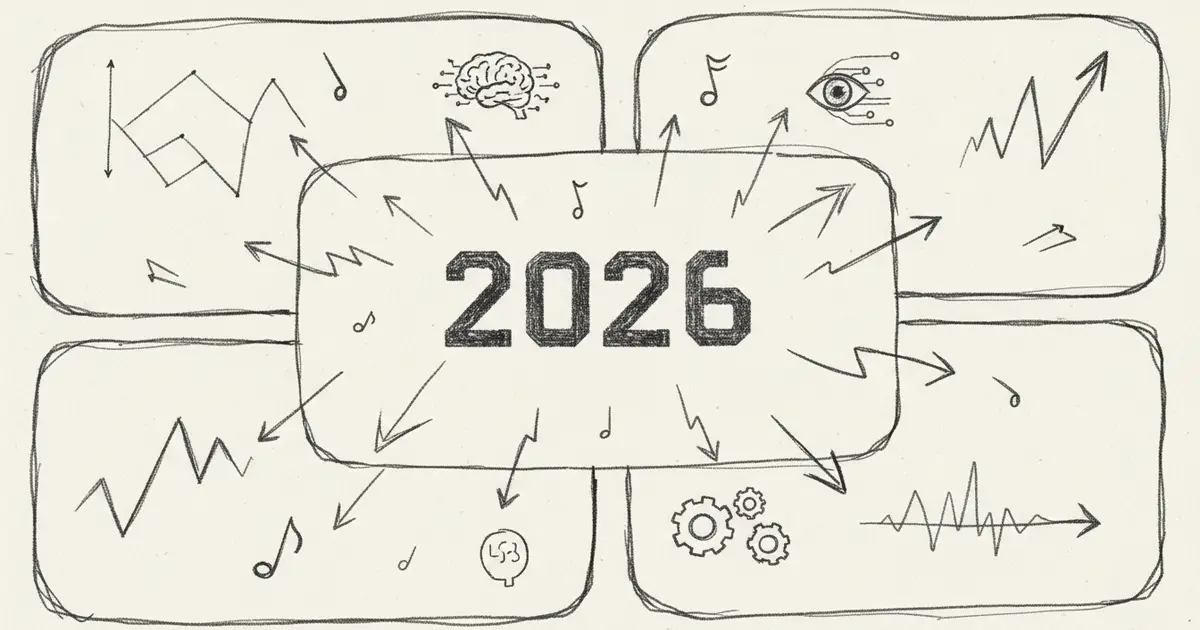
AI Music Trends 2026: Practical Changes Creators Can Use
See 2026 AI music trends creators can use now: Music Agent workflows, prompt repair, source-rights checks, stem edits, video music, and records.
Trend Guides Should Be Useful, Not Speculative
AI music changes quickly. A trend article that lists fixed market numbers, model versions, or predictions can become stale within months. A better trend guide asks:
- What workflow changed?
- What can creators actually do today?
- What still needs human judgment?
- What legal or platform checks are now more important?
This guide focuses on practical trends that affect creators, video teams, podcasters, indie game developers, and small studios.
1. From AI Music Generator To Music Agent
The biggest shift is from one-shot generation to guided workflows.
MusicMake.ai started with generation, but the product now connects Generate, AI Lyrics, AI Style Generator, Cover, Extend, Add Tracks, Mashup, Replace Section, Vocal Remover, and Music Agent.
This matters because users often know what is wrong with a song but do not know how to fix the prompt or choose the next tool.
Search terms such as Song Agent, AI Song Agent, Music GPT, and Music Chat point to the same demand: conversational music creation connected to real actions.
Track current shipped changes in the changelog.
2. Prompt Repair Is Becoming A Core Feature
Creators waste credits when they repeat the same prompt and hope for a better result.
Better workflow:
Problem: It still has a beat.
Repair: No drums, no percussion, no beat, no bass, no rhythm section.
Positive target: soft fingerpicked acoustic guitar as the only instrument.
Prompt repair is a high-value trend because it helps non-musicians describe musical constraints without learning production language first.
3. Revision Tools Matter More Than First Draft Speed
First drafts are easier now. The competitive edge is what happens next:
- extend the ending
- replace one section
- make a cover version
- add accompaniment
- remove vocals
- create short versions
- save project history
Creators will increasingly judge tools by editability, not only first-output quality.
4. Video Music Is Becoming More Context-Aware
Video creators need music that fits the edit:
- leaves space for voiceover
- matches pacing
- has clean start and end points
- can create short and loopable versions
- supports platform and client requirements
AI music for video is less about "generate a track" and more about "make this track work under this scene."
5. Source Rights Are Now Part Of The Workflow
Cover, mashup, stem, and vocal workflows are useful only when the source material is safe to use.
Every serious project should track:
- source audio
- lyrics
- vocals
- references
- plan terms
- generation records
- exports
- client approvals
Rights documentation is becoming a product feature, not an afterthought.
6. Multilingual Songs Need Language-Aware Review
AI can generate songs in many languages, but quality depends on:
- pronunciation
- syllable stress
- lyric phrasing
- cultural fit
- vocal emotion
- whether the melody supports the language
Do not judge multilingual songs only by audio fidelity. Listen for language naturalness.
7. Human Taste Is More Important, Not Less
As generation becomes easier, selection becomes more valuable.
Creators still need to decide:
- what is worth keeping
- what should be rejected
- what should be revised
- what fits a brand or story
- what rights risk is acceptable
AI increases output speed. Human taste determines whether the output is useful.
Practical Action Plan
- Build one repeatable prompt template.
- Save failed prompts and repair notes.
- Use Music Agent when the next step is unclear.
- Create versions instead of restarting every time.
- Keep source and license records.
- Test music in the real context: video, podcast, game, or client file.
- Review the changelog before relying on new features.
FAQ
What is the biggest AI music trend in 2026?
The move from one-shot generation to Music Agent workflows that can interpret feedback and choose the next action.
Is AI replacing human musicians?
AI is changing drafting, editing, and production workflows. Human taste, performance, story, and rights judgment still matter.
What is Music GPT?
It is a search phrase for conversational music creation. A useful version should connect chat to real music tools.
What should creators watch most closely?
Licensing, source rights, platform policies, and whether tools can revise a draft instead of only creating a new one.
Conclusion
The practical AI music trend for 2026 is workflow maturity. The future is not just faster generation. It is better revision, clearer records, and tools that help creators move from feedback to action.
Autor

Kategorien
Weitere Beiträge
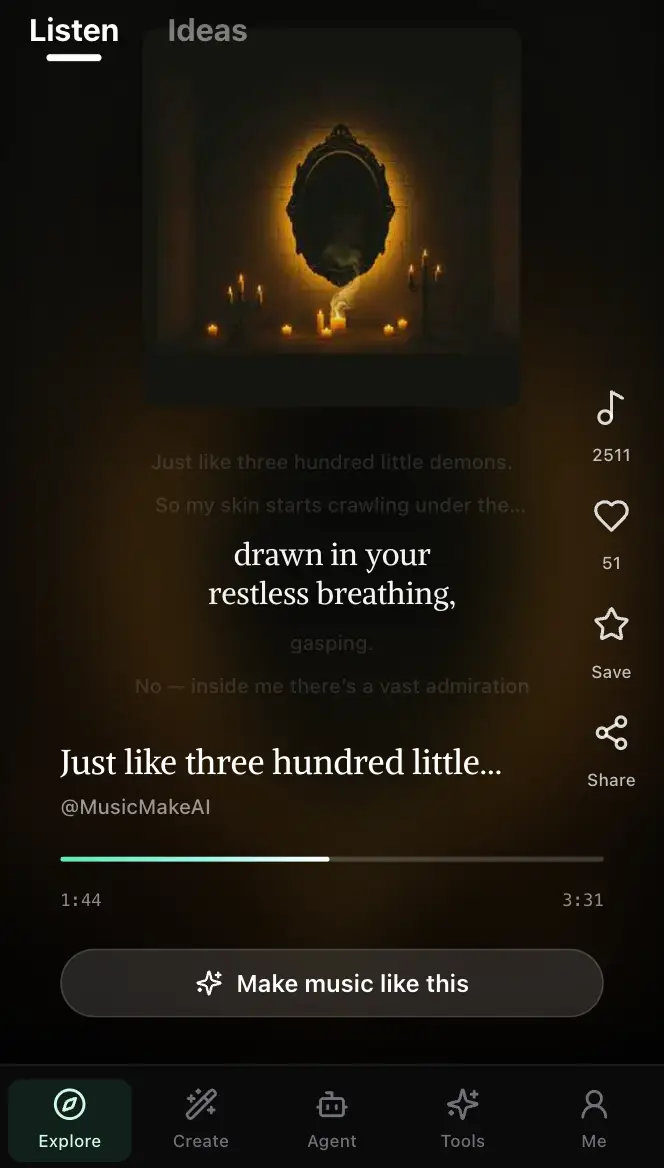
MusicMake.ai Mobile Update: Create Music From Your Phone Like an App
MusicMake.ai now gives creators a complete mobile flow for listening, generating, refining with Music Agent, opening tools, and managing songs from a phone.
AI Songwriting Guide: How to Write Songs with AI in 2026
Learn how to use AI songwriting tools to write better songs faster. Step-by-step guide covering lyrics, melody, arrangement, and production with AI assistance.
how to become a music producer with ai tools - MusicMake.ai Guide
Learn about how to become a music producer with ai tools with this comprehensive guide from MusicMake.ai.