
Best AI Music Generator 2026: A Practical Workflow-Based Guide
Choose the best AI music generator for first drafts, Music Agent revision, Song Agent editing, background music, vocals, licensing, and commercial checks.
Short Answer
The best AI music generator in 2026 is not one universal winner.
Choose by workflow:
| Need | Best Type Of Tool | What To Verify |
|---|---|---|
| Fast vocal song drafts | Prompt-to-song generators such as Suno, Udio, MusicMake.ai, Mureka, MusicGPT, Musicful, and Treblo | Credits, duration, exports, model behavior, and current terms |
| Revision after a weak first draft | MusicMake.ai Music Agent workflow | Whether the agent can route to Generate, Lyrics, Style, Cover, Extend, Add Tracks, Mashup, Replace Section, or Vocal Remover |
| Free draft volume | Free-first generators such as Treblo, formerly Sonauto | Output terms, public/private settings, download formats, and whether unlimited drafts actually help finish the song |
| All-in-one tool stack without an agent | Tool-stack products such as Meloflow, OpenMusic AI, Musicful, and MusicGPT | Plan limits, commercial license, exports, source upload rules, and whether the user still has to choose every next action manually |
| Background music for creators | Background-music platforms such as Soundraw and Beatoven, or MusicMake.ai workflows | License scope, loopability, voiceover fit, and platform rules |
| Score or orchestral work | Score-oriented tools | MIDI, notation, export rights, and commercial plan limits |
| Client or commercial work | Any tool with clear records and current plan coverage | Source rights, terms, exports, receipts, and project documentation |
If you only need a first draft, compare prompt-to-song tools. If your real problem is "the first result is close but wrong," choose a workflow that can help you revise instead of only generating more drafts.
Why MusicMake.ai Became A Music Agent Workflow
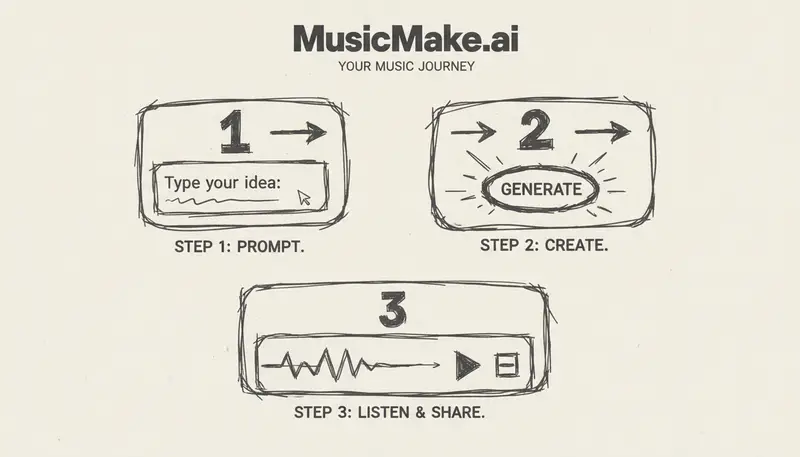
Most AI music generators solved the first step: type a prompt, get a song. MusicMake.ai started there too, with Generate, AI Lyrics, AI Style Generator, Cover, Extend, Add Tracks, Mashup, Replace Section, and Vocal Remover.
The harder problem is what happens after the first result. Creators need to keep the hook, remove a weak section, extend the ending, try a cover voice, separate vocals, save versions, or continue from a previous song. That is why MusicMake.ai evolved from a normal AI music generator into Music Agent: you describe the outcome, and the agent helps choose the next tool.
This category is also searched as Song Agent, AI Song Agent, Music GPT, or Music Chat. The point is not "chatting with AI." The point is reducing wasted generations by turning feedback into a specific music action.
For current product evidence, see the MusicMake.ai changelog, especially Music Agent 2.5, recoverable failure repair, editable approval cards, Smart Next Actions, style analysis from uploaded audio, and Agent Pro.
How To Compare AI Music Generators Without Hype
Static rankings age quickly. Instead of asking "which tool is number one?", test each tool against the job.
Test 1: First Draft Quality
Use the same prompt and lyrics across tools. Listen for:
- vocal clarity
- language fit
- arrangement density
- section structure
- audio artifacts
- ending quality
Test 2: Prompt Alignment
Use a restrictive brief:
Soft fingerpicked acoustic guitar only.
No drums, no percussion, no beat, no bass, no vocals, no extra instruments.
Slow, calm, sparse, intimate.
If the output still adds rhythm or extra instruments, quality is not just an audio issue. It is an instruction-following issue.
Test 3: Revision Workflow
Take a result that is wrong and say:
It still has a beat. Keep only the guitar, make it simpler, and remove every other instrument.Now compare whether the product can help you act on that feedback. This is where a Music Agent workflow matters.
Test 4: Rights And Records
Before commercial use, check:
- current plan terms
- source-audio rights
- export formats
- generation records
- receipts or certificates
- attribution or disclosure rules
- distributor and platform policies
The best AI music generator for a commercial project is the one that can produce a usable track and support a clean rights record.
Tool Categories
Prompt-To-Song Generators
These tools are useful when you want a complete song draft from lyrics, style, and prompt direction.
Good for:
- demo songs
- lyric experiments
- vocal concepts
- social ideas
- songwriting references
Watch for:
- old model-version claims
- outdated free-tier limits
- unclear commercial-use rules
- similar-output risk
- weak editing after the first render
Suno, Udio, MusicMake.ai, Mureka, MusicGPT, Musicful, Treblo, and other current generators can all be worth testing depending on language, genre, and workflow.
As of the June 15, 2026 Chrome refresh, Suno also has a clear published paid-entry price advantage over MusicMake.ai: its official pricing page lists Pro at $10/month monthly or $8/month with annual billing, with 2,500 credits per month. That makes Suno a strong choice when the decision is mostly price plus fast native vocal-song ideation.
Current competitor map:
| Tool | Strongest reason to test it | Main watchout |
|---|---|---|
| Suno | Lower visible paid entry price, v5.5 access on paid plans, and fast native vocal-song drafts. | Free songs are non-commercial by default, and upgrading later does not automatically make old free-plan songs commercially licensed. |
| Udio | Lower visible paid entry price and first-render testing in Udio's own sound. | Current checked terms are restrictive around Output download, distribution, ownership, and commercial use. |
| Mureka | Model-testing workflow and user-visible CNY pricing screenshots that can look cost-efficient. | Pricing and rights need checked account context; do not assume broad ownership from a plan card alone. |
| Meloflow | Broad music workflow with a lower Lite annual-view entry than MusicMake.ai Basic. | Compare exact plan limits and whether it guides the next action or mainly offers a tool stack. |
| Soundraw | Clear background-music and beat licensing story for Creator and Artist use cases. | Great licensing clarity does not mean it is the best fit for vocal-song generation or agent-guided revision. |
| Beatoven.ai | Background music, SFX/API positioning, and synchronized-content licensing. | Public /pricing returned 404 in the checked pass, so do not present its pricing as a normal live pricing table. |
| MusicGPT | Lower visible annual paid entry price plus song, discovery, TTS, and sound-tool surfaces. | Good tool breadth does not automatically solve revision decisions after a weak first draft. |
The practical conclusion: choose Suno or Udio when you are mostly testing a model's first-render sound; choose Soundraw or Beatoven.ai when the job is licensed background music; choose OpenMusic AI, Musicful, MusicGPT, or Meloflow when you want a broad tool stack; choose MusicMake.ai when generation needs to stay connected to Studio, helper tools, listening/community, saved works, source-based editing, and optional Music Agent guidance.
High-Fidelity And Detail-Oriented Tools
Some creators evaluate tools mainly by production feel, vocal detail, or instrumental clarity. That can be important, but do not confuse high fidelity with project fit.
Ask:
- Does the song follow the prompt?
- Does it work under voiceover?
- Can you revise a weak section?
- Can you export the format you need?
- Are the current terms suitable for your project?
Music Agent Workflows
Music Agent workflows are for users who need help after the first draft.
MusicMake.ai is strongest when the task sounds like:
- "remove the beat"
- "keep only the guitar"
- "make the chorus simpler"
- "extend the ending"
- "replace this section"
- "make a cover version"
- "separate vocals"
- "continue from this song in my library"
In other words, the user knows what is wrong, but does not know which tool or prompt will fix it.
Tool-Stack Music Generators
Some products are not just one-shot generators. Meloflow, OpenMusic AI, Musicful, and MusicGPT all show broader tool surfaces than a simple prompt box.
That makes them real workflow competitors, not products to dismiss with a lazy "one-shot generator" label.
The difference to check is guidance. A tool stack gives you multiple actions. A Music Agent workflow should help decide which action comes next when the song is close but still wrong.
Use this category when you want:
- one product with several music tools
- lower entry pricing than MusicMake.ai for basic generation
- cover, extension, track addition, or stem workflows
- vocal remover, stem splitter, mastering, MIDI, music video, or sound tools
- plan-based export and commercial-license choices
Choose MusicMake.ai instead when the bottleneck is not tool availability, but deciding the next correct move.
This is also where pricing comparisons become more honest. Some competitors have lower visible entry prices or more generous-looking quotas than MusicMake.ai. That is fine. The reason to choose MusicMake.ai is not "it is always cheaper"; it is that the product combines direct generation, Studio, lyrics/style prep, editing tools, listening/community, saved works, and Music Agent guidance in one workflow.
Free-First AI Song Generators
Some users should not start with a paid workflow at all. Treblo, formerly Sonauto, is a serious free-first competitor because it publicly positions itself around unlimited free song generation, style tags, downloads, editing, and broad output-use language.
Choose a free-first generator when:
- you need many rough drafts before choosing a direction
- you are testing lyrics, style tags, or vocal ideas
- you want to learn what AI music can do before paying
- the project is experimental and not client-critical yet
Choose a guided workflow instead when you already have a promising draft and need to finish it. Unlimited drafts can be useful, but they do not automatically answer whether to rewrite, extend, cover, replace a section, remove vocals, add tracks, or change the prompt.
All-In-One Music Tool Suites
OpenMusic AI is a good example of a broad toolkit approach: generation, lyrics, vocal remover, stem splitting, mastering, singing voice, cover, MIDI, audio-to-MIDI, lofi conversion, key/BPM tools, genre pages, and visible yearly credit bundles.
Musicful is closer to a consumer song app and feature bundle: text-to-song, lyrics-to-song, hum or audio-to-song positioning, vocals, music video, mobile app presence, advanced editing, stems, MIDI, remastering, and commercial-use plan gating.
MusicGPT mixes AI song creation with discovery, playlists, public music surfaces, sound generation, text-to-speech, and plan-based commercial use.
These tools may be the better choice if you know exactly which feature you want. MusicMake.ai is the better fit when you need the product to help decide the next action after listening to the output.
Background-Music Platforms
These tools are useful for creator videos, streams, apps, shops, podcasts, and ambient loops.
Test:
- loop quality
- whether it leaves space for speech
- licensing for your platform
- download rules
- client or public-venue restrictions
Soundraw and Beatoven both belong in this decision set, but the details matter. Soundraw is often evaluated around creator background music, watermark/free-trial behavior, Content ID, and Artist/Creator plan differences. Beatoven is stronger to evaluate around video/podcast/game background scoring, SFX/API positioning, and synchronized-use license scope.
Score And Orchestral Tools
Use score-oriented tools when MIDI, notation, orchestration, or film/game scoring matters. These tools may not be best for modern vocal songs, but they can be strong for structured composition work.
Practical Recommendations By User
YouTube Creator
Start with the target scene, not the tool. If the video has voiceover, test whether the music stays behind the voice. If the music needs a custom hook or theme, generate a few drafts and then revise the best one.
MusicMake.ai is useful when you need versions: intro, outro, loop, short cut, instrumental, or alternate arrangement.
Podcaster
Focus on short identity pieces:
- intro
- outro
- transition
- sponsor bed
- soft background loop
Avoid overly busy music. Keep records so the show can reuse the theme across episodes.
Songwriter
Use AI for drafts, alternate melodies, arrangement ideas, and lyric testing. Do not stop at the first output. Edit, rewrite, arrange, and document your creative contribution.
Indie Game Developer
Test loops, state changes, and volume behavior. A good game track must support gameplay, not just sound impressive alone.
Agency Or Brand Team
Prioritize documentation and source rights. For client work, the best AI music generator is the one that gives you enough control, records, and plan coverage to defend the deliverable.
Free AI Music Generator Access: Use It For Testing
Free or starter access is useful for learning:
- prompt behavior
- genre fit
- workflow speed
- output quality
- UI comfort
Do not assume free outputs are ready for commercial publishing. Treblo's current public positioning is unusually generous for free generation, while OpenMusic AI's license page says free or unpaid outputs are not licensed for commercial use, and Musicful's guide separates non-commercial Free/Basic use from commercial Standard/Pro/Lifetime use. Always check current plan terms before using music in monetized videos, client work, ads, distribution, or paid products.
Comparison Checklist
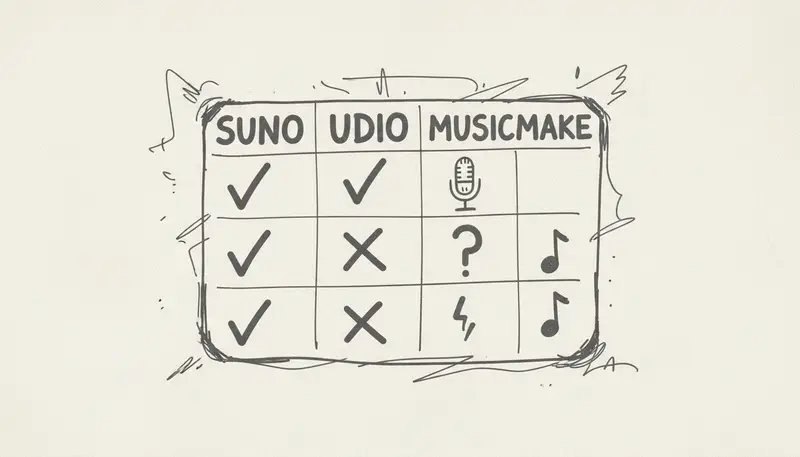
| Question | Why It Matters |
|---|---|
| Does it make a strong first draft? | Saves time at the beginning. |
| Does it follow negative constraints? | Prevents "no beat" prompts from still adding rhythm. |
| Can it revise instead of regenerate? | Reduces wasted credits. |
| Can it handle your language? | Lyrics and pronunciation matter. |
| Can it export what you need? | Client, video, and distribution workflows differ. |
| Does the current plan cover your use? | Commercial use depends on terms. |
| Can you save records? | Important for clients, disputes, and future edits. |
2026 Tool Map
| Tool | Best Fit | Main Watchout |
|---|---|---|
| MusicMake.ai | Music Agent workflow, revision after generation, source-based follow-up tools, background music, records | Not the cheapest paid entry; choose it when workflow guidance matters |
| Suno | Fast vocal-song drafts, native Suno creation flow, lower published paid-entry price | Free-plan songs are non-commercial by default; Pro/Premier rights do not automatically cover old free-plan songs |
| Udio | First-draft style and output evaluation | Refresh terms and plan details before commercial publishing |
| Mureka | Testing its current generation model and song output style | Public pricing route returned 404 in the June 15 Chrome check, so use the logged-in pricing screenshot for plan facts; checked terms support paid-tier/gold Output ownership but include broad license-back and no-uniqueness/copyright-registration caveats |
| Meloflow | All-in-one tool stack with Generate, Extend, Cover, Add Tracks, Vocal Remover, and Stem Splitter | Lower Lite entry price is real, but commercial license and exports are plan-dependent |
| Soundraw | Background-music and creator-music workflows | Checked USD sale-view entry pricing can be lower than MusicMake.ai; compare Creator vs Artist plan rules, formats, and distribution use before choosing |
| Beatoven | Video and background scoring workflows | Strong for synchronized background music/SFX; pricing page returned 404 while homepage schema had lower offer hints, and terms exclude standalone Spotify/Apple Music distribution |
| MusicGPT | Song platform with create, explore, playlists, sound generation, TTS, remix/extend/replace-style feature rows, and paid commercial-use positioning | Lower visible annual paid entry than MusicMake.ai; choose MusicMake.ai when revision workflow and workspace depth matter more than the lowest entry price |
| OpenMusic AI | All-in-one music toolkit, visible yearly quotas, lyrics, stem tools, mastering, MIDI, cover, music video, and paid license positioning | Homepage Free card says "Commercial License Included", but the license page says free/unpaid outputs are not commercially licensed; use the license page for commercial-use conclusions |
| Treblo, formerly Sonauto | Free-first AI song generation, style tags, fast drafts, editing, downloads, community, and permissive output-use language | Free volume is strong, but users still own the responsibility for inputs, legality, platform rules, and finishing the song |
| Musicful | Consumer AI song app with text/lyrics/hum-to-song positioning, vocals, music video, mobile apps, and advanced editing features | Checked sale prices can be lower than MusicMake.ai at several entry points; compare workflow depth, plan rights, credits, and advanced feature needs |
This map is not a final ranking. It is the starting point for choosing which tool to test first.
FAQ
What is the best AI music generator in 2026?
There is no universal best. Use prompt-to-song tools for first drafts, free-first tools when draft volume matters, tool-stack products when you want many separate music actions, background tools for creator music, score tools for orchestral work, and MusicMake.ai when Music Agent revision workflow matters.
Which AI music generator is best for free drafts?
Treblo, formerly Sonauto, is one of the strongest free-first options based on its current public positioning around unlimited free songs. Use it when you want many drafts. Use MusicMake.ai when the bottleneck is finishing and revising a promising draft.
Which AI music generator is best for an all-in-one tool suite?
OpenMusic AI, Musicful, MusicGPT, and Meloflow are all credible all-in-one or tool-stack choices. Compare their exact plans by the feature you need: stems, vocal removal, mastering, MIDI, music video, sound generation, TTS, downloads, commercial use, and source upload rules.
Is Music Agent different from an AI music generator?
Yes. A generator creates music from a prompt. A Music Agent helps interpret feedback, choose tools, rewrite instructions, and continue the workflow after the first result.
What is Music GPT or Music Chat?
These are search phrases people use for conversational music creation. A useful version should connect chat to real music actions, not just answer questions.
Can I use free AI music generators commercially?
Only if the current terms allow it. Treat free access as testing unless the live plan and terms clearly cover your use case. Do not assume "royalty-free" marketing copy means every free output is safe for monetized videos, ads, client work, streaming distribution, or marketplace assets.
How should I test tools fairly?
Use the same prompt, same lyric, same use case, and same revision request. Judge first draft, prompt alignment, revision workflow, export options, and licensing records.
Conclusion
The best AI music generator is the one that fits your workflow. A first draft is only the beginning. The real advantage comes when the product helps you understand what went wrong and move to the next correct action.
MusicMake.ai is built for that next step: generate, revise, extend, cover, replace, separate, and continue through Music Agent. Suno may be better when you want lower paid-entry pricing and fast native vocal-song ideation. Treblo may be better when you want maximum free draft volume. OpenMusic AI, Musicful, MusicGPT, and Meloflow may be better when you want a broad tool suite or app-style workflow. Soundraw and Beatoven may be better when the project is mainly background music.
MusicMake.ai is the stronger choice when guidance after the first result is the main bottleneck.
Tác giả

Bài viết khác
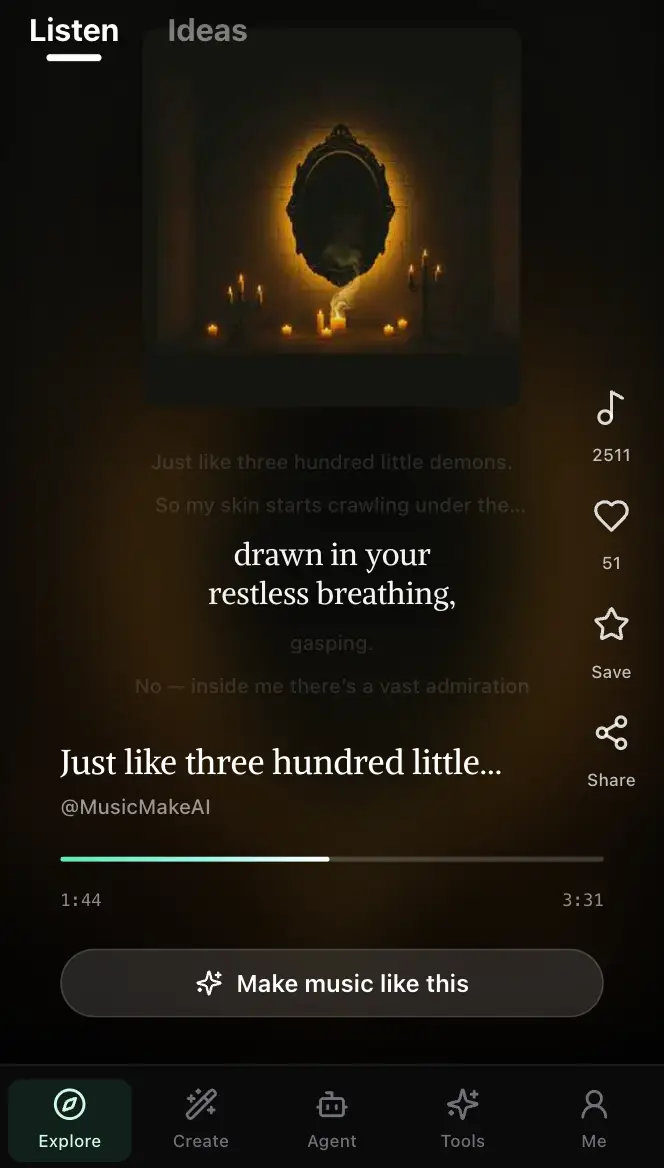
MusicMake.ai Mobile Update: Create Music From Your Phone Like an App
MusicMake.ai now gives creators a complete mobile flow for listening, generating, refining with Music Agent, opening tools, and managing songs from a phone.
AI Songwriting Guide: How to Write Songs with AI in 2026
Learn how to use AI songwriting tools to write better songs faster. Step-by-step guide covering lyrics, melody, arrangement, and production with AI assistance.
how to become a music producer with ai tools - MusicMake.ai Guide
Learn about how to become a music producer with ai tools with this comprehensive guide from MusicMake.ai.