AI Music Generator Licensing Guide 2026: Copyright-Free vs Royalty-Free
Decode copyright-free, royalty-free, and licensed AI music so YouTube, podcast, game, ad, and client projects use safer release workflows.
Short Answer
"Copyright-free AI music" is usually not literal. Most creators actually need licensed AI music or royalty-free use within a specific license.
Before using an AI-generated track in YouTube, podcasts, games, ads, client projects, or streaming releases, verify:
- The current plan covers the use case.
- The output was created under terms that allow that use.
- You control all source audio, lyrics, vocals, samples, and references.
- You have generation records, exports, receipts, and license notes.
- You are not promising exclusivity unless the terms and contract support it.
Use this article as a licensing checklist, not legal advice.
What "Copyright-Free" Actually Means
Creators search for "copyright-free AI music," but the safer language is more precise:
| Term | Practical Meaning | What To Check |
|---|---|---|
| Copyright-free | Rarely literal; often used casually to mean "usable without a traditional stock license" | Source rights, platform terms, and copyright law |
| Royalty-free | No ongoing per-use royalty inside the license scope | License limits, attribution, resale, client work |
| Public domain | Copyright expired or released | Jurisdiction and authenticity |
| Creative Commons | Shared under a specific license | Attribution, commercial permission, derivative rules |
| Licensed AI music | Use allowed under a platform plan or contract | Plan, output rights, source material, and documentation |
The important question is not whether a track is "free." The important question is what you are allowed to do with it.
How AI Changes The Licensing Workflow
AI music can reduce traditional licensing friction, but it does not remove all legal questions.
You still need to consider:
- user plan and current terms
- source materials
- uploaded audio
- lyrics
- vocals
- samples
- artist-style references
- similar-output risk
- commercial destination
- export format
- attribution or disclosure
- copyright registration limits
A platform license cannot automatically clear third-party material you upload.
Where MusicMake.ai Fits
MusicMake.ai is useful because it combines creation, revision, and records in one workflow: Generate, AI Lyrics, AI Style Generator, Cover, Extend, Add Tracks, Mashup, Replace Section, Vocal Remover, and Music Agent.
Music Agent helps when the first result is close but not usable. You can say:
- "remove the beat"
- "only keep the guitar"
- "make it simpler"
- "replace the second section"
- "extend the ending"
- "separate the vocal"
That matters for licensing too. A professional workflow should keep prompts, generation history, source-audio context, exports, and plan records.
This kind of workflow may also be searched as Song Agent, AI Song Agent, Music GPT, or Music Chat. The useful version connects chat to real music actions and project records.
Check the current pricing and changelog before relying on any commercial-use workflow.
Choosing A Tool For Licensed AI Music
Instead of scoring tools with stars, evaluate each one with the same checklist:
| Question | Why It Matters |
|---|---|
| Does the current plan allow the use case? | Commercial scope varies by plan. |
| Are outputs exclusive or non-exclusive? | Similar outputs may exist. |
| Can you modify, edit, or combine outputs? | Derivative work rules matter. |
| Can you use the music for clients? | Client work may require transfer or sublicensing. |
| Does the platform provide records? | Records help with disputes and compliance. |
| Can you export needed formats? | Video, podcast, game, and distribution workflows differ. |
| What happens after cancellation? | Some rights may depend on plan terms. |
This works for MusicMake.ai, Suno, Udio, Mubert, AIVA, Soundraw, Boomy, and other current tools. Use the live terms and pricing pages, not old blog tables.
Commercial Use Scenarios
YouTube And Social Video
Check whether the current plan covers monetized uploads, sponsorships, Shorts, Reels, TikTok, and paid brand campaigns. Keep prompt, export, and plan records.
Podcasts
Podcast themes and background beds are practical use cases. Make sure the license covers repeated use across episodes and possible sponsorship contexts.
Games And Apps
Games may need looping, state variations, public distribution, and sometimes client or publisher rights. Document source files and exports in the build archive.
Client Work
Client projects need stronger records. Do not promise exclusive ownership, sublicensing, or copyright registration unless the terms and contract support it.
Streaming Releases
Check your AI music plan, distributor policy, DSP rules, source rights, and disclosure obligations. Save records for every release.
Safer Workflow
- Pick the use case before generating.
- Choose a plan that covers that use case.
- Avoid unlicensed source audio, lyrics, vocals, and samples.
- Generate and revise the track.
- Save prompt, date, output link, export, plan receipt, and license notes.
- Add human selection, editing, arrangement, or production where the release matters.
- Verify the destination policy before upload.
- Keep records after publication.
For MusicMake.ai users, Music Agent can help turn plain feedback into the next action instead of repeatedly generating from the same weak prompt.
Common Misunderstandings
"Royalty-Free" Means No Rules
No. It means no per-use royalty within the license scope. There may still be limits on resale, Content ID, client transfer, stock marketplaces, or attribution.
"AI Generated" Means No Copyright Risk
No. Source material, similar outputs, artist impersonation, and platform policies still matter.
"Free Plan" Means Free Commercial Use
Not necessarily. Free or trial access is best treated as testing until the current terms say otherwise.
"I Own It" Means I Can Promise Exclusivity
Not always. Many AI outputs are non-exclusive or may be similar to outputs generated for others.
FAQ
Is AI-generated music copyright-free?
Usually not in the literal sense. It may be licensed for use under a platform's current terms. Read the live terms before publishing.
Can I use AI music on YouTube without copyright claims?
Only if your license, source material, and YouTube policy support that use. No tool can promise every upload will avoid every claim.
Can I sell AI music to clients?
Maybe, but check client-use rights, sublicensing, transferability, source rights, and documentation.
Does MusicMake.ai provide a safer workflow?
MusicMake.ai helps with workflow and records, especially when using Music Agent and revision tools. You still need to check current plan terms and source-material rights.
What should I save for commercial use?
Save prompt, lyrics, source files, generation link, export, date, plan receipt, license notes, and client approval where relevant.
Conclusion
The safest way to think about "copyright-free AI music" is to replace the phrase with "licensed, documented, source-safe AI music."
MusicMake.ai's Music Agent workflow helps creators move from idea to usable result while keeping a clearer project path. That matters as much as the first generated audio.
Tác giả

Danh mục
Bài viết khác
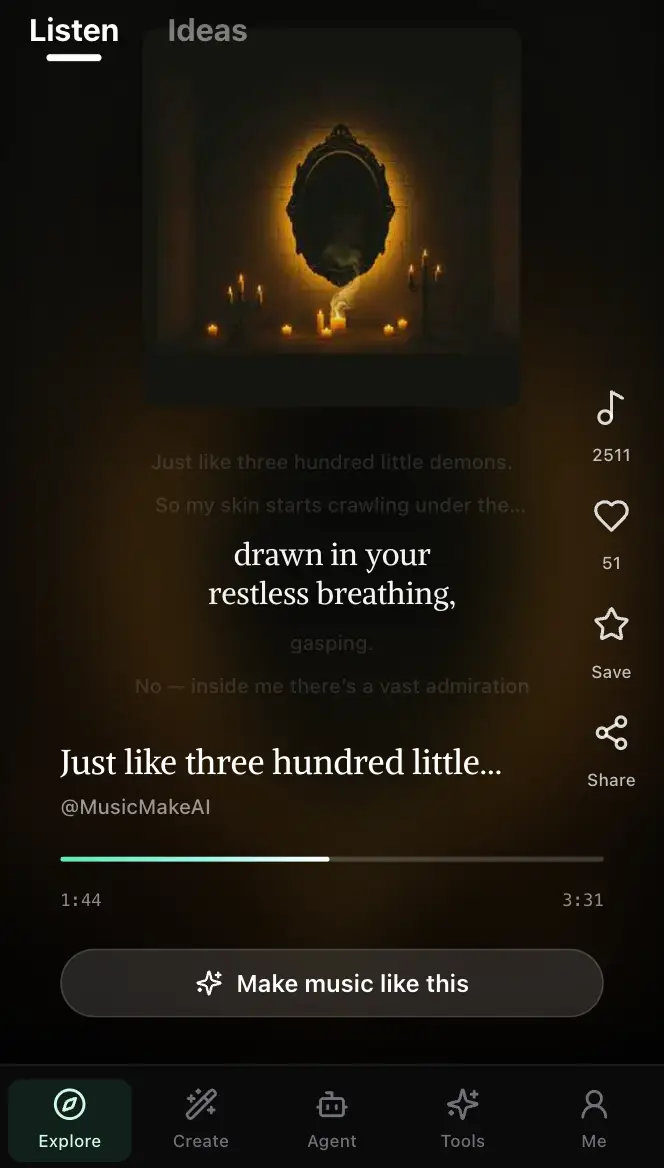
MusicMake.ai Mobile Update: Create Music From Your Phone Like an App
MusicMake.ai now gives creators a complete mobile flow for listening, generating, refining with Music Agent, opening tools, and managing songs from a phone.
AI Songwriting Guide: How to Write Songs with AI in 2026
Learn how to use AI songwriting tools to write better songs faster. Step-by-step guide covering lyrics, melody, arrangement, and production with AI assistance.
how to become a music producer with ai tools - MusicMake.ai Guide
Learn about how to become a music producer with ai tools with this comprehensive guide from MusicMake.ai.