Emerging AI Audio and Music App Trends 2026: What Is Actually Useful
A practical 2026 guide to AI audio and music app trends: music agents, iterative editing, cover workflows, stem tools, creator documentation, and where MusicMake.ai fits.
The Real Trend Is Workflow, Not Novelty
AI audio apps are no longer judged only by whether they can generate a song from a prompt. The market is shifting toward a more practical question: can the product help creators move from vague intent to a usable result with less waste?
That is why the most important trends in 2026 are not fantasy product categories or inflated download counts. They are workflow improvements:
- Better prompt-to-song translation
- Faster revision loops
- Cleaner source-audio handling
- More usable editing tools
- Clearer commercial-use and release workflows
- Better records for creators and teams
MusicMake.ai fits this shift well because it is no longer just a simple AI music generator. It has expanded into a broader creation stack built around a Music Agent workflow plus generation and editing tools.
Trend 1: From One-Shot Generators to Music Agents
The first generation of AI music products asked users to write one prompt and hope for the best. That model breaks down quickly because users often know what feels wrong in a song, but they do not know how to rewrite the prompt precisely.
This is the gap that Music Agent, Song Agent, Music GPT, and Music Chat-style products are solving.
Examples of useful feedback:
- "It still has a beat."
- "Only keep the guitar."
- "Make the chorus simpler."
- "The vocal is too theatrical."
- "Extend the song without changing the mood."
The product that wins is not the one with the loudest claim. It is the one that turns feedback like this into a better next step.
For MusicMake.ai, this happens through Music Agent, which can help users:
- Rewrite prompts
- Clarify arrangement constraints
- Choose the right tool
- Decide whether to generate, extend, cover, replace, or remove vocals
- Reduce wasted credits from repeated bad prompts
Trend 2: Generation Alone Is Not Enough
Creators now expect an AI music product to support the full path from idea to revision.
That means useful products increasingly bundle:
- Original generation
- Lyrics ideation
- Style or genre guidance
- Cover workflows
- Extension tools
- Section replacement
- Stem or vocal utilities
- Revision history
MusicMake.ai already covers this broader surface:
- Generate
- AI Lyrics Generator
- AI Music Style Generator
- Cover
- Extend
- Add Tracks
- Mashup
- Replace Section
- Vocal Remover
The practical lesson is that creators do not want ten isolated gimmicks. They want a connected workflow.
Trend 3: Better Editing Beats More Hype
As more products can generate passable music, the next layer of differentiation is editing quality:
- Can the user replace only one section?
- Can they extend a song without breaking the mood?
- Can they remove vocals cleanly enough for practice or remix use?
- Can they add tracks without rebuilding from zero?
- Can they combine outputs into one stronger result?
This is where many "new" AI music apps fail. They overemphasize generation demos and underbuild revision tooling.
For serious creator retention, revision features matter more than launch-week novelty.
Trend 4: Source Audio Rights and Documentation Are Becoming Product Features
The more AI music moves into commercial use, the more creators care about:
- What source files they may upload
- Whether they can use outputs commercially
- What proof they can keep
- How to explain their workflow to a client or distributor
This does not turn an app into a legal product, but it changes the buying criteria. Teams increasingly prefer products that make the workflow explicit.
Useful records include:
- Prompt history
- Music Agent feedback
- Source asset list
- Export history
- Plan or invoice records
- Final version tracking
This is one reason the Music Agent approach matters. It improves not only generation quality, but also traceability.
Trend 5: Voice and Cover Workflows Need More Structure
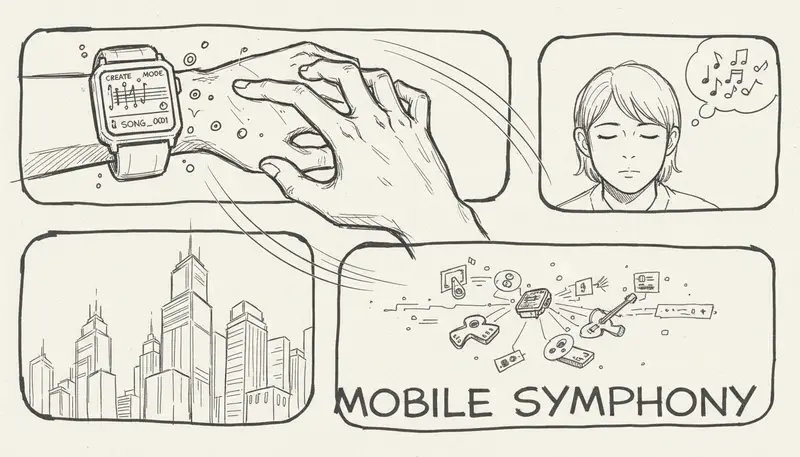
Cover-style generation, vocal transformation, and source-audio editing continue to attract creators, but they also create more confusion.
The trend is toward more structured workflows:
- Clearer source upload boundaries
- Better user guidance
- More explicit editing steps
- Cleaner separation between original generation and source-based transformation
For MusicMake.ai, Cover and related tools are strongest when the product clearly guides the user about what they are editing, what source material they are using, and what the next step should be.
Trend 6: Social Creation Is Becoming an Audio Workflow, Not Just a Share Button
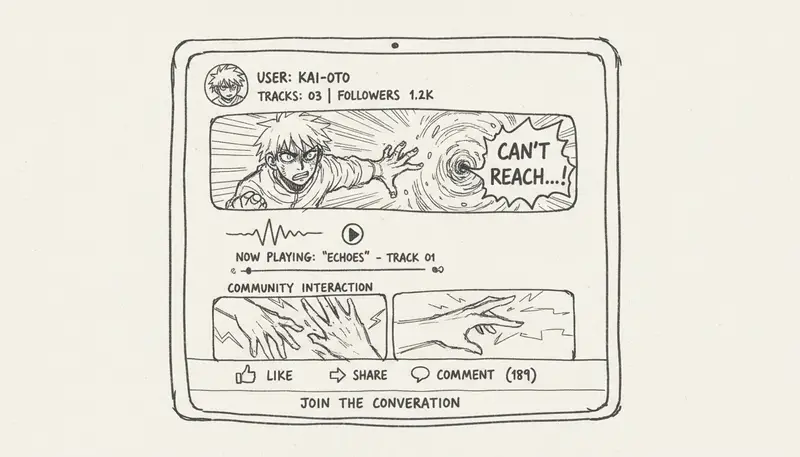
Short-form creators do not just need "music generation." They need audio that fits a repeated content workflow:
- Hook-ready intros
- Loop-friendly background tracks
- Creator voice consistency
- Faster iteration for campaign variations
- Easier versioning for different platforms
That means the best AI audio apps are drifting toward creator operating systems rather than single-purpose generators.
MusicMake.ai is well positioned here because its toolset can support idea generation, lyric refinement, style shaping, track edits, and iterative music chat in one place.
Trend 7: Accessibility Matters More Than Raw Complexity
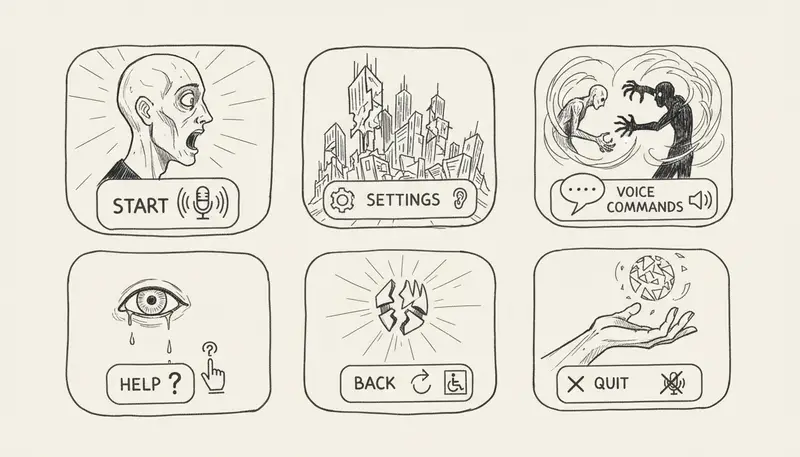
The market is also moving toward simpler control surfaces. Most users are not producers, audio engineers, or prompt specialists.
They want products that let them say:
- "Make it warmer."
- "Take out the drums."
- "Only keep the melody."
- "Make the ending shorter."
- "Give me a cleaner version for background use."
This is why natural-language control is becoming more important than exposing every technical parameter. The real accessibility win is not removing power. It is translating music judgment into tool actions.
What This Means for Builders
If you are building in AI audio, the next wave is not about adding random features. It is about choosing the right product shape.
The strongest opportunities are:
| Opportunity | Why It Matters |
|---|---|
| Agent-led creation | Users need help turning feedback into better prompts and edits. |
| Connected editing tools | Creation, cover, extend, replace, and vocal tools work better together. |
| Source-rights awareness | Creators need cleaner input boundaries and documentation habits. |
| Creator workflows | Repeatable outputs for content, client work, and releases matter more than one-off demos. |
| Fewer dead ends | Products should help users recover from bad generations instead of retrying blindly. |
What This Means for Creators
When evaluating an AI music app in 2026, ask these questions:
- Can I revise a weak result without starting over?
- Can I move from lyrics or style ideas into a full track?
- Can I use cover, extend, replace, or vocal tools when needed?
- Can the product help me express feedback in plain language?
- Can I keep a usable record of how the song was made?
If the answer is no, the product may still be interesting, but it is probably not mature enough for repeated creator work.
Why MusicMake.ai Matters in This Shift
MusicMake.ai stands out when you evaluate it through workflow rather than hype.
The product story is:
- Start with an idea or rough prompt.
- Use Music Agent to sharpen direction.
- Generate or edit with the right tool.
- Use lyrics, style, cover, extend, mashup, replace, or vocal workflows as needed.
- Keep iterating until the song matches the intent.
That is a more durable product direction than treating AI music generation as a one-click novelty.
Bottom Line
The most important AI audio and music app trend in 2026 is the move from isolated generation to guided creative systems.
Creators want:
- better revisions
- clearer tool selection
- less wasted output
- more usable editing
- stronger documentation
That is exactly why Music Agent-style products are gaining importance. The real innovation is not that an app can generate a song. It is that the app can help users get from "this is not right" to "this is what I meant" much faster.
Last reviewed: June 7, 2026.
Yazar

Kategoriler
Daha Fazla Yazı
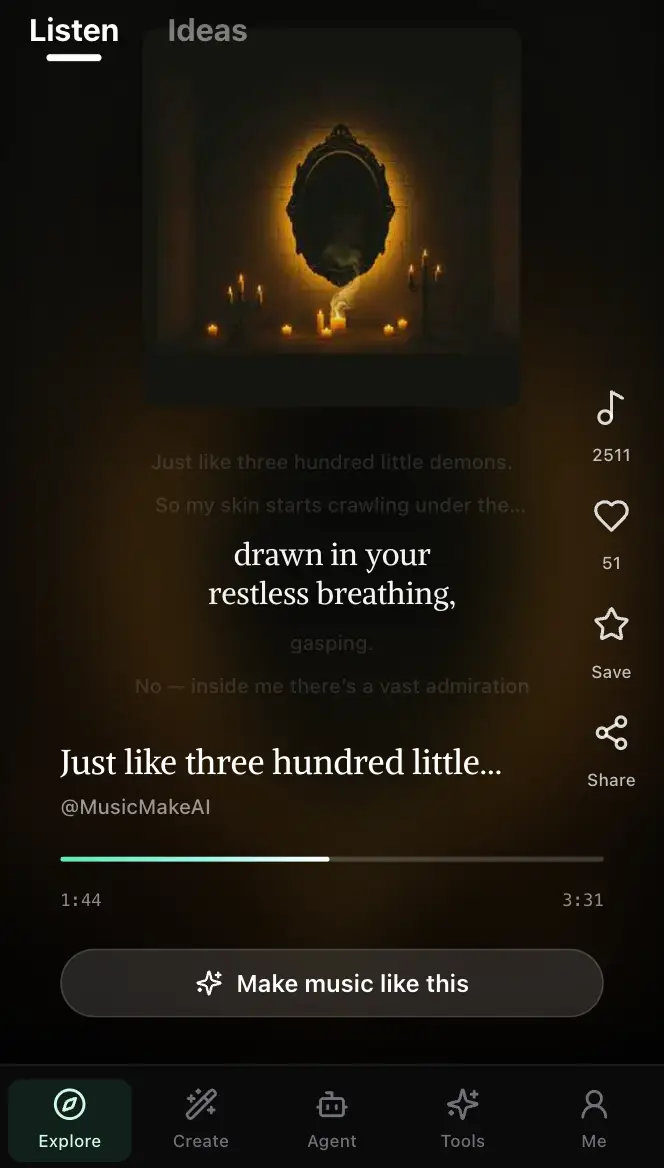
MusicMake.ai Mobile Update: Create Music From Your Phone Like an App
MusicMake.ai now gives creators a complete mobile flow for listening, generating, refining with Music Agent, opening tools, and managing songs from a phone.
AI Songwriting Guide: How to Write Songs with AI in 2026
Learn how to use AI songwriting tools to write better songs faster. Step-by-step guide covering lyrics, melody, arrangement, and production with AI assistance.
how to become a music producer with ai tools - MusicMake.ai Guide
Learn about how to become a music producer with ai tools with this comprehensive guide from MusicMake.ai.