Copyright AI Music News 2026: How Creators Should Read Legal Updates
A practical 2026 guide to AI music copyright news: what to trust, what to ignore, and how creators can prepare releases with better documentation.
Why AI Music Copyright News Is Easy to Misread
AI music copyright is one of the noisiest areas in creative technology. One article says AI music cannot be copyrighted. Another says creators own everything. A third claims a lawsuit has changed the entire industry overnight.
Most creators do not need hype. They need a way to separate reliable legal updates from vague or exaggerated claims.
This guide explains how to read AI music copyright news in 2026, what official sources currently support, and how MusicMake.ai users can prepare cleaner release records.
This is general information, not legal advice.
Start With the Stable Principles
Before reacting to any news story, anchor your thinking around five practical principles:
- AI systems are not legal authors.
- Human authorship still matters for copyright claims.
- Platform commercial-use rights come from terms and plans.
- Uploaded source material still needs permission.
- Distribution and video platforms may require AI or synthetic media disclosure.
Official sources worth checking:
- U.S. Copyright Office guidance on works containing AI-generated material
- U.S. Copyright Office AI copyrightability report
- YouTube altered or synthetic content disclosure policy
- EU AI Act official text on EUR-Lex
If a news article contradicts those sources, check the primary document before changing your workflow.
What Counts as Useful Copyright News?
Good AI music copyright news usually includes at least one of these:
| News Type | Why It Matters |
|---|---|
| Official agency guidance | Helps creators understand registration, authorship, or disclosure. |
| Final court decisions | May clarify specific legal issues in a jurisdiction. |
| Filed complaints or settlements | Shows where industry conflict is moving, but may not settle the law. |
| Platform policy updates | Directly affects uploads, monetization, labeling, and takedowns. |
| Distributor requirements | Impacts whether your track can reach streaming or content libraries. |
| Licensing deals | Signals market direction, but does not automatically change your rights. |
Weak AI copyright news often relies on unnamed sources, broad claims, or dramatic numbers without linking to court filings, laws, official statements, or platform policies.
The Biggest Misunderstandings in AI Music Copyright
Misunderstanding 1: Commercial Use Means Full Copyright Ownership
Commercial use means a platform allows certain business uses under its terms. It does not automatically mean you own full copyright in every generated element worldwide.
Before using a track in a commercial project, verify:
- Your current plan terms
- The output license
- Whether use is exclusive or non-exclusive
- Distribution and resale limits
- Source material rights
- Client contract requirements
For MusicMake.ai, check current pricing, product pages, and the changelog because the platform evolves quickly.
Misunderstanding 2: AI Music Is Automatically Public Domain
Some purely AI-generated material may have limited copyright protection, but that does not make every output free for anyone to use. Platform contracts, uploaded source rights, metadata rules, and distribution terms can still control use.
Misunderstanding 3: Prompting Alone Always Creates Copyright
Prompt history is useful evidence of creative direction, but current U.S. Copyright Office analysis is cautious about treating prompts alone as sufficient control over the expressive output. Stronger records often include human lyrics, arrangements, edits, recordings, selection, mixing, or material modification.
Misunderstanding 4: Voice Cloning Is Just Another Cover
Voice cloning and artist soundalikes can involve rights of publicity, consent, unfair competition, platform policy, trademark, privacy, and contract issues. Treat real-person voice use as a higher-risk workflow unless you have permission.
Misunderstanding 5: A Lawsuit Headline Solves the Law
Complaints, motions, settlements, and final judgments are different things. A filed lawsuit shows a dispute. A settlement may not create precedent. A final ruling may apply only to specific facts and jurisdiction.
A Better Way to Track AI Music Copyright News
Use this source hierarchy:
- Official law, regulation, or agency guidance.
- Court filings and final decisions.
- Platform or distributor policy pages.
- Direct statements from rights holders or AI platforms.
- Reputable legal analysis that cites primary sources.
- News summaries.
- Social posts and screenshots.
If a claim is important enough to change your release strategy, it is important enough to verify at the primary source.
What Creators Should Do Right Now
1. Document Human Creativity
Keep records of:
- Human-written lyrics
- Arrangement decisions
- Music Agent feedback and prompt revisions
- Output versions considered and rejected
- DAW edits
- Mixing and mastering work
- Recorded vocals or instruments
- Final selection decisions
2. Keep Source Audio Clean
Do not upload source material unless you can prove you may use it. This applies to:
- Covers
- Stems
- Vocals
- Samples
- Loops
- Reference tracks
- Client files
- Public-domain or Creative Commons works with conditions
3. Avoid Misleading Metadata
Do not market AI music as if it features a real artist who did not participate. Avoid artist names, fake features, deceptive soundalike claims, or metadata that suggests permission you do not have.
4. Follow Platform Disclosure Rules
For videos, shorts, ads, or realistic synthetic performances, check the destination platform's current disclosure policy. YouTube's policy is a useful public reference, but other platforms and distributors may have their own rules.
5. Recheck Terms Before High-Value Uses
For client campaigns, sync placements, games, podcasts, stock libraries, paid ads, or brand work, do not rely on an old blog post or screenshot. Reopen the current terms and plan page.
Where MusicMake.ai Fits
MusicMake.ai started from a simple AI music generation problem: users could describe a song, but when the result was wrong, they often did not know how to turn feedback into a better prompt.
That is why the product has moved toward a Music Agent workflow. The Music Agent works like a Music Chat, Song Agent, and Music GPT-style assistant for music creation. It helps users express feedback such as:
- "It still has a beat."
- "Make it simpler."
- "Only keep the guitar."
- "Do not add background instruments."
- "Replace this section with something calmer."
The value is not just conversation. The value is converting feedback into clearer creative instructions, reducing wasted credits, and producing a more traceable workflow.
MusicMake.ai users can combine the agent with:
- Generate
- AI Lyrics Generator
- AI Music Style Generator
- Cover
- Extend
- Add Tracks
- Mashup
- Replace Section
- Vocal Remover
Those records will not replace legal advice, but they can help show how a track moved from idea to prompt, generation, critique, edit, and final export.
Release Checklist for AI-Assisted Music
| Step | Question |
|---|---|
| License | Does your current plan allow the intended use? |
| Source files | Do you own or have permission for every uploaded asset? |
| Human authorship | What lyrics, arrangement, edits, recordings, or selection did you contribute? |
| Voice and likeness | Are you using or implying a real person's voice, identity, or endorsement? |
| Metadata | Are title, artist, credits, and descriptions honest? |
| Disclosure | Does the destination require AI or synthetic media labeling? |
| Evidence | Can you show prompts, Music Agent revisions, versions, exports, and receipts? |
| Legal review | Is the use valuable enough to justify professional advice? |
How Businesses Should Evaluate AI Music
If you are licensing or commissioning AI-assisted music, ask for:
- The AI platform used
- Plan or license confirmation
- Source material clearance
- Human contribution summary
- AI disclosure status
- Territory and use case
- Indemnity language where appropriate
- Final file and project records
For brand campaigns, films, games, podcasts, and stock catalogs, treat AI music as a workflow that needs documentation, not as a magic file with automatic rights attached.
Frequently Asked Questions
Is AI music legal to use commercially?
It can be, depending on the platform terms, source material, destination policy, and use case. "Commercial use allowed" is a starting point, not the whole analysis.
Can I copyright a song made with AI?
You may be able to claim protection in human-authored elements, such as lyrics, arrangement, edits, recordings, and selection. Pure AI-generated material may be treated differently.
Should I disclose AI use?
Check the destination. Some platforms require disclosure for realistic altered or synthetic content, and clients may require disclosure even when a platform does not.
Does Music Agent solve copyright risk?
No. Music Agent improves the creative process and documentation. It does not guarantee copyright registration, platform acceptance, or legal clearance.
Bottom Line
The best way to handle AI music copyright news is to stay grounded:
- Read primary sources.
- Separate copyright from platform licenses.
- Keep source audio clean.
- Document human creativity.
- Follow disclosure rules.
- Use Music Agent to make feedback and revision history clearer.
AI music law will keep changing. A careful workflow makes those changes easier to handle.
Last reviewed: June 7, 2026. This article provides general information and is not legal advice.
ผู้เขียน

โพสต์เพิ่มเติม
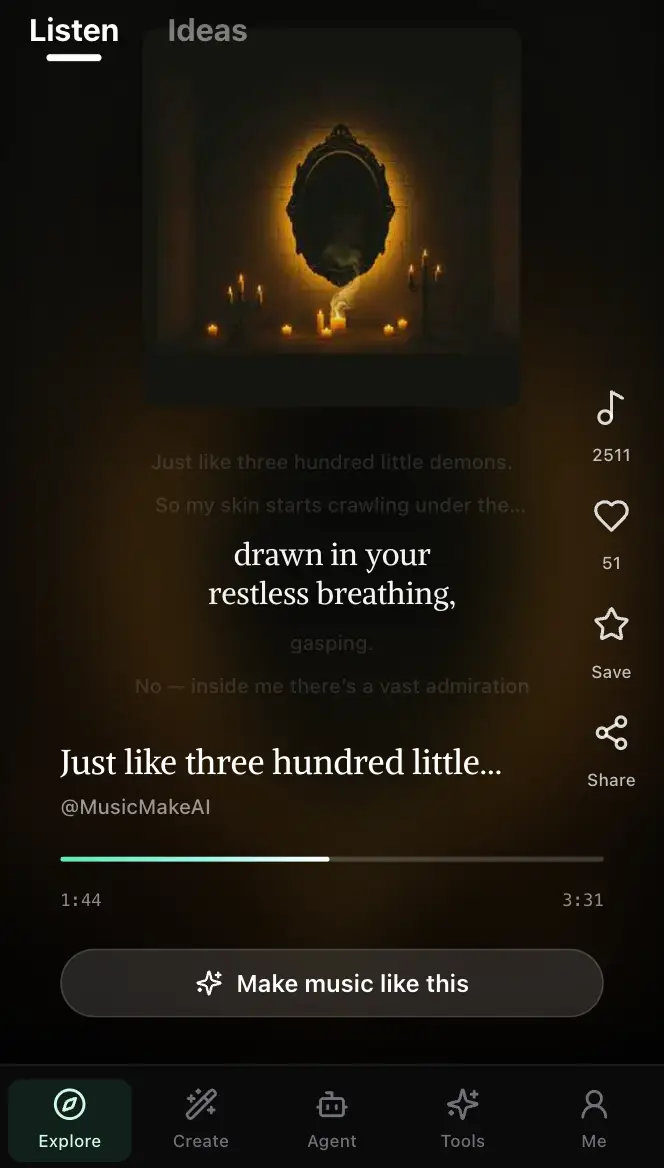
MusicMake.ai Mobile Update: Create Music From Your Phone Like an App
MusicMake.ai now gives creators a complete mobile flow for listening, generating, refining with Music Agent, opening tools, and managing songs from a phone.
AI Songwriting Guide: How to Write Songs with AI in 2026
Learn how to use AI songwriting tools to write better songs faster. Step-by-step guide covering lyrics, melody, arrangement, and production with AI assistance.
how to become a music producer with ai tools - MusicMake.ai Guide
Learn about how to become a music producer with ai tools with this comprehensive guide from MusicMake.ai.