Current Music Trends 2026: AI Creation, Spatial Audio, and Creator Workflows
See the 2026 music trends creators can act on now, from AI-assisted production and short-form audio to spatial mixes and safer release workflows.
Introduction: The Sound of 2026
Music in 2026 is being reshaped by AI collaboration, spatial audio, short-form platforms, and creator-first workflows. This guide focuses on the practical trends creators can act on, without treating fast-changing market numbers as permanent facts.
Top 10 Music Trends Dominating 2026
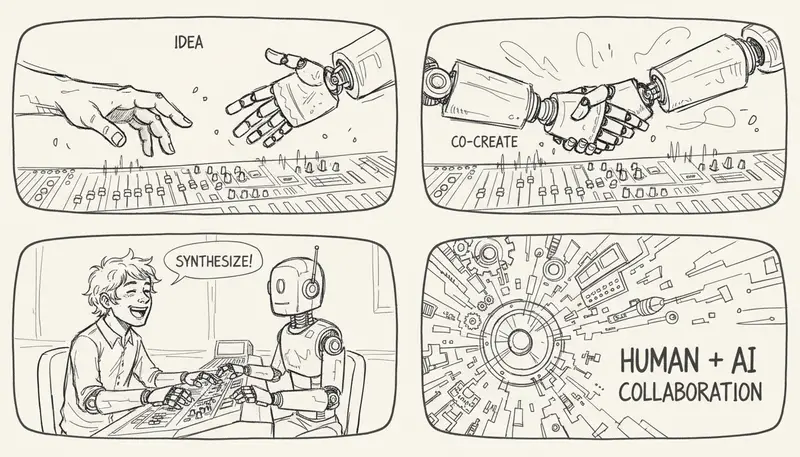
1. AI-Human Collaborative Music Creation
The biggest shift in music production history
What's happening:
- Artists using AI to generate initial ideas
- Human refinement and emotional depth added
- New genre: "AI-Collaborative" recognized officially
- Major artists releasing AI-assisted albums
Signals to watch:
- Artists use AI for sketches, references, lyrics, arrangement ideas, and alternate versions
- Human selection and taste still decide which ideas survive
- The winning workflow is no longer one prompt box; it is a loop of generate, edit, compare, and publish carefully
- Rights, source material, and disclosure rules matter more as AI-generated music becomes common
MusicMake.ai follows this direction: Generate creates the first idea, AI Lyrics and AI Style Generator shape the concept, and tools like Cover, Extend, Add Tracks, Mashup, Replace Section, and Vocal Remover help creators keep working after the first draft. Music Agent adds the next layer by routing plain-language goals to the right tool. Check the changelog for shipped updates.
2. Spatial Audio Goes Mainstream
Immersive listening becomes the standard
Why it matters:
- 360-degree sound experience
- Enhanced emotional impact
- New creative possibilities
- Hardware adoption at scale
Platform support to verify:
| Platform | What to Check |
|---|---|
| Apple Music | Current Dolby Atmos catalog, device support, and mixing requirements |
| Spotify | Current immersive-audio availability and supported devices |
| Amazon Music | Current Dolby Atmos catalog and playback requirements |
| Tidal | Current immersive format support and plan requirements |
Creator takeaway:
- Make stereo versions work first
- Prepare stems if you plan spatial mixes
- Verify platform requirements before budgeting a spatial release
3. Short-Form Music Dominance
TikTok and Reels reshape song structure
The new song structure:
- Traditional (2020): Intro → Verse → Chorus → Verse → Chorus → Bridge → Chorus → Outro
- 2026 Standard: Hook → Viral Moment → Hook (15-30 seconds optimized)
Practical patterns:
- Strong hooks need to arrive early
- Creators often test short edits before committing to full arrangements
- Multiple versions matter: intro cut, chorus-first cut, instrumental cut, and loopable background cut
- AI tools help generate options quickly, but audience feedback decides what works
Industry response:
- Labels hiring "viral moment consultants"
- Artists recording multiple "hook versions"
- AI tools optimizing for virality
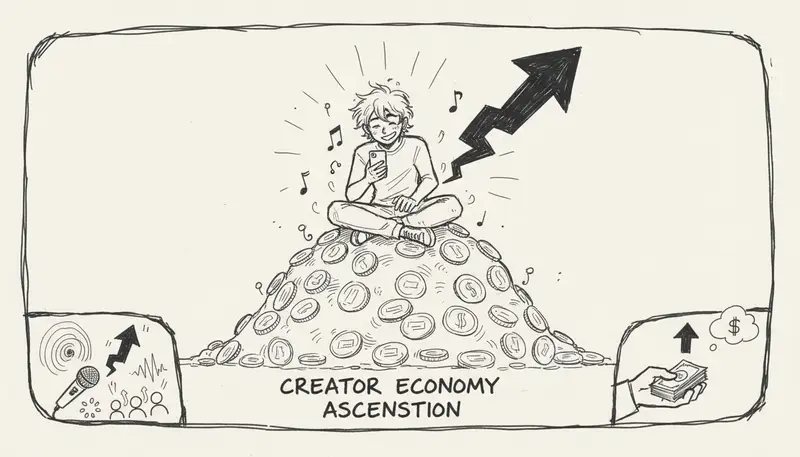
4. Creator Economy Music Revolution
Independent artists outpacing labels
Shifting power dynamics:
- Independent creators can now build faster demo cycles
- Distribution, short-form promotion, and direct-to-fan tools reduce reliance on a traditional studio pipeline
- The bottleneck moves from "can I make a track?" to "can I select, edit, clear, and market the right track?"
A practical creator stack:
| Need | Typical Tool Type | What to Verify |
|---|---|---|
| Song ideas | AI music generator or Music Agent | Prompt control, revision tools, and export terms |
| Distribution | Distributor | Store coverage, fees, and rights handling |
| Promotion | Short-form and analytics tools | Audience fit and platform rules |
| Monetization | Membership, sync, licensing, or direct sales | License terms and documentation |
Tools enabling independence:
- AI music generation (MusicMake.ai, Suno)
- Distribution (DistroKid, TuneCore)
- Marketing (Chartmetric, Spotify for Artists)
- Monetization (Patreon, Bandcamp)
5. Nostalgic Soundscapes: Y2K Revival 2.0
2000s music influence peaks
Sound characteristics:
- Synth-heavy production
- Auto-tune aesthetic (intentional)
- Electronic rock fusion
- R&B-pop hybrid vocals
What to listen for:
- Brighter synth hooks and early-2000s drum textures
- Pop-R&B phrasing, glossy vocal stacks, and maximalist choruses
- "Vintage digital" production choices used as a deliberate style, not only nostalgia
Key elements:
- ✅ Processed vocals
- ✅ Electronic drums with live feel
- ✅ Maximalist arrangements
- ✅ Nostalgic synth patches
6. Personalized Music Experiences
AI curates music just for you
Personalization evolution:
- 2020: Playlist recommendations
- 2023: Mood-based suggestions
- 2026: Real-time generated content matching your taste
How it works:
- AI analyzes your listening history
- Learns your preferences, moods, contexts
- Generates/curates music in real-time
- Adapts to feedback continuously
Platforms and workflows to watch:
- Spotify Daylist: Context-aware playlists
- Apple Music Personal Radio: AI DJ for each user
- Amazon Amp: Personalized live radio
- MusicMake.ai workflow: Generate, lyrics, style, cover, extend, stems, and Music Agent for creator-led personalization
7. Live Music Renaissance
Post-pandemic concert culture thrives
Industry direction:
- Artists are combining live performance, visual systems, fan interaction, and digital extras
- Smaller premium events and hybrid streams are becoming part of the touring playbook
- AI is more useful for pre-production, visuals, and versioning than for replacing the live performance itself
New experiences:
- Hybrid concerts: Live + VR simultaneous
- AI-enhanced performances: Real-time visuals
- Interactive elements: Audience influences setlist
- Intimate venues: Smaller, premium experiences
What creators can copy:
- Build alternate mixes for live, short-form, and background use
- Prepare stems for visualizers and reactive stage content
- Keep licensing and source-material records for every version
8. Audio Wellness & Functional Music
Music designed for specific outcomes
Why it is growing:
- Listeners want music for work, sleep, meditation, workouts, and stress reduction
- Creators need loopable, non-distracting versions instead of only full songs
- Personalization makes background music feel more useful to the listener
Categories:
| Category | Purpose | Popular Services |
|---|---|---|
| Focus | Deep work, study | Brain.fm, Endel |
| Sleep | Rest, recovery | Calm, Pzizz |
| Meditation | Mindfulness | Headspace, Insight Timer |
| Workout | Energy, motivation | Apple Fitness+, Peloton |
| Stress | Anxiety reduction | Aura, Balance |
AI innovation:
- AI can generate or adapt music for context, duration, and intensity
- Claims about medical, cognitive, or focus benefits should be treated carefully unless backed by specific research
- For creators, the immediate opportunity is making clean, loopable, rights-aware background versions
9. Genre Fluidity: The End of Categories
Boundaries between genres dissolve
The shift:
- Artists describe music by mood, scene, and energy instead of strict genre labels
- Streaming and short-form platforms reward hybrid sounds that are easy to tag and reuse
- Prompt-based creation makes cross-genre experimentation easier
Popular fusions 2026:
- Country-Trap: Blend of country storytelling + trap beats
- K-Classical: Korean pop + orchestral elements
- Ambient-Hip Hop: Lo-fi production meets rap
- Latin-EDM: Regional rhythms + electronic drops
- Jazz-Core: Jazz improvisation + hardcore energy
Why it's happening:
- Global music access (streaming)
- AI tools make fusion easier
- Gen Z rejects rigid categorization
- Cross-cultural collaboration increases
10. Music NFTs and Blockchain Integration
Digital ownership evolves
Practical applications 2026:
- Royalty tracking: Automated, transparent payments
- Ownership verification: Irrefutable copyright proof
- Fan engagement: Exclusive access tokens
- Collectibles: Limited edition releases
What to verify before using it:
- Whether the chain, marketplace, and royalty workflow are still active
- Whether buyers understand what rights they receive
- Whether copyright, distribution, and collection-society obligations are compatible
Use cases:
| Application | Example | Status |
|---|---|---|
| Royalty splits | Splits happen automatically on-chain | Mainstream |
| Copyright | Timestamp and ownership proof | Growing |
| Fan tokens | Access to exclusive content/events | Popular |
| Music shares | Fans invest in songs, earn royalties | Emerging |
Regional Music Trends
Global Sounds Going Mainstream
Africa: Afrobeats Continues to Dominate
Signals:
- Afrobeats remains a major global influence
- Cross-border collaborations keep expanding
- Rhythm and percussion ideas from African scenes show up in pop, dance, and creator music
Artists and scenes to study:
- Established Afrobeats artists and producers
- Newer regional scenes that influence dance, pop, and short-form sound design
Latin America: Reggaeton Evolution
Trends:
- Reggaeton fusion with global genres
- Regional Mexican music global breakout
- Portuguese-language music rising
Signals:
- Reggaeton, regional Mexican, and Latin pop keep crossing into global playlists
- Producers mix Latin rhythms with EDM, pop, trap, and acoustic songwriting
Asia: K-Pop and Beyond
Developments:
- K-Pop: Stable dominance continues
- J-Pop: International growth accelerates
- C-Pop: TikTok-driven global discovery
- Southeast Asian pop: Emerging market
Technology Driving Trends
The Tech Stack of Modern Music
Creation tools:
- AI composition: MusicMake.ai, Suno, Udio
- AI mastering: LANDR, CloudBounce, eMastered
- Virtual instruments: Native Instruments, Arturia
- Collaboration: Splice, Soundtrap, BandLab
Distribution:
- Independent: DistroKid, TuneCore, Amuse
- AI workflow: MusicMake.ai for drafts, iterations, and generation records where available
- Social: TikTok Sound, Instagram Music
Consumption:
- Streaming: Spotify, Apple, Amazon, YouTube
- Spatial: Dolby Atmos platforms
- Personalized: AI-curated experiences
What's Coming Next
Predictions for Late 2026 and Beyond
Short-term (2026):
- Clearer platform rules for AI-assisted music
- More creator workflows that combine generation, editing, and rights documentation
- More demand for stems, alternate mixes, and short-form-ready versions
Medium-term (2027-2028):
- More personalized music experiences
- Better source separation and arrangement editing
- More disclosure, attribution, and provenance tooling
Long-term (2029-2030):
- More real-time adaptive music in games, wellness, and creator apps
- Better integration between AI generation, DAWs, distribution, and rights records
- More pressure on creators to prove originality and licensing hygiene
How to Stay Ahead
For Music Creators
Action items:
- ✅ Learn AI tools - Don't resist, embrace efficiency
- ✅ Think short-form first - Design for viral moments
- ✅ Prepare stems - Keep options open for remixes, spatial mixes, and edits
- ✅ Build direct relationships - Own your audience
- ✅ Experiment with genre - Use mood, scene, and energy as creative inputs
For Music Consumers
Maximize your experience:
- Upgrade to spatial audio-capable headphones
- Explore AI-curated personalized playlists
- Support independent artists directly
- Attend live events (hybrid options available)
- Try functional music for productivity
FAQ: Music Trends 2026
Q: Is AI replacing human musicians?
A: No—AI is augmenting human creativity. The most successful music combines AI efficiency with human emotion and authenticity. Think of AI as a powerful instrument, not a replacement.
Q: Are traditional genres dying?
A: Not dying, but evolving. Genre labels remain useful for discovery, but artists are less bound by them. Expect more fluid categorization systems.
Q: How can independent artists compete?
A: Independent artists have more leverage than before, but the market is also more crowded. AI tools, accessible distribution, and direct-to-fan platforms help most when paired with a clear audience and consistent release process.
Q: What equipment do I need to create modern music?
A: Minimum: Computer or phone, an AI music workflow, and a place to store drafts. For release work, add a DAW, monitoring, rights documentation, and a distribution account when needed.
Conclusion: Embrace the Evolution
2026 rewards creators who can move from idea to edited version quickly while keeping quality, rights, and audience fit under control. AI helps most when it becomes part of a repeatable workflow, not a shortcut around taste.
Key takeaways:
- 🎵 AI collaboration is becoming a normal part of drafting and editing
- 🎧 Spatial audio is worth tracking, but stereo still has to work
- 📱 Short-form feedback shapes long-form decisions
- 🌍 Global sounds influence local creator workflows
- 🎤 Independent artists need both tools and a clear audience strategy
The strongest creators will combine faster tools with better judgment.
Open Music Agent for your next music idea →
Auteur

Categorieën
Meer berichten
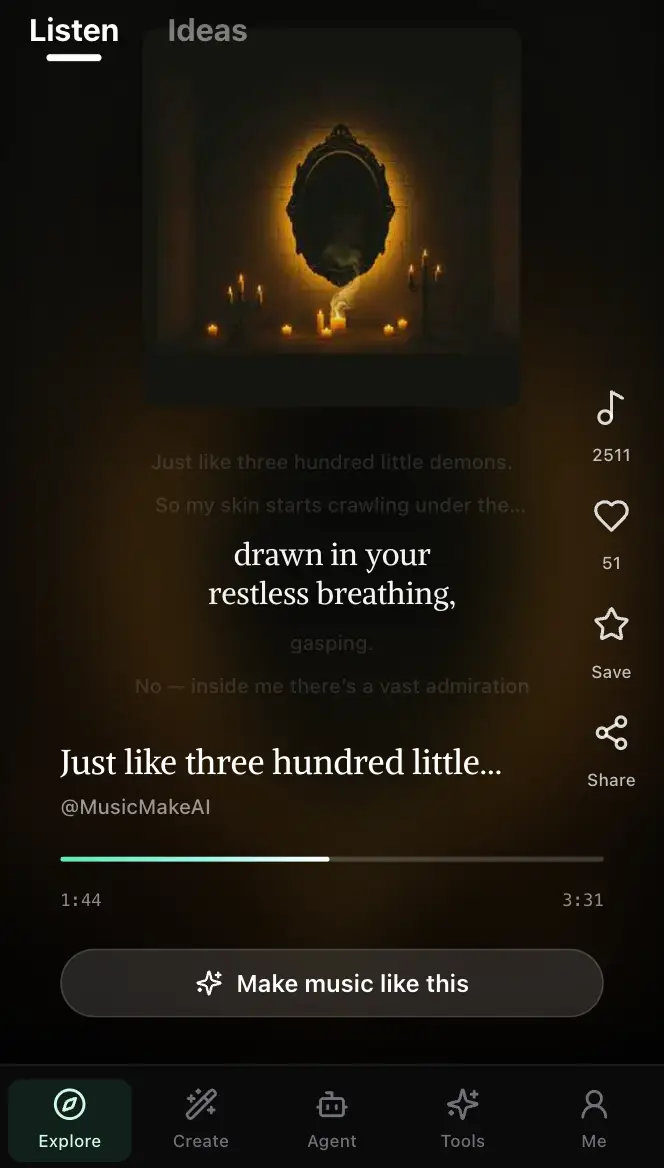
MusicMake.ai Mobile Update: Create Music From Your Phone Like an App
MusicMake.ai now gives creators a complete mobile flow for listening, generating, refining with Music Agent, opening tools, and managing songs from a phone.
AI Songwriting Guide: How to Write Songs with AI in 2026
Learn how to use AI songwriting tools to write better songs faster. Step-by-step guide covering lyrics, melody, arrangement, and production with AI assistance.
how to become a music producer with ai tools - MusicMake.ai Guide
Learn about how to become a music producer with ai tools with this comprehensive guide from MusicMake.ai.