AI Music Regulation News 2026: What Creators Should Track
Track AI music regulation issues that affect creators, including copyright guidance, disclosure, voice rights, platform rules, and release checks.
AI music regulation is moving quickly, but not every headline is useful. Creators need a source-first view: what official guidance actually says, what is still unresolved, and what practical steps reduce risk before a release.
This article tracks the regulatory issues that matter most for AI music creators in 2026:
- Copyrightability and human authorship
- Training-data disputes and licensing pressure
- Synthetic media disclosure
- Voice, likeness, and soundalike concerns
- Platform terms and distribution rules
- Workflow records for commercial releases
This is general information, not legal advice.
Quick 2026 Snapshot
| Area | What Creators Should Know |
|---|---|
| Copyright | Pure AI output may have limited protection; human authorship remains central. |
| Platform licenses | Commercial-use rights come from terms and plans, not just copyright law. |
| Source audio | Uploaded vocals, stems, samples, and covers still need permission. |
| Synthetic disclosure | Video and social platforms may require disclosure for realistic altered or synthetic content. |
| Voice and likeness | Real-person voice cloning and artist soundalikes are higher-risk uses. |
| Documentation | Prompt history, edits, plan records, source licenses, and exports matter. |
The safest habit is to read official sources and current platform policies before publishing a high-value track.
Official Sources Worth Checking
Instead of relying on viral summaries, start here:
- U.S. Copyright Office guidance on works containing AI-generated material
- U.S. Copyright Office report on AI copyrightability
- YouTube altered or synthetic content disclosure policy
- Regulation (EU) 2024/1689, the EU AI Act, official EUR-Lex text
Use these sources as anchors, then check the current terms of the AI music platform and distribution destination you plan to use.
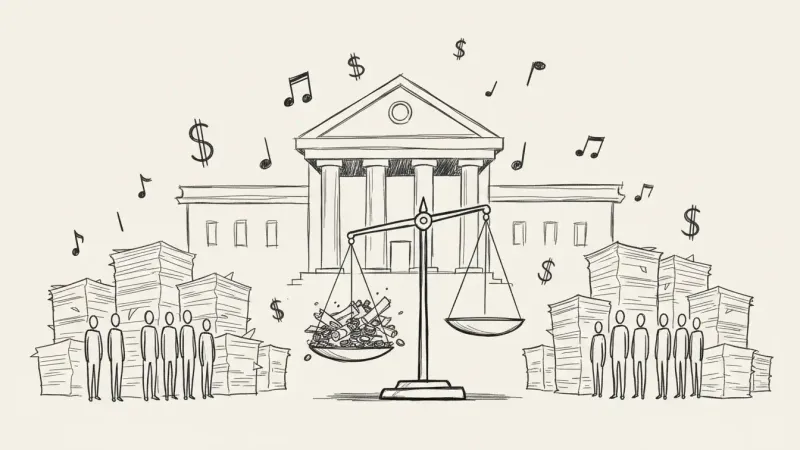
What Is Actually Settled?
1. AI Is Not the Legal Author
Current U.S. copyright guidance does not treat AI systems as authors. If you want a stronger claim, focus on human-authored elements: lyrics, arrangement, editing, selection, mixing, performance, and other expressive contributions.
2. Platform Terms Still Matter
Even when copyright protection is uncertain, platform terms can grant commercial-use rights. Those rights may control whether you can use a song in a client project, YouTube video, podcast, ad, game, or streaming release.
3. Uploaded Source Material Is Your Responsibility
If you upload a vocal, instrumental, sample, loop, or reference song, you still need the right to use it. AI transformation does not automatically clear the source.
4. Disclosure Rules Are Becoming Normal
Platforms are increasingly asking creators to identify realistic altered or synthetic media. YouTube, for example, has a disclosure policy for realistic content made or altered with AI. Music videos, voice clones, synthetic performances, or realistic artist imitations can trigger extra scrutiny.
What Is Still Unresolved?
Training Data Litigation
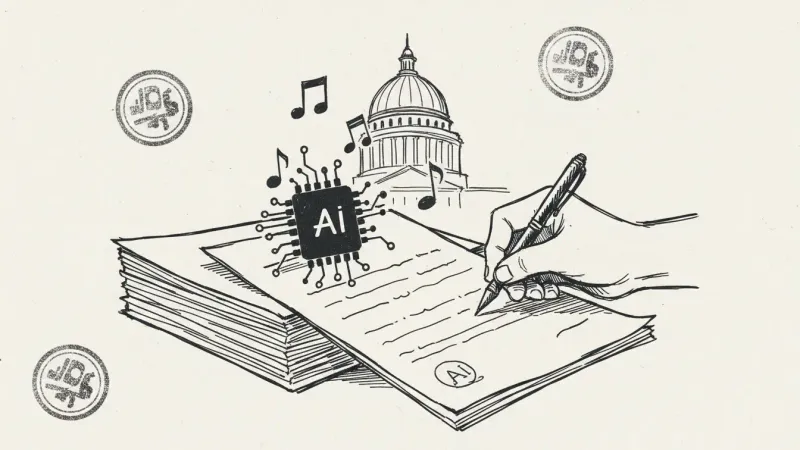
The music industry is still debating how copyright law applies to model training, output similarity, market substitution, and licensing. These issues may evolve through lawsuits, settlements, licensing deals, and legislation.
For creators, the immediate action is not to make legal predictions. It is to:
- Use reputable platforms.
- Avoid promising that any output has zero legal risk.
- Keep records of your workflow.
- Avoid unauthorized source material.
- Check whether your client or distributor has AI-specific requirements.
Copyright Registration for AI-Assisted Music
Registration offices may ask what part of a work was created by a human and what part was generated by AI. A one-click track and a heavily edited AI-assisted composition may be treated differently.
If registration matters, keep evidence of:
- Human-written lyrics
- Manual arrangement decisions
- DAW edits
- Recorded vocals or instruments
- Final selection and curation
- Prompt and revision history
Voice, Likeness, and Soundalikes
Voice cloning is not only a copyright issue. It can involve publicity rights, privacy rights, consent, trademark, unfair competition, platform policy, and artist contract issues. This is especially important for cover tools, vocal transformations, and prompts that name living artists.
Regional View Without the Hype
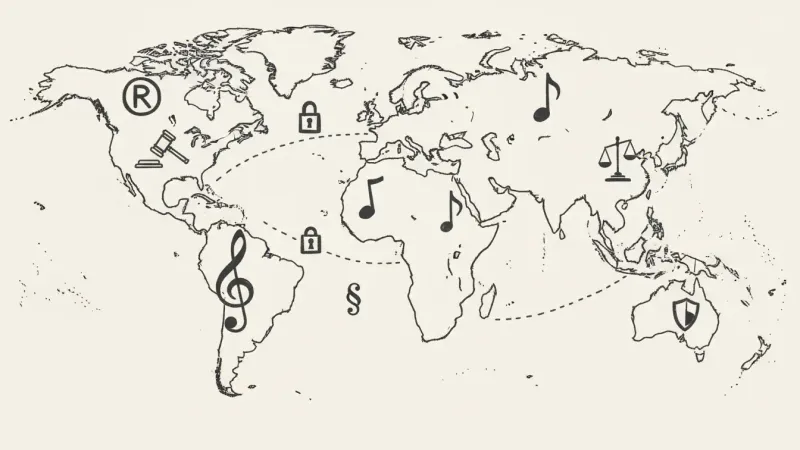
United States
The U.S. Copyright Office guidance is the main practical source for copyrightability and registration. It emphasizes human authorship and disclosure of AI-generated material in registration applications.
Creator takeaway: document what you contributed. Do not assume a generic prompt gives the same protection as human-written lyrics, editing, arrangement, or recorded performance.
European Union
The EU AI Act creates transparency and governance obligations for AI systems, including rules around synthetic content in certain contexts. It is not a simple "AI music copyright ownership law." Copyright and platform obligations still require separate analysis.
Creator takeaway: if you publish in the EU or serve EU users, watch transparency, labeling, and rights-reservation developments carefully.
United Kingdom and Other Jurisdictions
Different countries may take different approaches to computer-generated works, human authorship, text-and-data mining, and training exceptions. International releases should not rely on one country's rule as a universal answer.
Creator takeaway: when a track has meaningful revenue or client exposure, check the jurisdiction that controls the contract, platform, and audience.
Platform Policy Updates: How to Read Them
Do not assume all platforms treat AI music the same way. A song may be acceptable on one destination and require disclosure, additional rights proof, or different metadata on another.
Check these policy areas before upload:
| Policy Area | What to Verify |
|---|---|
| AI disclosure | Does the platform require you to label AI-generated or synthetic content? |
| Voice cloning | Are real-person voice models, impersonation, or soundalikes restricted? |
| Samples and covers | Do you need mechanical, master, or sync rights? |
| Monetization | Are AI-generated tracks eligible for ads, subscriptions, licensing, or library sales? |
| Metadata | Are artist names, featured artists, or "in the style of" claims allowed? |
| Takedown rules | What happens if a rights holder disputes the track? |
This is especially important for video platforms, stock libraries, podcast networks, ad campaigns, games, and client deliverables.
What This Means for MusicMake.ai Users
MusicMake.ai is built around a broader creative workflow than one-click generation. The Music Agent is designed to act like a Music Chat, Song Agent, and Music GPT-style assistant that helps users refine prompts, choose tools, and move through iterations.
That matters because regulation and platform rules increasingly reward clear documentation:
- What did you ask for?
- What feedback did you give?
- What did you change?
- Which tools did you use?
- Did you upload source audio?
- Did you have rights to that source?
- Which version became the final release?
MusicMake.ai tools that creators should document include:
- Generate
- AI Lyrics Generator
- AI Music Style Generator
- Cover
- Extend
- Add Tracks
- Mashup
- Replace Section
- Vocal Remover
- Music Agent
For current product capabilities, use the changelog rather than old screenshots or outdated blog summaries.
Practical Compliance Workflow for Creators
Before Generating
- Decide whether the song is personal, commercial, client, library, sync, or streaming use.
- Confirm the plan and terms allow the intended use.
- Avoid prompts that request a real artist's voice or direct imitation.
- Prepare only source files you own or have licensed.
During Creation
- Keep prompt history.
- Use Music Agent to convert vague feedback into specific constraints.
- Save drafts that show your creative direction.
- Record human edits, lyrics, arrangements, and DAW changes.
Before Release
- Check the destination platform's AI disclosure rules.
- Verify sample, cover, and voice rights.
- Avoid misleading metadata.
- Keep plan receipts and export records.
- Add legal review for high-value client, sync, ad, or catalog use.
Red Flags in AI Music Legal News
Be skeptical when an article claims:
- A new law has "fully solved" AI music ownership.
- Every AI-generated song is automatically copyrightable.
- Every AI-generated song is automatically public domain.
- A platform's usage terms are the same thing as worldwide copyright ownership.
- Voice cloning is safe if the result is not identical.
- Training data lawsuits have created one global rule.
- A tool can remove every legal risk from a track.
AI music regulation is real, but clean workflows and reliable sources matter more than exaggerated headlines.
Creator Checklist
| Task | Why It Matters |
|---|---|
| Read current platform terms | Commercial-use rights can change by plan. |
| Track human contributions | Human authorship is central to copyright claims. |
| Clear source files | Uploaded audio can create independent rights issues. |
| Avoid artist impersonation | Voice and likeness claims are high risk. |
| Follow disclosure rules | Video and music platforms may require labeling. |
| Save evidence | Good records help with clients, distributors, and disputes. |
| Watch the changelog | MusicMake.ai features evolve quickly. |
Bottom Line
The best AI music regulation strategy in 2026 is not panic. It is disciplined creation:
- Use current official sources.
- Verify platform terms.
- Keep source material clean.
- Document human creative work.
- Disclose synthetic content when the destination requires it.
- Use Music Agent to make the creative process more explicit and easier to revise.
Regulation will keep changing. A clear workflow gives you the best chance of adapting without rewriting every release decision from scratch.
Last reviewed: June 7, 2026. This article is general information and not legal advice.
Categorieën
Meer berichten
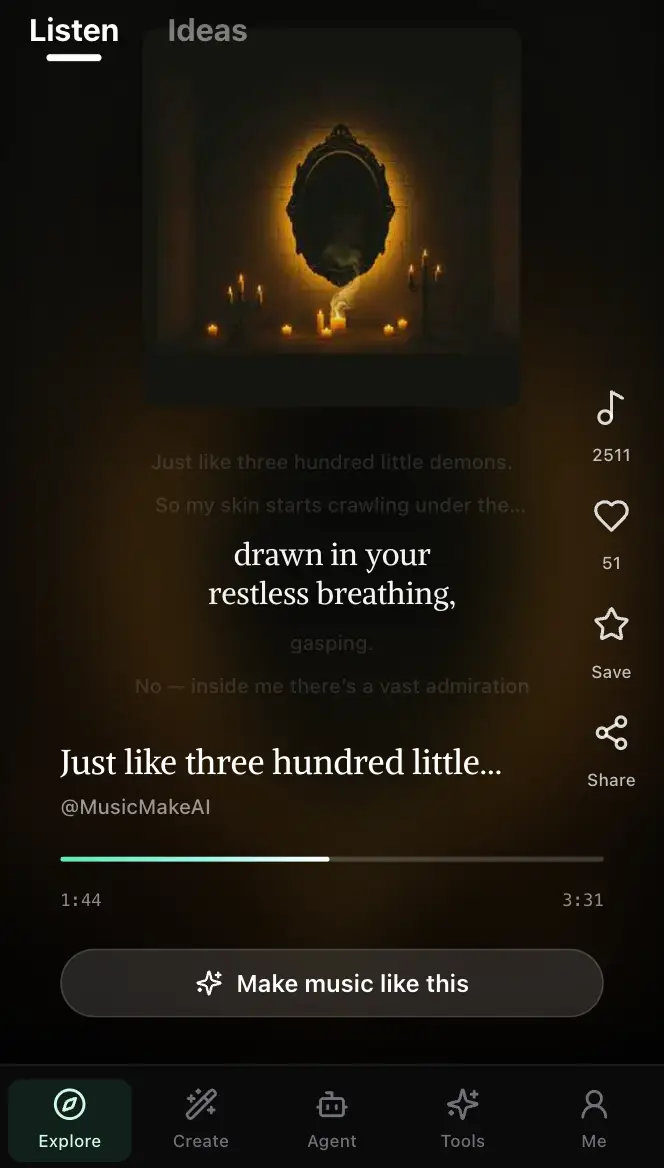
MusicMake.ai Mobile Update: Create Music From Your Phone Like an App
MusicMake.ai now gives creators a complete mobile flow for listening, generating, refining with Music Agent, opening tools, and managing songs from a phone.

AI Songwriting Guide: How to Write Songs with AI in 2026
Learn how to use AI songwriting tools to write better songs faster. Step-by-step guide covering lyrics, melody, arrangement, and production with AI assistance.
how to become a music producer with ai tools - MusicMake.ai Guide
Learn about how to become a music producer with ai tools with this comprehensive guide from MusicMake.ai.