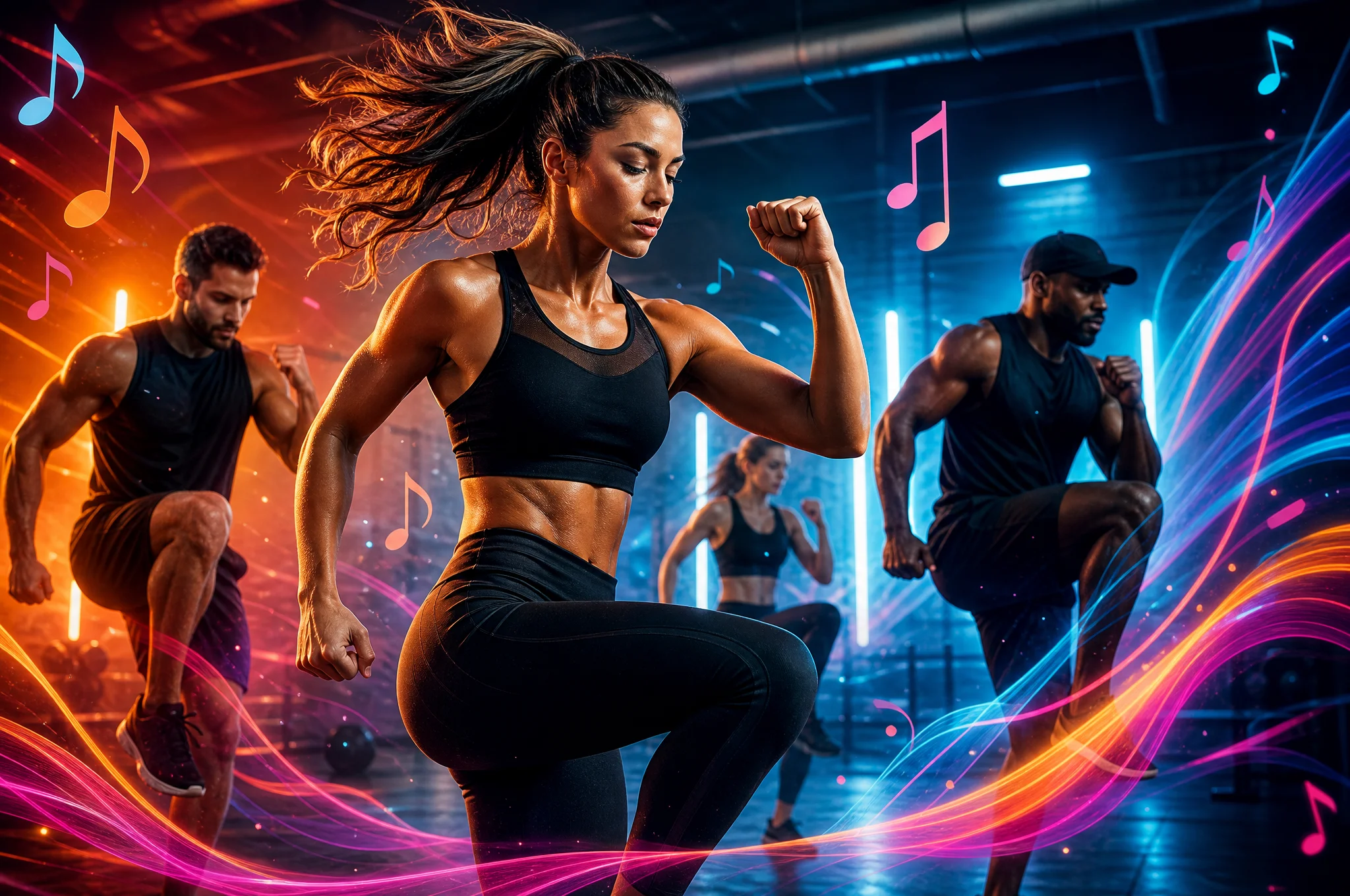
Gym Music Style: A Complete Guide to AI Music Creation
Explore gym music styles and subgenres, and master AI music creation techniques. Create professional-grade workout music with MusicMake.ai.
What Is Gym Music?
Gym/Workout Music is a genre specifically designed for exercise and fitness scenarios, characterized by high energy, powerful rhythms, and motivational drive. The primary goal of this music is to enhance athletic performance, extend workout duration, and make the exercise experience more enjoyable.
The core of gym music lies in the synchronization between rhythm and movement. Research shows that exercising in sync with a musical beat can improve endurance, reduce perceived fatigue, and boost overall athletic performance. This is why BPM (beats per minute) is one of the most critical parameters for gym music — running typically requires 120-140 BPM, while high-intensity interval training (HIIT) demands 140-180 BPM.
In AI music creation, gym music is a highly practical application. AI can precisely generate music matching specific BPMs and energy levels for different exercise types and intensities, helping fitness instructors, athletes, and content creators obtain the ideal workout soundtrack.
Whether you're a gym instructor, sports video creator, or fitness app developer, MusicMake.ai can help you quickly generate professional-grade workout music assets. From warm-up to high-intensity training to cool-down, AI can precisely match the energy demands of each phase. Here are several commonly used creation methods.
Core Characteristics
- High BPM: Typically between 120-180 BPM, matching different exercise intensities. Running, cycling, and other cardio exercises prefer 120-140 BPM, while HIIT and CrossFit require 150-180 BPM extreme tempos to match explosive movements
- Powerful Rhythms: Prominent kick and snare drums provide a steady workout beat. The arrangement of kick and snare directly influences the exerciser's cadence and power output
- Motivational: Full of energy and drive,ignite workout enthusiasm. Vocal shouts, synth effects, and progressive build-ups together create a "push past your limits" auditory atmosphere
- Repetitive Structure: Looping rhythmic patterns help maintain workout rhythm. The steady groove of 4/4 time allows exercisers to stay in sync without extra mental effort
- Escalating Energy: Musical energy increases with exercise intensity, typically peaking at the climax. Well-designed workout music features multiple drops and breakdowns that perfectly mirror the rhythm of interval training
- Electronic Elements: Extensive use of synthesizers, electronic drums, and samples. Electronic sounds are highly malleable, capable of creating "surreal" energy that doesn't exist in nature
- Prominent Bass: Powerful low frequencies provide "thrust" for exercise. Sub-bass and 808 drum machine resonance can physically stimulate the exerciser's body response
- Concise Lyrics: Lyrics are typically short and punchy, avoiding complex narratives. Repeated hooks and slogan-style lyrics can be quickly processed by the brain during high-intensity exercise, forming psychological cues
- Tonal Density: Gym music typically employs high-density mixing with a full frequency spectrum, avoiding "gaps" in the music that might distract or demotivate the exerciser
- Dynamic Compression: Uses high dynamic compression ratios to ensure volumeconsistently remain at consistently high levels, preventing sudden drops that could break workout rhythm
History
The history of gym music traces back to the disco era of the 1970s. The powerful rhythms and high-energy atmosphere of disco clubs inspired aerobics founder Kenneth Cooper to begin incorporating music into exercise training. In the 1980s, Jane Fonda's aerobics videos brought gym music to the mainstream.
From the 1990s to the 2000s, with the rise of electronic dance music (EDM), gym music began to heavily adopt electronic music elements. Techno, House, Trance, and other EDM styles became standard in gyms. During this period, gym music started to be segmented by exercise type, with different intensities corresponding to different BPMs.
Contemporary gym music has become highly specialized. From CrossFit to yoga, from boxing to dance, each sport has its specific music requirements. The emergence of fitness playlists on streaming platforms and dedicated fitness music labels has made gym music an independent music market. The addition of AI technology has made personalized workout soundtracks possible.
In China, the demand for gym music is also growing rapidly. With the rise of national fitness awareness, gyms, fitness apps, and workout video content have an increasing need for high-quality gym music.
The influence of gym music on fitness culture is profound. It is not merely an accompaniment to exercise but part of fitness cultural identity. From the collective rhythms of 1980s aerobics to today's personalized workout playlists in everyone's earbuds at the gym, music has always defined how people "should feel when exercising." Many gyms build their brand image and class experience around music styles — the nightclub atmosphere of cycling classes, the hip-hop beats of kickboxing, the ambient music of yoga studios — these music choices directly impact member retention and class participation.
Gym music has alsogiven rise to unique social phenomena. Fitness music festivals (such as Fitness Music Festival) combine live performances with group workouts, where participants complete mass-scale collective training guided by DJs. Fitness playlists on Spotify and Apple Music have millions of subscribers, and the bond between exercise and music has transcended functional needs to become a lifestyle expression. Professional athletes use specific music before competitions to activate their mental state — this "music warm-up" method has been confirmed by sports psychology research to enhance competitive performance.
Gym Music in the Digital Age
The digital age hascompletely transformed the creation, distribution, and consumption of gym music. The rise of streaming platforms has shifted gym music from physical media to on-demand playback — official fitness playlists like "Beast Mode" and "Workout Twerk" on Spotify have over tens of millions of subscribers, and Apple Music's Fitness+ service deeply integrates music with workout classes, synchronizing heart rate and rhythm in real time.
AI technology is reshaping the production chain of gym music. Traditionally, producing a single workout track required multiple stages including composing, arranging, and mixing, with high costs and long turnaround times. Today, AI music generation tools can produce gym music matching specific BPMs, energy levels, and styles in seconds. This enables small and medium-sized gyms, personal trainers, and fitness app developers to access professional-grade workout soundtracks, significantly lowering the barrier to content creation.
Personalization is the core trend of gym music in the digital age. Smartwatches and fitness trackers can monitor exercise intensity in real time, and when paired with AI music engines, they can automatically adjust the BPM and energy level of playback music based on the user's current heart rate and workout rhythm. This "adaptive workout music" technology is moving from the lab to consumer products, and the future fitness experience will be a real-time dialogue between music and exercise data.
The rise of podcasts and audio content has also opened new convergence directions for gym music. Some fitness content creators have begun mixing exercise instruction audio with background music, producing "workout music with commentary" — users can follow the beat while hearing movement cues. AI has a natural advantage in generating this type of content, precisely controlling the ratio of voice to music, rhythm synchronization, and energy transitions.
Social media platforms are also redefining how gym music spreads. Fitness challenge videos on TikTok have driven the viral spread of numerous workout songs — a song used in a popular fitness challenge can gain hundreds of millions of plays in a short time. Fitness bloggers and sports KOLs have become important channels for promoting gym music, and musicians have started creating concise "workout snippets" specifically for fitness scenarios toadapt to social media dissemination patterns.
In the future, as spatial audio, haptic feedback, and other technologies mature, gym music will no longer be limited to the auditory dimension. Exercisers may experience immersive 3D sound fields in VR gyms, with low-frequency vibrations transmitted directly to muscle groups through smart wearable devices — the relationship between music and exercise will enter aa new era of multi-sensory integration.
Creating Gym Music with MusicMake.ai
Using AI Music Generator
Visit the Generate page and enter your gym music style description. For example:
- "High-energy EDM, 140 BPM, suitable for HIIT training"
- "Motivational hip-hop beats, perfect for strength training"
The built-in AI Style Generator can help you turn vague ideas into precise gym music style descriptions.
Using Music Agent
Tell the Music Agent the gym music style you want, for example:
- "Make music suitable for running, 130 BPM"
- "Generate a high-intensity training soundtrack with escalating energy"
- "Create an energetic workout track in EDM style"
Using AI Prompt Enhancer
In Simple mode, the AI Prompt Enhancer can expand a single sentence into a complete gym music description, automatically adding details like BPM, energy level, and workout scenario.
Subgenres
| Subgenre | Description |
|---|---|
| EDM Workout | Electronic dance music style high-energy music |
| Hip-Hop Workout | Hip-hop beats for strength training |
| Rock Workout | Rock-style high-intensity music |
| Dance Workout | Dance-style cardio music |
| HIIT Soundtrack | Music designed for high-intensity interval training |
| Running Music | Music matched to running rhythm |
| Strength Training | Motivational strength training soundtrack |
| Cardio Music | Medium-intensity cardio workout music |
| Boxing Music | Intense boxing training soundtrack |
| Yoga Music | Soothing yoga and stretching music |
| Warm-Up Music | Light warm-up transitional music |
| Cool-Down Music | Soothing post-workout relaxation music |
| Cycling Music | Indoor cycling class soundtrack |
| Dance Fitness | Energetic dance class music |
| CrossFit Music | High-intensity CrossFit training music |
| Pilates Music | Focused Pilates class music |
| Kickboxing Music | Energetic kickboxing class soundtrack |
| Group Class | Motivational group fitness class music |
Best Practices
1. Precisely Match BPM
Different exercise types require different BPMs. Use specific BPM ranges to guide AI generation: warm-up 100-120 BPM, running 120-140 BPM, HIIT 140-180 BPM, cool-down 60-80 BPM.
2. Design the Energy Curve
A complete workout requires rising and falling musical energy. Use the AI Style Generator to generate a complete music sequence from warm-up to peak to cool-down.
3. Emphasize Low Frequencies
Gym music needs powerful low frequencies to provide workout "thrust." Use keywords like "heavy bass," "powerful low-end," and "punchy drums" in your descriptions.
4. Keep It Simple
Gym music should be concise and powerful, avoiding overly complex arrangements and lyrics. Let the music be the background driving force for exercise, not a distraction. Excessive melodic variation or sudden tempo shifts can break the exerciser's flow state and affect training quality.
5. No Commercial Risk
Gym music generated with MusicMake.ai carries no commercial risk. You can confidently use it in gyms, workout videos, fitness apps, or commercial projects. No need to worry about copyright disputes or additional licensing fees.
6. Consider the Workout Scenario
Different scenarios have different music requirements — personal training can be more personalized, group classes need a more universal sense of rhythm, and outdoor exercise requires music that can maintain sufficient penetration in open environments. When describing your AI generation needs, specifying the exact use case will yield more fitting results.
Frequently Asked Questions
How can I make AI generate gym music at a specific BPM?
Clearly state the desired BPM range in your description. For example, "running music at 130 BPM" or "HIIT soundtrack at 150 BPM." The AI will generate music matching the specified tempo. BPM is the core parameter of gym music, and precise BPM control helps exercisers maintain a steady workout rhythm.
Can MusicMake.ai generate a complete workout class soundtrack?
Yes. You can use the Music Agent to describe the entire class flow (warm-up — main workout — cool-down), and the AI will generate a complete soundtrack sequence. From low-intensity warm-up to high-intensity training to soothing cool-down, AI can provide a coherent musical experience for the entire workout session.
What scenarios is gym music suitable for?
Gym music is suitable for gyms, workout videos, fitness apps, group classes, outdoor exercise, esports events, and more. Music generated with MusicMake.ai carries no commercial risk and can be freely used. Whether for personal training or group classes, AI-generated gym music can enhance the workout experience.
What style of gym music should I choose for different exercise types?
Cardio (running, cycling) suits EDM or pop dance music at 120-140 BPM; strength training suits hip-hop or rock at 90-120 BPM, emphasizing bass and rhythmic impact; HIIT and CrossFit need 140-180 BPM high-energy electronic music to match explosive movements; yoga and Pilates suit ambient or light electronic music at 60-90 BPM. When using MusicMake.ai, simply specify the exercise type in your description, and the AI will automatically match the appropriate style and BPM.
Can AI-generated gym music be used in commercial gyms and fitness apps?
Yes. Music generated by MusicMake.ai comes with full commercial licensing. You can confidently play it in commercial gyms, embed it in fitness apps, or use it in YouTube/TikTok workout videos without paying additional copyright fees. This is an efficient and economical solution for fitness content creators and commercial gyms that need large amounts of background music.