Best AI Music Production Tools 2026: Workflow Stack Guide
Build an AI music production stack for ideas, Music Agent workflows, mixing, mastering, stems, vocals, sound design, and release documentation.
Quick Answer
The best AI music production stack is not one tool. It is a workflow:
- create or refine the song idea
- generate a usable draft
- fix the weak sections
- separate or add parts when needed
- mix for the final destination
- master only after the arrangement works
- save license and generation records
This guide avoids static winner tables and fixed prices because production software changes quickly. Use it as a decision framework, then check current official product pages before buying.
Where MusicMake.ai Fits in a Production Stack
MusicMake.ai belongs at the creation and revision layer, before the DAW gets involved.
Use Music Agent when you know the creative problem but not the exact tool:
The chorus is too busy. Keep the vocal energy, reduce percussion, and replace the section from 0:45 to 1:10 with a cleaner hook.Some users call this kind of workflow Song Agent, Music GPT, or Music Chat. The label matters less than the connection to real tools. MusicMake.ai connects the chat workflow to Generate, AI Lyrics, AI Style Generator, Cover, Extend, Add Tracks, Mashup, Replace Section, and Vocal Remover.
After that, a DAW, mixing tool, or mastering tool can polish the result.
Production Tool Categories
1. Song creation and revision
Use these before mixing:
- MusicMake.ai for multi-step creation and Music Agent-guided edits
- Suno or Udio for fast vocal-song ideation
- AIVA-style tools for score and instrumental composition
- Soundraw or Mubert-style tools for background music
The key question is not "which sounds best once?" It is "which helps me get from first draft to usable track fastest?"
2. Stem separation
Stem tools are useful for:
- remixing
- vocal removal
- creating karaoke/instrumental versions
- fixing a mix when you only have a stereo file
- isolating parts for practice or arrangement
Examples include LALAL.AI, Moises, Ultimate Vocal Remover, and platform-native stem tools. Check current limits, file-size caps, commercial terms, and whether the source audio is legally yours to process.
3. Vocal production
AI-assisted vocal tools can help with:
- pitch correction
- de-essing
- vocal chain presets
- harmony creation
- noise cleanup
- voice separation or enhancement
Do not use voice cloning, artist imitation, or real-person likeness workflows without permission.
4. Mixing assistance
AI mixing tools are most useful for:
- EQ suggestions
- masking detection
- vocal balance
- low-end cleanup
- rough mix starting points
They do not replace listening. A suggested mix can still be wrong for YouTube, a podcast, a club track, or a client ad.
5. Mastering
AI mastering is useful when:
- the arrangement and mix are already stable
- you need a quick loudness and tonal-balance pass
- you want reference-track matching
- the project is a demo, social video, or independent release
Do not master too early. If the song structure is wrong, mastering will only make the wrong structure louder.
6. Sound design
Sound-design tools help with:
- synth presets
- textures
- transitions
- risers and impacts
- ambient layers
- game or app sound cues
Use them after the core musical direction is clear.
A Practical Stack by Creator Type
YouTube or podcast creator
Recommended workflow:
- Use Music Agent or Generate for the first draft.
- Ask for feedback-driven revisions: less busy, no vocals, softer percussion, loopable ending.
- Use Extend if the bed is too short.
- Mix under speech in a video editor or DAW.
- Save plan, generation, and license records.
Songwriter or vocalist
Recommended workflow:
- Draft lyrics with AI Lyrics Generator.
- Build style direction with AI Music Style Generator.
- Generate several drafts.
- Use Music Agent to rewrite feedback into cleaner constraints.
- Move the best result into a DAW for vocal comping, edits, and mix.
Producer or remixer
Recommended workflow:
- Start with a song or source material you own or can license.
- Use Vocal Remover or dedicated stem tools.
- Use Add Tracks, Mashup, or Replace Section for structured edits.
- Finish in a DAW with your own effects and mix chain.
Game or app creator
Recommended workflow:
- Generate short loops by mood and state.
- Test transitions in-engine.
- Keep loop points clean.
- Document license and source rights.
- Avoid over-mastered tracks that fight sound effects.
How to Choose a Tool
Ask these questions before buying:
- Does the tool solve my current bottleneck?
- Can I export the format I need?
- Are commercial-use rights clear for my use case?
- Does the tool require source audio, and do I have rights to it?
- Can I save generation or license records?
- Does it fit my DAW or editing workflow?
- Does it reduce retries, or just add another subscription?
Common Mistakes
Buying plugins before fixing the song
If the hook is weak or the arrangement is wrong, mixing tools will not solve the problem. Fix the music first.
Treating AI mastering as quality control
Mastering is a final polish step. It does not verify copyright, source rights, arrangement, or mix decisions.
Ignoring license records
Professional production needs documentation: plan, generation date, source audio rights, and final export.
Copying an artist too closely
Avoid prompts that imitate a living artist's voice, name, or protected style in a misleading way.
FAQ
What is the best AI music production tool?
There is no universal winner. MusicMake.ai is strongest for creation and revision workflow, DAWs are best for detailed production, stem tools are best for separation, and mastering services are best for final polish.
Is Music Agent a production tool?
Yes, but at the creative workflow layer. It helps decide what to do next before the technical mix stage.
Is Music GPT the same as Music Agent?
Not exactly. "Music GPT" is a search phrase people use for conversational music tools. A useful Music Agent should be connected to real generation and editing actions, not only chat.
Should I master AI-generated music?
If the track will be released, used in client work, or mixed with other audio, yes. But first fix arrangement, balance, and source rights.
Can I use stem separation commercially?
Only if you have rights to the source audio and your tool terms allow the use.
Conclusion
The best AI music production stack is workflow-first:
Music idea -> Music Agent or direct generation -> targeted edits -> stems or added parts -> mix -> master -> records.
Start with MusicMake.ai Music Agent when the creative direction is clear but the next tool choice is not. Then use production tools only where they actually improve the final track.
Penulis

Postingan Lainnya
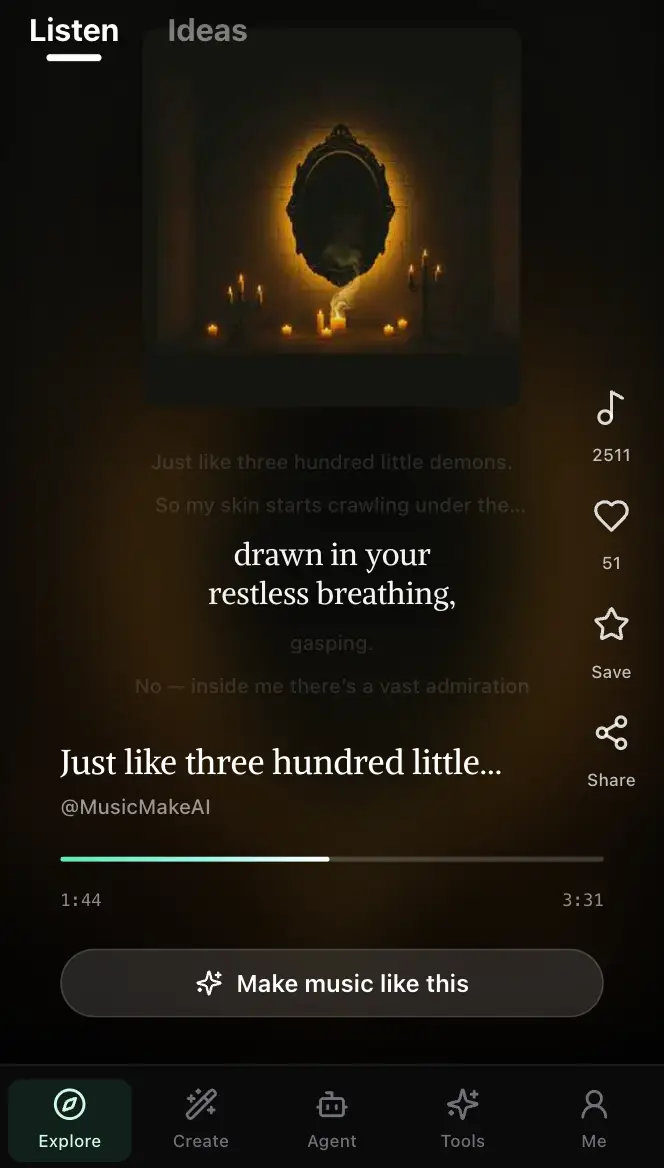
MusicMake.ai Mobile Update: Create Music From Your Phone Like an App
MusicMake.ai now gives creators a complete mobile flow for listening, generating, refining with Music Agent, opening tools, and managing songs from a phone.
AI Songwriting Guide: How to Write Songs with AI in 2026
Learn how to use AI songwriting tools to write better songs faster. Step-by-step guide covering lyrics, melody, arrangement, and production with AI assistance.
how to become a music producer with ai tools - MusicMake.ai Guide
Learn about how to become a music producer with ai tools with this comprehensive guide from MusicMake.ai.