Southeast Asian Music Styles: A Complete Guide to AI Music Creation
Explore Southeast Asian music styles and subgenres, and master AI music creation techniques. Create professional-grade Southeast Asian music with MusicMake.ai.
What Is Southeast Asian Music?
Southeast Asian music encompasses the musical traditions of countries such as Vietnam, Thailand, Indonesia, the Philippines, Malaysia, Myanmar, Cambodia, and Laos. The music of this culturally diverse region is characterized by rich percussion, unique scale systems, and a spirit of fusion—making it one of the most musically diverse regions in the world.
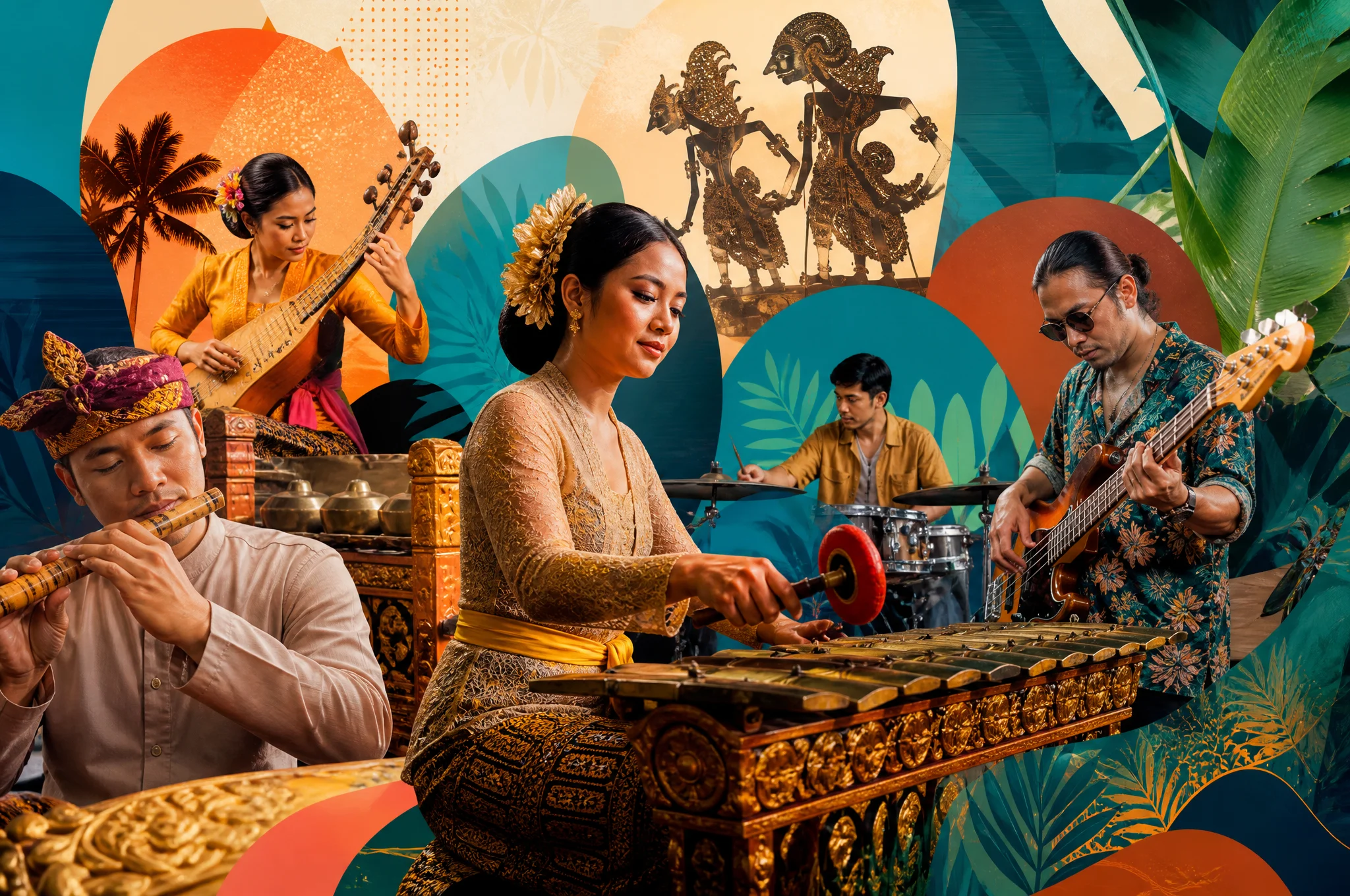
At the heart of Southeast Asian music lies a fusion of diverse cultures. Due to its unique geographic position, Southeast Asian music blends elements from Chinese, Indian, Arab, and indigenous musical traditions. The bronze percussion of gamelan, the refined classical music of Thailand, the monochord of Vietnam, the bamboo instruments of the Philippines—each country has its own distinct musical heritage while sharing certain regional characteristics.
For AI music creation, Southeast Asian music is a tremendously rewarding area to explore. Understanding the unique instruments, scales, and rhythmic patterns of each country is key to generating high-quality Southeast Asian music.
Core Characteristics of Southeast Asian Music
- Rich percussion: Bronze gongs, xylophones, drums, and other percussion instruments play a central role in Southeast Asian music
- Unique scale systems: Different countries use different scales, such as Indonesia's slendro and pelog
- Cyclic structures: Much Southeast Asian music employs cyclical rhythmic and melodic patterns
- Ensemble tradition: Emphasis on collective performance rather than individual solos
- Distinctive instruments: Gamelan, monochord (dan bau), bamboo instruments, and more
- Dance integration: Music and dance are closely intertwined, with much music composed for dance
- Ceremonial functions: Music is deeply tied to religious rituals and celebrations
- Oral tradition: Many traditional music forms are passed down through oral transmission
History of Southeast Asian Music
The history of Southeast Asian music is closely linked to the region's civilizational development. The spread of Hinduism and Buddhism brought Indian musical elements, while Chinese immigrants introduced Chinese musical traditions. These external elements merged with local music to form distinctive Southeast Asian musical styles.
Gamelan—Indonesia's most iconic musical form—dates back to at least the 8th century. This ensemble music, composed of bronze percussion instruments, matured in Java and Bali and became a symbol of Southeast Asian music. Gamelan is not merely a musical form; it embodies social cohesion and cultural identity.
In the 20th century, Southeast Asian music underwent modernization and globalization. Thailand's luk thung (Thai country music), Indonesia's dangdut, the Philippines' OPM (Original Pilipino Music), and other modern musical forms blended Western pop elements while maintaining local identity. Modern pop genres like T-Pop (Thai pop) and V-Pop (Vietnamese pop) have also gained global attention.
Creating Southeast Asian Music with MusicMake.ai
MusicMake.ai offers multiple ways to create Southeast Asian music:
Method 1: Using AI Music Generator
Visit the Generate page and enter a description of the Southeast Asian style you want. The built-in AI Style Generator can help you turn vague ideas into precise Southeast Asian style descriptions.
Method 2: Using Music Agent
Tell Music Agent about the Southeast Asian style you want, for example:
- "Create an Indonesian gamelan piece with bronze percussion and cyclic structure"
- "Compose a section of Thai classical music, refined and elegant with a dance feel"
- "Make a piece with the Vietnamese monochord, expressing melancholy and beauty"
Method 3: Using AI Style Generator
The AI Style Generator helps you explore various Southeast Asian subgenres, automatically generating style descriptions that include details about instruments, scales, and cultural elements.
Southeast Asian Music Subgenres
| Subgenre | Region | Characteristics | Representative Artists/Works |
|---|---|---|---|
| Gamelan | Indonesia | Bronze percussion, cyclic structure | Traditional gamelan ensemble |
| Dangdut | Indonesia | Popularized local music | Rhoma Ima, Inul Daratista |
| Indonesian Pop | Indonesia | Modern Indonesian pop music | Agnes Monica, Raisa |
| Thai Classical | Thailand | Refined arrangements, Thai scales | Traditional Thai court music |
| Luk Thung | Thailand | Thai country music | Pumpuang Duangjan |
| T-Pop | Thailand | Thai pop music | BNK48, Bright Vachirawit |
| Vietnamese Folk | Vietnam | Monochord, moon lute | Traditional Vietnamese music |
| V-Pop | Vietnam | Vietnamese pop music | Son Tung M-TP, Hoang Thuy Linh |
| Filipino Ballad | Philippines | Guitar, harmonies, storytelling | Freddie Aguilar |
| OPM | Philippines | Original Pilipino Music | Regine Velasquez |
| Malay Traditional | Malaysia | Traditional Malay instruments, court music | Traditional Malay music |
| Malay Pop | Malaysia | Malay pop music | Siti Nurhaliza |
| Cambodian Classical | Cambodia | Court music, Apsara dance | Traditional Cambodian music |
| Myanmar Classical | Myanmar | Burmese harp, saung gauk | Traditional Myanmar music |
| Lao Music | Laos | Traditional Lao instruments, lam singing | Traditional Lao music |
Southeast Asian Music Prompt Examples
Here are reference prompts for generating Southeast Asian music with MusicMake.ai:
Indonesian Gamelan:
"An Indonesian gamelan piece, bronze percussion ensemble, cyclic structure, layered metallic timbres, traditional Javanese gamelan style."
Thai Classical:
"A Thai classical music piece, refined arrangements, Thai scales, Ranad Ek (xylophone) lead, elegant dance rhythms, Thai court style."
Vietnamese Monochord:
"A Vietnamese monochord piece, melancholic and beautiful melody, glissando and vibrato ornamentation, traditional Vietnamese folk style, expressing homesickness."
T-Pop:
"A T-Pop song, Thai pop style, electronic beats, catchy melodies, modern production, a blend of BNK48 and Bright Vachirawit styles."
MusicMake.ai Has No Commercial Risk
Southeast Asian music created with MusicMake.ai carries no commercial risk. All AI-generated music can be used for personal projects, commercial purposes, video soundtracks, game audio, and more—without worrying about copyright disputes. This gives you the freedom to use generated Southeast Asian music across all your creative and commercial projects.
Recommended MusicMake.ai Features
| Feature | Use Case | Link |
|---|---|---|
| AI Music Generator | Quickly generate Southeast Asian music clips | Generate |
| Music Agent | Conversational creation with precise style control | Chat |
| AI Style Generator | Explore Southeast Asian subgenre combinations | Style Generator |
| AI Prompt Enhancer | Expand simple ideas into full descriptions | Generate |
Southeast Asian Music Fusion with Other Genres
The multicultural foundation of Southeast Asian music makes it a creative platform for cross-genre fusion:
- Southeast Asian + Pop: T-Pop, V-Pop, and OPM blend Southeast Asian traditions with modern pop
- Southeast Asian + Electronic: Electronic dangdut and Southeast Asian EDM fuse local rhythms with electronic beats
- Southeast Asian + Rock: Southeast Asian rock combines traditional instruments with distorted guitars
- Southeast Asian + Jazz: Southeast Asian jazz merges improvisation with local scales
- Southeast Asian + Hip-Hop: Southeast Asian hip-hop blends traditional rhythms with modern beats
On MusicMake.ai, you can explore these fusion styles by combining descriptions, such as "gamelan + electronic beats" or "Thai traditional + pop production."
Best Practices for AI Southeast Asian Music Creation
-
Specify the country and tradition: Southeast Asian musical styles vary significantly between countries. Be clear about whether you want Indonesian, Thai, Vietnamese, Filipino, or other Southeast Asian styles.
-
Specify instrument combinations: Southeast Asian traditional instruments are highly distinctive. Specifying instruments in your prompt (such as "gamelan," "monochord," "bamboo instruments") yields more accurate results.
-
Describe rhythmic characteristics: Southeast Asian music typically features cyclical rhythms. Use terms like "cyclic rhythm," "repetitive patterns," and "layered percussion."
-
Consider cultural context: Southeast Asian music is often associated with specific rituals, dances, or celebrations. Describing the intended use case helps the AI understand the emotional tone of the music.
-
Blend in modern elements: Modern Southeast Asian pop music (such as T-Pop, V-Pop) incorporates many electronic and pop elements. Specify the balance between traditional and modern in your prompt.
FAQ
Can AI generate authentic gamelan music?
MusicMake.ai can simulate the characteristics of gamelan music—cyclic structures, bronze percussion timbres, and layered textures. However, gamelan is a highly complex ensemble music form, and its subtle interactions and improvisational elements may require human musician adjustments to achieve the best results.
What is the relationship between Southeast Asian music and Indian music?
Due to the spread of Hinduism and Buddhism, Southeast Asian music has been deeply influenced by Indian music. The traditional music of Thailand, Cambodia, and Indonesia all contain Indian musical elements. However, while absorbing Indian influences, Southeast Asian music also blended Chinese and indigenous musical traditions to form its own unique styles.
What Southeast Asian traditional instruments does MusicMake.ai support?
MusicMake.ai can simulate the timbres of various Southeast Asian traditional instruments, including gamelan instruments (metallophone, gong), monochord, bamboo instruments, traditional Thai instruments, and more. Specifying instrument names in your prompt yields more accurate results.