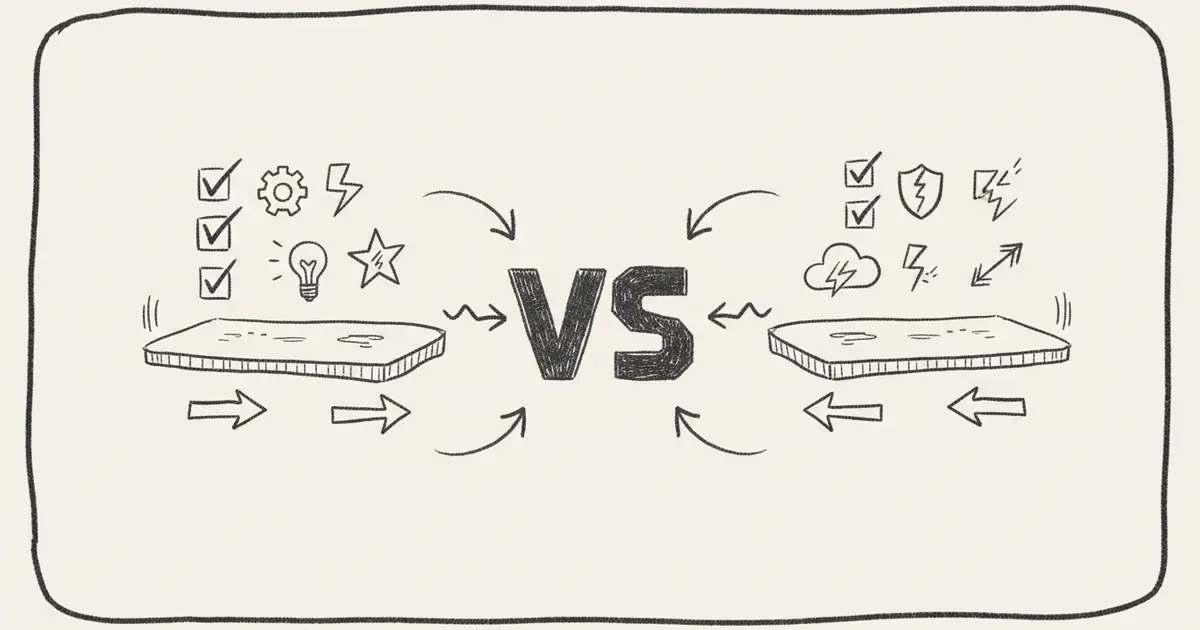
Suno vs MusicMake.ai 2026: Generator or Music Agent Workflow?
A practical 2026 comparison of Suno and MusicMake.ai by workflow, credits, commercial-use checks, vocals, editing tools, and Music Agent iteration.
Quick Answer
Suno and MusicMake.ai are both useful AI music tools, but they solve different problems.
- Choose Suno when your main goal is fast vocal-song ideation and you like Suno's model style.
- Choose MusicMake.ai when your real work starts after the first result: rewriting prompts, extending, covering, adding tracks, replacing sections, separating supported vocals, saving versions, and using Music Agent to decide the next step.
Do not choose only from an old price table. Suno pricing, credits, model limits, and commercial-use terms can change. Check Suno pricing, Suno help pages, and the current MusicMake.ai pricing page before budgeting or publishing commercially.
Why MusicMake.ai Became a Music Agent Workflow
Most AI music generators solved the first step: turning a prompt into a song. MusicMake.ai started there too, with AI music generation, lyrics, style tags, cover songs, song extension, add tracks, mashups, section replacement, and vocal removal.
The harder problem is what happens after the first result. A creator may know the song is wrong, but not know how to write the next prompt. They may say, "it still has a beat," "make it simpler," "only keep the guitar," or "extend the ending without adding vocals."
That is the gap Music Agent is built for. It can help rewrite feedback, route the next tool, show an approval card before using credits, and suggest follow-up actions. See the MusicMake.ai changelog for Music Agent 2.5, Smart Next Actions, editable approval cards, and Agent Pro.
Comparison by Job to Be Done
| Job | Better fit |
|---|---|
| Fast vocal-song ideation | Suno |
| Turning vague feedback into a better prompt | MusicMake.ai Music Agent |
| First-draft instrumentals and background tracks | MusicMake.ai or Suno, depending on taste |
| Multi-step editing workflow | MusicMake.ai |
| Working from your saved MusicMake.ai library | MusicMake.ai |
| Mobile-first Suno creation | Suno |
| Source-based cover, extend, mashup, add-tracks, or replace-section workflow | MusicMake.ai, if you own or license the source |
| Budgeting by current credits and commercial terms | Check both official pricing pages |
Pricing and Credits
Pricing is the easiest section of a comparison to get wrong.
Use this rule:
- For Suno, check suno.com/pricing and your account UI.
- For MusicMake.ai, check the current pricing page.
- For commercial work, generate under the plan that covers the use instead of upgrading after the fact and assuming old outputs are covered.
Suno's official help describes Free, Pro, and Premier plan types, with free credits that replenish and larger credit pools on paid plans. Suno also notes that paid subscriptions do not automatically grant commercial-use licensing for songs created before subscribing. Always confirm the current terms before a YouTube release, client project, paid ad, or streaming distribution.
MusicMake.ai plans should be evaluated by the whole workflow: credits, exports, commercial-use terms, generation records, support level, and whether you need Agent-assisted iteration after the first song.
Quality Comparison
Suno strengths
Suno is strongest when you want:
- vocal song ideation
- quick lyrical demos
- experimental genres
- a strong model personality
- mobile-first creation, if that matters to your workflow
Suno is often a good benchmark for "make a complete vocal song from an idea."
MusicMake.ai strengths
MusicMake.ai is strongest when you want:
- prompt-to-music generation
- instrumental and background workflows
- lyrics and style helper tools
- source-based follow-up actions
- agent-guided prompt rewriting
- approval before credit-spending actions
- a library-centered workflow that lets you keep working from prior results
MusicMake.ai is not just trying to win the first generation. It is built to help users get from "not right yet" to "this is what I meant."
Editing and Follow-Up Workflow
The biggest difference is not the first prompt. It is the second and third move.
With a normal generator, users often repeat the same prompt and hope for a better result. Music Agent is designed to reduce that waste. You can give feedback like:
It still has a beat. Keep only soft fingerpicked acoustic guitar, remove drums, percussion, bass, rhythm section, vocals, and extra layers.That kind of feedback can become a stronger generation instruction or a follow-up action. This is especially valuable for background music, acoustic tracks, client revisions, and creators who do not want to learn prompt engineering.
Commercial Use and Rights
For both platforms, do not treat "paid plan" as a complete legal answer.
Check:
- whether the plan covers your use case
- whether old free-plan generations are covered after upgrading
- whether you used source audio, and whether you own or licensed it
- whether your distributor, YouTube, client, or marketplace accepts the output
- whether attribution, Content ID, resale, or exclusivity restrictions apply
For MusicMake.ai, source-based tools such as Cover, Extend, Add Tracks, Mashup, Replace Section, and Vocal Remover still require rights to the source material.
Use Case Recommendations
YouTube creator or video editor
Start with MusicMake.ai if you need background music, fast revision, and a workflow that can turn feedback into the next prompt. Use Music Agent when the track is close but not usable.
Lyric-focused songwriter
Try Suno if your main goal is vocal-song exploration and you want to hear lyrical ideas quickly.
Podcast producer
MusicMake.ai is usually a better fit for intros, outros, loops, and subtle beds that must sit under speech. The Agent workflow helps when the first track is too busy.
Client music service
Use the platform that gives you the clearer workflow, records, and license coverage for the client job. In many cases, MusicMake.ai's approval cards, generation records, and multi-tool workflow are useful for client revisions.
Developer or API workflow
Check current API availability and terms directly from each platform. Do not rely on an old blog comparison for API status.
Can You Use Both?
Yes. Many creators should.
A practical split:
- Suno for vocal ideation and model-specific song experiments
- MusicMake.ai for background music, prompt refinement, source-based editing, and agent-guided continuation
The better tool is the one that removes your current bottleneck.
FAQ
Which is better for beginners?
MusicMake.ai is usually easier when the user does not know how to turn feedback into a better prompt. Music Agent can help guide the next step.
Which has better vocals?
Suno is a strong choice for vocal-song ideation. MusicMake.ai is stronger as a broader creation and editing workflow.
Which is cheaper?
Check current official pricing. The real cost is not only monthly price; it includes retries, credits, exports, commercial-use terms, and how many external tools you need.
Can I try both for free?
Usually yes, but current free access and credit rules can change. Use free access for testing, not as a commercial publishing plan unless current terms allow it.
Which is better for YouTube?
For background music and revision workflow, MusicMake.ai is often the better fit. For vocal-song experiments, Suno may fit better. In both cases, check commercial-use terms before publishing.
Conclusion
Suno is a strong AI music generator. MusicMake.ai is a stronger fit when the job is not only "generate a song," but "keep improving this music until it matches the idea."
If your main bottleneck is vocal-song ideation, try Suno. If your main bottleneck is iteration, source-based editing, prompt rewriting, and avoiding wasted credits, start with MusicMake.ai Music Agent.
Last updated: June 7, 2026 | Verify current Suno and MusicMake.ai terms before purchasing or publishing commercially.
Author

More Posts
AI Background Music Generator 2026: Best Tools and Workflow for Videos
A practical guide to AI background music generators for YouTube, podcasts, TikTok, games, and client videos, with prompt examples, licensing checks, and MusicMake.ai Music Agent workflows.
AI Music Copyright 2026: Legal Guide for Creators and Teams
A practical 2026 guide to AI music copyright, human authorship, commercial-use terms, source-audio rights, and documentation for creators using AI music tools.

AI Music Copyright Guide 2026: Ownership, Commercial Use, and Records
A practical AI music copyright guide for 2026. Learn the difference between copyright, commercial-use licenses, source-audio rights, and documentation for AI-generated songs.