Synthwave Music Style: Complete Guide to AI Music Creation
Explore synthwave styles and subgenres while mastering AI music creation techniques. Create professional‑grade synthwave tracks with MusicMake.ai.
What is Synthwave?
Synthwave (Synthwave) is an electronic music style that originated in the late 2000s, drawing inspiration from 1980s synth music, film scores, and video game soundtracks. Its core characteristics are retro synthesizer tones, powerful electronic drum machine beats, and nostalgic melodies, creating a sound aesthetic that feels both vintage and futuristic.
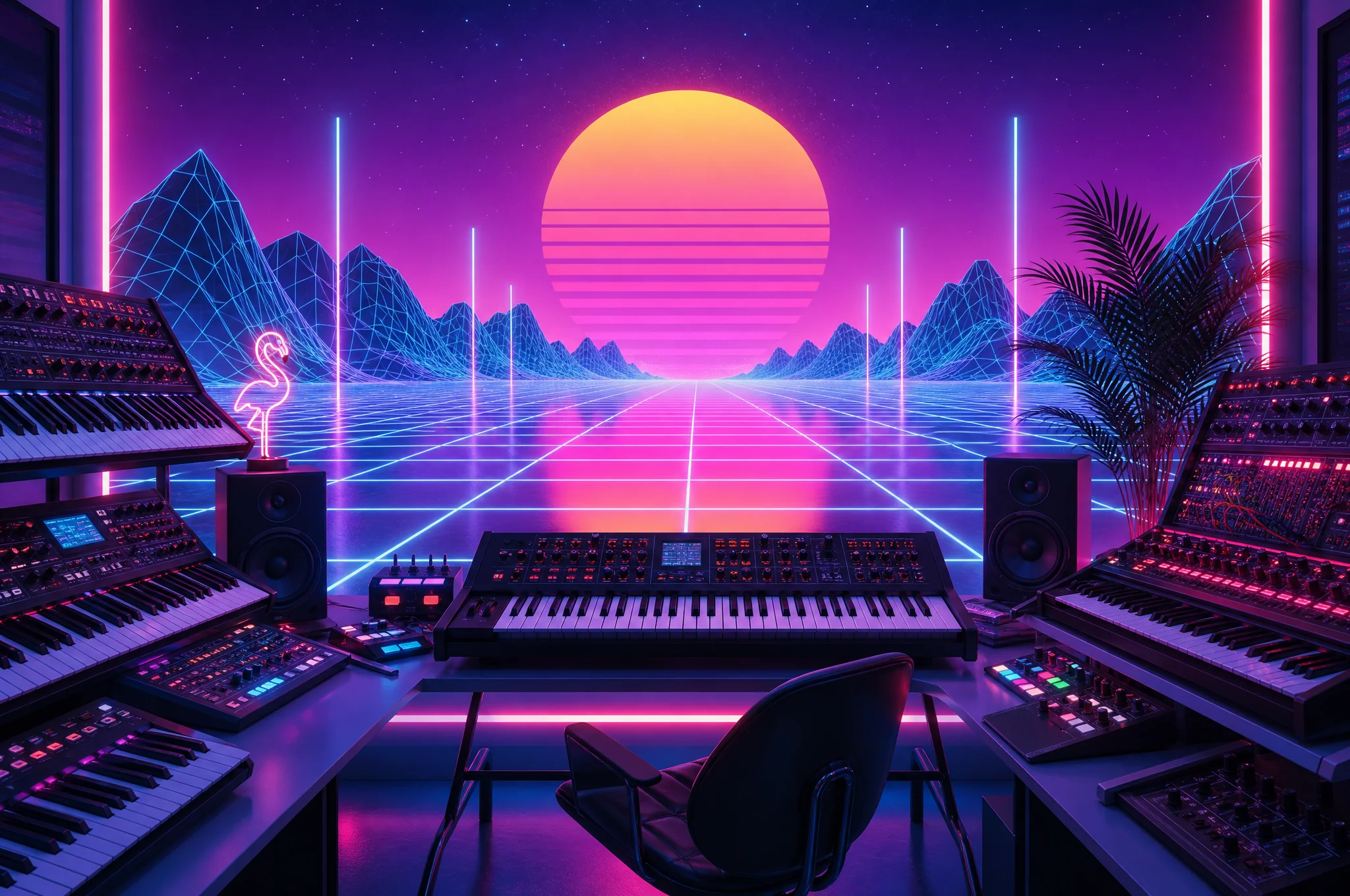
Synthwave’s most distinctive appeal lies in its cultural imagination of the 1980s. Neon lights, retro sports cars, pixelated sunsets—these visual elements are tightly woven with the music, forming the unique aesthetic universe of Synthwave. Musically, it blends the analog synth sounds of the 80s with modern electronic production techniques, delivering an auditory experience that is both nostalgic and fresh.
From a musical structure standpoint, Synthwave builds on a grand wall of synth pads, paired with fast arpeggiator note sequences and driving four-on-the-floor electronic drum rhythms. The bassline typically uses sawtooth or square wave synthesizers to create a thick low-end foundation. For melody, Synthwave tends toward major scales and simple harmonic progressions, evoking a bright, hopeful feeling.
Synthwave has evolved into multiple subgenres—from the powerful energy of Darksynth to the dreamy drift of Dreamwave, from the violent aesthetics of Outrun to the lighthearted vibe of Retrowave—forming a rich and diverse musical ecosystem.
MusicMake.ai’s AI model has deeply learned the stylistic features of everything from classic Synthwave to various subgenres, enabling it to produce Synthwave works that combine 80s retro charm with modern production quality.
Core Characteristics of Synthwave
- Retro Synth Tones: The warm sound of analog synthesizers is the soul of Synthwave
- Electronic Drum Beats: Driving four-on-the-floor rhythms that mimic 80s drum machine sounds
- Arpeggiator Sequences: Fast arpeggiator note patterns that create a sense of movement
- Grand Wall of Sound: The spacious, layered feel built by synth pads
- Nostalgic Melodies: Melodic lines steeped in 80s nostalgia
- Thick Basslines: Deep low end created by sawtooth or square wave synths
- 80s Aesthetic: A visual and sonic style tightly linked to 1980s pop culture
- Cinematic Feel: Drama and narrative quality inspired by 80s film scores
- Retro-Futurism: A sound aesthetic that is both nostalgic and futuristic
- Gradual Development: Songs often have a gradual structure, layering from simple to complex
The History of Synthwave
Synthwave’s roots trace back to the synth-pop music of the 1980s. Artists like Depeche Mode, New Order, Gary Numan, and Tangerine Dream pioneered a new era of electronic music. 80s film composers such as John Carpenter, Vangelis (Blade Runner), and Harold Faltermeyer (Beverly Hills Cop) also deeply influenced later Synthwave artists.
In the late 2000s, underground electronic scenes in France and the U.S. began a revival of 80s sounds. Kavinsky’s “Nightcall” (later popularized by the film Drive) and early works by Perturbator (both French) are seen as pioneers of Synthwave. At the same time, artists like College, Electric Youth, and Anoraak were exploring similar sound aesthetics.
In the early 2010s, Synthwave solidified as an independent genre. Artists such as Carpenter Brut, Dance With The Dead, Lazerhawk, and Miami Nights 1984 defined the core traits of the style. Platforms like Bandcamp and SoundCloud became vital channels for Synthwave artists to showcase and distribute their music.
In the mid-to-late 2010s, Synthwave entered the mainstream through the film Drive (2011), Stranger Things (2016), and the game Hotline Miami (2012). The Stranger Things score, composed by Kyle Dixon and Michael Stein, perfectly captured the essence of 80s synth music, introducing global audiences to the appeal of Synthwave. Since then, Synthwave has continued to evolve, cross-pollinating with related styles like Vaporwave and Chillwave to form an even more diverse electronic music ecosystem.
Creating Synthwave with MusicMake.ai
MusicMake.ai offers multiple ways to create Synthwave—from classic Outrun to modern Darksynth—tailored to different style needs:
Using AI Music Generator
Visit the Generate page and enter your Synthwave idea. The AI Style Generator helps you precisely select subgenre parameters like Outrun, Darksynth, or Dreamwave.
In Simple mode, just type a short description like “Make a Synthwave track,” and the AI will automatically expand it into a full musical description. In Custom mode, you can precisely control parameters such as synth type, drum machine tone, and arpeggio speed.
Using Music Agent
Chat with Music Agent and describe the Synthwave you want in natural language:
- “Make an 80s-style Outrun Synthwave track”
- "Play a Darksynth track with dark, aggressive electronic tones"
- "Create a Dreamwave style with dreamy, ethereal synth pads"
- "Play a Retrowave track that evokes retro sunsets and neon lights"
Music Agent supports multi-turn dialogue, so you can adjust the timbre, rhythm, and atmosphere based on the generated results.
Use AI Style Generator
Explore synthwave subgenre combinations in AI Style Generator. You can try cross-genre mixes like "Synthwave + Rock" or "Synthwave + Metal" to discover unique synthwave styles.
Synthwave Subgenres
Synthwave subgenres are diverse, ranging from classic Outrun to experimental styles, each with distinct musical characteristics:
| Subgenre | Description | Key Features |
|---|---|---|
| Outrun | Retro-futuristic car chase aesthetic | Classic Synthwave, retro car aesthetics, driving beats |
| Darksynth | Dark, aggressive synth style | Dark aggression, metal influence, high intensity |
| Dreamwave | Dreamy, ethereal style | Dreamy and ethereal, soft tones, relaxing atmosphere |
| Retrowave | Retro futuristic style | 80s pop feel, bright melodies, nostalgic atmosphere |
| Synthpop | Synthpop style | Pop structure, synth-driven, strong vocal presence |
| Vaporwave | Vaporwave aesthetic | Critique of consumer culture, sample collage, lo-fi aesthetic |
| Chillwave | Chillwave style | Lo-fi texture, warm tones, relaxing atmosphere |
| Darkwave | Darkwave style | Dark synth, goth influence, gloomy atmosphere |
| Spacewave | Spacewave style | Space theme, massive sound wall, cosmic feel |
| Cyberpunk | Cyberpunk style | Future city, tech vibe, dystopian |
| Synth Metal | Synth Metal style | Metal guitar, synth tones, high energy |
| Kavinsky Style | Kavinsky Style | French touch, cinematic, night driving |
| Tangerine Dream Style | Tangerine Dream Style | German electronic, long-form progressive, meditative |
| Synthwave Pop | Pop-influenced synthwave | Pop structure, synth sounds, accessible |
| Ambient Synth | Ambient Synth style | Ambient soundscape, synth pads, spacious |
| Synth Funk | Synth Funk style | Funk groove, synth sounds, 80s |
| Synthwave Revival | Synthwave Revival style | Modern recreation of classic Synthwave sound |
| Electro Synth | Electro Synth style | Electronic drum machine, synth-driven, dancefloor ready |
Synthwave Creation Best Practices
- Vintage tones are key: Use analog synth sounds or digital synths that emulate their character.
- Master the Arpeggiator: Arpeggiator sequences are a key rhythmic element in Synthwave
- Drum Machine Sounds: Pick classic 80s drum machine tones like the TR-808 and LinnDrum
- Massive Sound Walls: Synth pads should create a wide sense of space and layered depth
- Keep the Bassline Thick: Use sawtooth or square wave synths to build a heavy low-end foundation
- Make Melodies Catchy: Synthwave melodies are typically simple but packed with memorable hooks
- Build Progressively: Songs usually start with simple layers and gradually stack into a big climax
FAQs
Common questions and answers about making synthwave:
Can I use synthwave made with AI for commercial projects?
Yes. Music generated by MusicMake.ai carries no commercial risk — you can use it confidently for commercial projects, game soundtracks, video background music, and more. All music created through the platform comes with full commercial licensing.
Can AI generate vintage synth sounds?
MusicMake.ai's AI model can produce synth tones with authentic 80s vintage character. In your prompt, you can specify descriptions like "warm analog synth sound," "80s drum machine tone," or "retro arpeggiator" to guide the AI toward sounds that better match the Synthwave tradition.
How can I make AI-generated synthwave feel more 80s?
Emphasize keywords like "80s," "vintage," and "retro" in your prompt, and specify particular sound traits such as "analog synth," "TR-808 drum machine," or "Vangelis style." You can also describe a visual scene like "night driving" or "neon-lit city" to help the AI understand the mood.
What are good use cases for synthwave?
Synthwave works great for game soundtracks, sci-fi films, YouTube videos, podcast intros, tech ads, and more. MusicMake.ai-generated synthwave tracks can be used directly in these commercial settings.
What's the difference between synthwave and Vaporwave?
Synthwave and Vaporwave both draw inspiration from 80s culture, but in different ways. Synthwave aims to recreate and pay homage to 80s synth music aesthetics — full of energy and positive drive — while Vaporwave is more critical, using sample collage and lo-fi processing to deconstruct 80s commercial culture, often with irony and surrealism. Their visual aesthetics also differ noticeably.
Can I earn more synthwave creation credits by checking in daily?
Yes, MusicMake.ai offers daily login check-ins where you can earn points and free credits, so you can keep creating more synthwave tracks.
Synthwave Sound Design
Sound design is at the heart of Synthwave creation. Here are the most common synth sound types in Synthwave:
| Sound Type | Description | Common Use |
|---|---|---|
| Pad | Rich synth backdrop | Creating space and atmosphere |
| Lead | Lead synth tone | Melody lines, solos |
| Bass | Low-end synth | Saw/square wave basslines |
| Arp | Arpeggiator sound | Fast note sequences, rhythmic drive |
| Pluck | Plucked-style tone | Short notes, rhythmic accents |
| Strings | Synth strings | String arrangements, epic feel |
| Brass | synthesized brass | brass timbre, power |
Classic Synthesizers of the Synthwave Era
Knowing the classic synths from Synthwave history helps you understand the genre's signature sound:
- Juno-106: A Roland classic whose warm pad sounds define Synthwave's iconic tone
- Prophet-5: Sequential Circuits' flagship synth with rich, versatile timbres
- Moog Minimoog: The analog legend behind thick bass and lead sounds
- DX7: Yamaha's FM synth, the source of the 80s signature electric piano and bell tones
- TR-808: Roland's drum machine foundation for Synthwave and electronic music rhythms