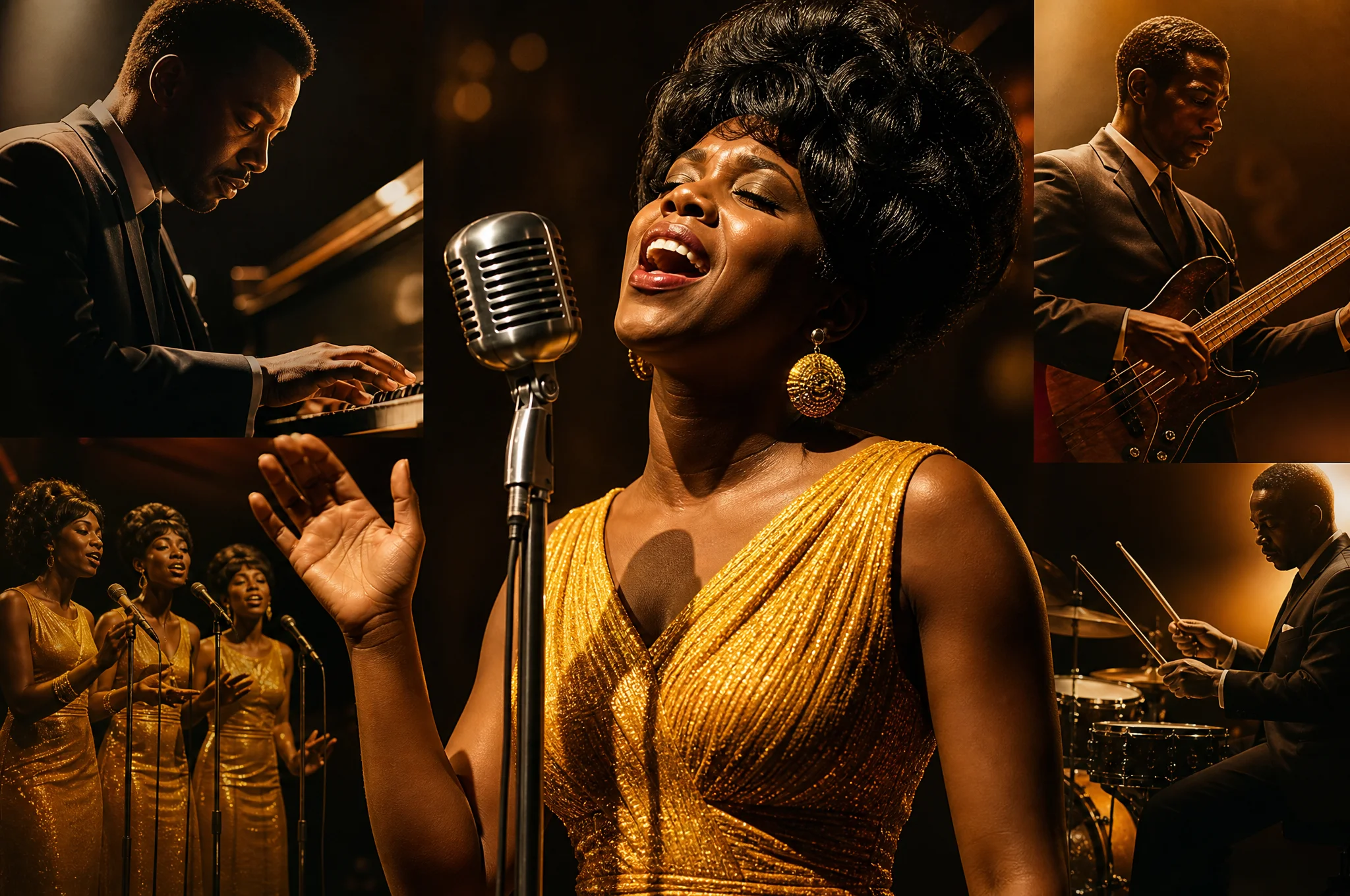
Soul Music Style: The Complete Guide to AI Music Creation
Explore soul music styles and subgenres, and master AI music creation techniques. Use MusicMake.ai to produce professional soul music.
What Is Soul Music?
Soul Music was born in the late 1950s in the United States, blending the impassioned singing of gospel music with the rhythmic groove of R&B from African American communities. It is defined by deeply emotional vocal delivery, rich harmonic arrangements, and a profound sense of rhythm — making it one of the most essential foundations of modern popular music.
The most defining feature of soul music is the emotional depth of the vocals. Carrying forward the gospel tradition, soul singing is full of runs,颤音, falsetto, and improvisational ornaments — the singer pours their entire soul into every note. From Ray Charles’s gritty wail to Aretha Franklin’s soaring cry, the voice itself becomes the most powerful instrument in soul music.
Musically, soul is built on the rich harmonies of seventh and ninth chords, paired with gospel‑inspired vocal arrangements. Brass sections (trumpets, trombones, saxophones) and string arrangements add a lush, layered texture. Rhythmically, soul carries forward the groove of R&B while introducing more complex and nuanced rhythmic treatments.
More than just a musical style, soul music is a form of cultural expression and emotional release. It carries the historical memory and emotional world of African Americans. Its expressive range is vast — from intimate personal feelings to social concerns.
MusicMake.ai’s AI model has deeply studied soul music styles ranging from classic Soul to Neo-Soul, and can generate pieces with soulful, heartfelt character.
Core Features of Soul Music
- Passionate Vocals: Emotion‑filled vocal delivery is soul music’s most essential feature.
- Gospel Roots: Singing techniques and emotional depth inherited from gospel music.
- Rich Harmonies: Seventh chords, ninth chords, and complex harmonic arrangements.
- Brass Instruments: Trumpets, trombones, and saxophones add power to soul music.
- String Arrangements: Elegant string parts add depth and texture.
- Rhythmic Groove: Inherits the rhythmic feel of R&B, but more nuanced and elastic.
- Vocal Runs: Extensive use of runs and ornamental notes to enrich melodic expression.
- Call‑and‑Response: Responsorial singing style, rooted in gospel tradition.
- Piano & Organ: Piano and organ are essential accompanying instruments in soul music.
- Emotional Tension: Strong contrast from soft, intimate phrases to powerful, soaring shouts.
The History of Soul Music
Soul music’s roots go back to the late 1950s. Ray Charles is widely recognized as the “father of soul.” He fused the passionate singing of gospel with secular lyrics, creating an entirely new musical form. His I Got a Woman (1954) is often considered the first true soul song — bringing the spiritual intensity of church music into the pop realm.
The 1960s were the golden age of soul. Motown Records in Detroit created the “Motown Sound” — a more polished, pop‑oriented soul style. Artists like The Supremes, The Temptations, Marvin Gaye, and Stevie Wonder brought soul into the mainstream. At the same time, Stax Records in Memphis and Muscle Shoals Sound Studio crafted a rawer, grittier Southern soul sound.
Aretha Franklin’s rise in the mid‑1960s marked soul’s zenith. Her Respect (1967) was not only a musical masterpiece but became an anthem for the civil rights and feminist movements. Otis Redding, Sam Cooke, and James Brown further expanded soul’s expressive range.
In the 1970s, soul began to diversify. Stevie Wonder and Marvin Gaye tackled social issues through their music, creating deeply meaningful works. Through the 1980s and 1990s, Prince, Whitney Houston, and Luther Vandross brought soul into a new era. In the late 1990s, D’Angelo, Erykah Badu, and Lauryn Hill led the Neo-Soul movement, blending soul traditions with modern elements.
Create Soul Music with MusicMake.ai
MusicMake.ai offers multiple ways to create soul music — from classic Motown to modern Neo-Soul — to suit different style preferences:
Using AI Music Generator
Visit the Generate page and enter your soul music idea. The AI Style Generator helps you precisely select sub‑genre parameters such as Motown Soul, Southern Soul, Neo-Soul, and more.
In Simple mode, just type something like “make a soul track,” and the AI automatically expands it into a full music description. In Custom mode, you can fine‑tune vocal style, brass configuration, string arrangements, and other parameters.
Using Music Agent
Chat with Music Agent in natural language to describe the soul music you want:
- “Make a Motown‑style soul track with classic brass and string arrangements.”
- "Give me a Southern Soul track — raw, gritty, and full of real emotion."
- "Make a Neo-Soul track with D'Angelo's groove."
- "I want a slow soul ballad with heartfelt piano accompaniment."
Music Agent supports multi-turn conversations, so you can keep refining the vocals, instruments, and emotional expression based on the generated output.
Use AI Style Generator
Explore various soul subgenre combinations in the AI Style Generator. Try crossover combos like "Soul + Jazz" or "Soul + Electronic" to discover unique soul styles.
Soul Music Subgenres
Soul's subgenres span from classic Motown to modern Neo-Soul, each with its own distinct musical traits:
| Subgenre | Description | Key Characteristics |
|---|---|---|
| Motown Soul | Motown soul | Refined arrangements, pop-oriented, danceable |
| Southern Soul | Southern soul | Raw and authentic, emotional depth, strong rhythm |
| Memphis Soul | Memphis soul | Rich brass, driving rhythm, authentic live sound |
| Philly Sound | Philly Sound | String arrangements, polished production, romantic ambiance |
| Neo-Soul | Neo soul | Modern production, eclectic fusion, nostalgic vibe |
| Blue-Eyed Soul | Blue-eyed soul | Soul performed by white artists |
| Northern Soul | Northern soul | UK dance culture, rare recordings, fast-paced |
| Psychedelic Soul | Psychedelic soul | Psychedelic elements, experimental, socially conscious |
| Progressive Soul | Progressive soul | Social themes, complex arrangements, artistic ambition |
| Smooth Soul | Smooth soul | Smooth vocals, romantic themes, easy listening |
| Gospel Soul | Gospel soul | Gospel influence, spiritual expression, church-like vibe |
| Funk-Soul | Funk soul | Funk groove, soulful vocals, highly danceable |
| Cinematic Soul | Cinematic soul | Grand strings, dramatic flair, cinematic soundtrack quality |
| Alternative Soul | Alternative soul | Indie influences, experimental, unique perspective |
| Electronic Soul | Electronic soul | Electronic elements, soulful vocals, modern production |
| Jazz Soul | Jazz soul | Jazz harmonies, soulful vocals, improvisational elements |
| Afro-Soul | Afro soul | African rhythms, soulful vocals, world music fusion |
Soul Music Writing Best Practices
- Emotion is the heart of it: The most important thing in soul music is authentic emotional delivery. Make your music full of soul.
- Prioritize vocal arrangement: Harmony and vocal runs are essential elements of soul music.
- Brass and strings: Incorporating brass instruments and string arrangements adds depth and power to soul music.
- Rhythmic groove: Soul rhythms should be nuanced and elastic, not too rigid.
- Study the classics: Learn from masters like Aretha Franklin, Stevie Wonder, and Marvin Gaye.
- Leave room to breathe: Soul music needs space to breathe—don't over-produce.
- Gospel influence: Gospel vocal techniques and emotional depth are major inspirations for soul music.
Frequently Asked Questions
Common questions and answers about soul music creation:
Can I use AI-generated soul music for commercial purposes?
Yes. Music created with MusicMake.ai carries no commercial risk, so you can confidently use it for commercial projects, film scoring, advertising, and more. All music generated through the platform comes with full commercial licensing.
Can AI generate vocal performances with soul music characteristics?
MusicMake.ai's AI model can generate vocals with soul music features, including runs, vibrato, and emotional delivery. You can specify prompts like "soulful female voice" or "gospel-influenced male voice" to guide the AI toward more authentic soul singing.
How can I make AI-generated soul music more emotional?
Emphasize emotional atmosphere in your prompts (e.g., "soulful," "melancholic," "powerful"), and specify subgenres and instrumentation. For example: "A melancholic soul ballad with piano and string arrangement." Describing the emotional story you want to tell also helps the AI better understand your vision.
What scenarios is soul music best suited for?
Soul music works well in romantic settings, film scores, restaurant background music, advertisements, and any scene that calls for emotional expression. Soul music generated with MusicMake.ai can be used directly in these commercial contexts.
What's the difference between soul music and R&B?
Soul music and R&B are closely related—soul itself evolved from R&B. The main difference is that soul emphasizes emotional depth and authenticity, drawing more heavily on gospel vocal techniques and expression. R&B is more diverse, incorporating modern electronic elements and pop styles. Neo-Soul is a contemporary fusion of the two.
Can I earn more soul music creation credits through daily check-ins?
Yes, MusicMake.ai supports daily login check-ins to earn points and free credits, so you can keep creating more soul music.
Soul Music Instrumentation
Soul music instrumentation is rich and refined, with each instrument playing a key role in emotional expression:
| Instrument | Role | Typical Sound Characteristics |
|---|---|---|
| Vocals | Emotional core | Runs, vibrato, falsetto, emotional intensity |
| Piano | Harmonic foundation | Rhodes electric piano, acoustic piano |
| Organ | Harmonic color | Hammond B3, warm chords |
| Bass | Low-end foundation | Walking bass lines, warm tone |
| Drums | Rhythmic backbone | Warm recording quality, moderate reverb |
| Brass section | Power and color | Trumpet, saxophone, trombone arrangements |
| String section | Depth and atmosphere | Orchestral arrangements, romantic feel |
Soul Singing Techniques
Vocal performance is at the heart of soul music. Here are the essential techniques for soul singing:
- Riffs & Runs: Rapid, continuous ornamental notes that enrich melodic expression
- Vibrato: Subtle pitch fluctuations that add warmth and expressiveness to the voice
- Falsetto: A light, airy vocal register used in the high range, often reserved for emotional climaxes
- Chest Voice: A powerful, full-bodied tone in the lower range, used to convey deep emotion
- Call-and-Response: A conversational style where the lead vocalist and backing vocals trade phrases