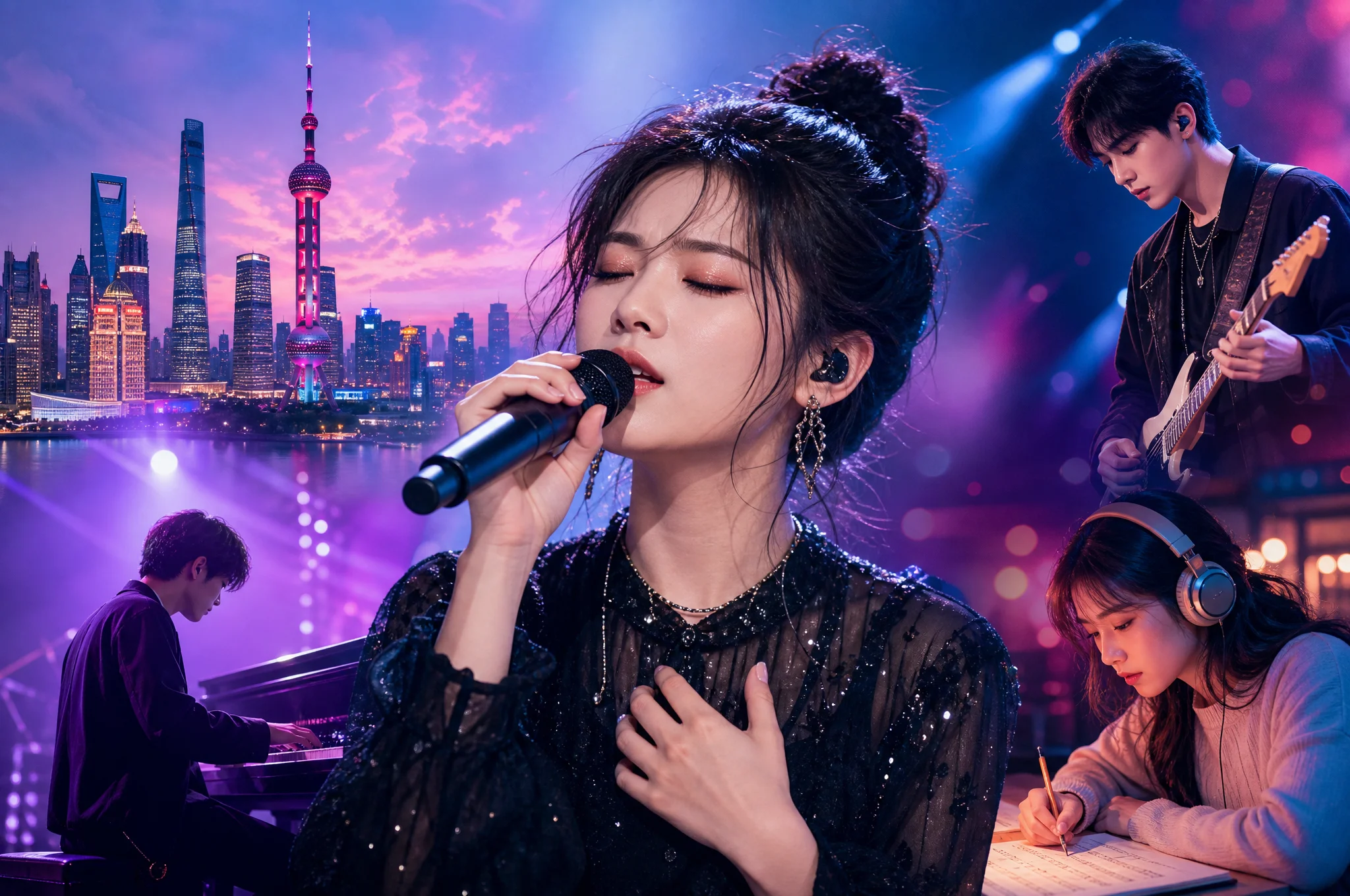
C-Pop Music Styles: The Complete Guide to AI Music Creation
Explore C-pop music styles and subgenres, master AI music creation techniques. Create professional-grade C-pop music with MusicMake.ai.
What Is C-Pop?
C-Pop (Chinese popular music) is an umbrella term for pop music performed primarily in Chinese, covering Mandarin, Cantonese, Hokkien, and other Chinese dialects. It represents the largest Chinese-language music market globally and a key vehicle for exporting Chinese cultural soft power.
C-Pop's most distinctive feature is its "lyric-melody unity" tradition. Unlike Western pop, C-Pop songs place greater emphasis on lyrical literary quality and melodic singability. The four tones of Chinese deeply influence melodic contour, and great C-Pop songs achieve "perfect tone-melody alignment"—where the tonal inflection of the lyrics flows seamlessly with the melody.
Geographically, C-Pop has three major hubs: Taiwan (Mandarin pop), Hong Kong (Cantonese pop), and Mainland China (Mainland pop). Taiwan's C-Pop is known for polished production and poetic lyrics, Hong Kong's Cantonese pop for its commercial idol system and martial-arts themes, while Mainland pop has exploded in recent years through online music and talent shows.
In AI music creation, C-Pop is a highly promising direction. AI helps creators explore different melodic paths and arrangement styles, and MusicMake.ai's AI Style Generator lets creators easily experiment with various C-Pop subgenres.
Core Features
- Lyric-Melody Unity: Lyrics' tonal patterns align closely with the melody.
- Beautiful Melodies: C-Pop songs are famed for their graceful melodic lines.
- Lyrical Literary Quality: Strong emphasis on literary expression and emotional depth in lyrics.
- Pentatonic Scale: Heavy use of the traditional Chinese pentatonic scale.
- Piano & Strings: Piano and strings are common arrangement elements.
- Direct Emotional Expression: Straightforward yet profound emotional delivery.
- Structured Form: Typically follows the classic verse-chorus structure.
- Linguistic Diversity: Branches in Mandarin, Cantonese, Hokkien, and more.
- Cultural Fusion: Blends traditional Chinese musical elements with modern pop production.
- Ballad-Dominated: Ballads are the mainstream of C-Pop.
Development History
C-Pop's roots trace back to 1920s–30s Shanghai. Pioneers like 周璇 and 白光 launched Chinese pop music by fusing Western jazz with traditional Chinese elements. Known as "shidaiqu" (era songs), this early Shanghai pop profoundly shaped later C-Pop.
In the 1970s–80s, Taiwan and Hong Kong emerged as C-Pop's twin centers. Taiwan's Campus Folk Song Movement nurtured singer-songwriters like 罗大佑 and 李宗盛, while Hong Kong's Cantopop was propelled to stardom by giants such as 许冠杰, 谭咏麟, and 张国荣. This era established C-Pop's commercial foundation.
The 1990s–2000s were C-Pop's golden age. Taiwan's 周杰伦 revolutionized C-Pop by blending R&B, hip-hop, and Chinese-style innovation; Hong Kong's Beyond band brought rock into the mainstream; and 王菲 influenced the entire scene with her unique musical aesthetic. Meanwhile, Chinese-American artists like 陶喆 and 王力宏 introduced Western musical elements into C-Pop.
Entering the 2010s, C-Pop entered a new phase. Online music platforms and talent shows reshaped music distribution, while independent and niche styles gained traction. New-generation artists like 毛不易, 陈粒, and 华晨宇 showcase C-Pop's fresh face. AI technology is opening new creative possibilities for C-Pop.
C-Pop's digital transformation is accelerating. Platforms like NetEase Cloud Music, QQ Music, and Spotify have changed music distribution, while short-video apps like Douyin have become key promotional channels—many songs go viral through short clips. This shift gives independent artists more exposure.
C-Pop's internationalization is also speeding up. More C-Pop artists are creating in English and engaging in cross-border collaborations. At the same time, rising cultural confidence inspires creators to explore new ways of blending traditional Chinese music into modern pop.
Create C-Pop with MusicMake.ai
MusicMake.ai offers multiple ways to create C-Pop—from slow ballads to up-tempo dance tracks, from Chinese-style to electro-pop—covering a wide range of creative needs:
Using AI Music Generator
Visit the Generate page and enter your C-Pop idea. The AI Style Generator helps you precisely select C-Pop subgenre parameters, such as lyrical pop, Chinese style, or R&B C-Pop.
In Simple mode, just type something like "make a Chinese lyrical pop song" and the AI automatically expands it into a full music description. In Custom mode, you can fine-tune BPM, timbre combinations, arrangement style, and more, crafting C-Pop that matches your exact vision.
Using Music Agent
Chat with Music Agent and describe the C-Pop you want in natural language:
- "Make a Jay Chou-style Chinese song with guzheng and flute"
- "Give me a slow Mandarin ballad with piano and strings"
- "Make a Cantonese pop song with the rock power of Beyond"
- "Give me a Chinese R&B track with that David Tao groove"
Music Agent supports multi-turn conversations, allowing you to adjust the melody, arrangement, and emotional expression based on the generated results.
Use the AI Style Generator
Explore various subgenre combinations of Chinese pop music in the AI Style Generator. You can try cross-genre combinations like "Chinese style + electronic" or "Chinese pop + hip hop" to discover unique Chinese pop styles.
Subgenres
| Subgenre | Description | Key Features |
|---|---|---|
| Chinese Ballad | Mandarin Ballad | Piano and strings, emotional lyrics, slow tempo |
| Chinese Style | Chinese Pop | Traditional instruments, pentatonic scale, ancient-style lyrics |
| Cantonese Pop | Hong Kong Pop | Cantonese lyrics, martial arts themes, commercial production |
| Chinese R&B | Chinese R&B | R&B rhythm, smooth vocals, modern feel |
| Chinese Hip Hop | Chinese Rap | Chinese rap, Trap beats, street culture |
| Chinese Rock | Chinese Rock | Electric guitar-driven, rock energy, emotional release |
| Chinese Electronic | Chinese Electronic | Electronic tones, drops, modern feel |
| Campus Folk | Taiwanese Folk | Acoustic guitar, literary lyrics, fresh vibe |
| Chinese Folk | Chinese Folk | Acoustic instruments, storytelling lyrics, indie feel |
| Hokkien Pop | Taiwanese Ballad | Hokkien lyrics, local emotion, enka style |
| Chinese Dance | Chinese Dance | High BPM, electronic tones, dance-oriented |
| Chinese Indie | Chinese Independent | Independent production, experimental, artistic |
| Chinese Gu Feng | Gu Feng Music | Classical instruments, ancient poem lyrics, xianxia themes |
| Chinese Funk | Chinese Funk | Funky bass, brass, groove |
| Chinese Jazz | Chinese Jazz | Jazz chords, saxophone, warm texture |
| Chinese Reggae | Chinese Reggae | Reggae rhythm, relaxed vibe, tropical feel |
| Chinese Metal | Chinese Metal | Distorted guitars, heavy drums, power |
| Chinese Punk | Chinese Punk | Fast tempo, rebellious spirit, DIY aesthetic |
| Chinese Reggae | Chinese Reggae | Reggae rhythm, relaxed atmosphere, tropical feel |
| Chinese Blues | Chinese Blues | Blues chords, emotional depth, guitar-driven |
| C-Pop Electronic Rock | Chinese Electronic Rock | Where Synth Textures Meet Rock Energy |
| C-Pop Trap | Chinese Trap | 808 Bass, Hi-Hat Rolls, Street Culture |
| C-Pop City Pop | Chinese City Pop | 80s Retro, Urban Vibe, Warm Texture |
| C-Pop Gospel | Chinese Gospel | Gospel Vocals, Spiritual Expression, Choir Arrangements |
| C-Pop Latin | Chinese Latin | Latin Rhythms, Passionate Vibe, Fusion Style |
| C-Pop New Age | Chinese New Age | Ethereal Tones, Meditative Feel, Nature Sounds |
Best Practices
- Prioritize Melodic Beauty: The soul of any C-pop hit is a gorgeous melody—make sure it flows naturally.
- Match Lyrics with Tones: Pay attention to how Mandarin's four tones interact with your melodic contour.
- Use Traditional Instruments: Guzheng, dizi, pipa—these instantly add a classic Chinese flavor.
- Keep Emotions Genuine: C-pop thrives on heartfelt expression—your lyrics must feel real and moving.
- Study the Greats: Analyze masterworks from artists like Jay Chou, Faye Wong, and Jonathan Lee.
- Polish the Arrangement: Every track should serve the song’s emotional core.
- Blend in Modern Elements: Layer electronic, hip-hop, and other contemporary sounds onto the classic C-pop foundation.
- Respect Cantonese Prosody: With nine tones and six pitches, Cantonese lyrics demand extra care in matching melody.
- Make the Chorus Unforgettable: The hook is everything in C-pop—refine it until it sticks.
- Let Breaks Breathe: Instrumental interludes aren’t for showing off—they should give emotion room to transition and pause.
- Aim for a Warm Recording: C-pop production usually seeks a warm, full vocal presence.
Frequently Asked Questions
Can AI-generated C-Pop music be used commercially?
Yes. Music created with MusicMake.ai carries no commercial risk. You can confidently use it for commercial projects, video soundtracks, ad music, and more. All tracks generated on the platform come with full commercial licensing.
How can I make AI-generated C-pop sound more traditionally Chinese?
Include keywords like "Chinese style," "guzheng," "dizi," and "pentatonic scale" in your prompt, and add cultural references such as "ancient" or "wuxia" to evoke a more authentic Chinese flavor.
Can AI generate C-pop with Mandarin lyrics?
MusicMake.ai primarily focuses on music composition. You can generate C-pop-style instrumentals and arrangements with AI, then write your own Mandarin lyrics. Music Agent can also help you structure the lyrics and plan their rhythm.
What's the difference between C-Pop and K-Pop?
C-Pop emphasizes melodic beauty and lyrical poetry, with more reserved, deeper emotional expression; K-Pop focuses on choreography and global aesthetics, leaning more toward hip-hop and electronic production. C-Pop is ballad-driven, while K-Pop is dance-driven.
How can I find fresh C-Pop inspiration every day?
MusicMake.ai offers daily check-ins for free creation credits, so you can generate new C-Pop tracks every day. Use the AI Style Generator to experiment with different subgenre combinations and get fresh C-Pop styles daily. No commercial risk, total creative freedom.
What's the typical BPM for C-Pop music?
Chinese pop music covers a wide BPM range: slow ballads typically sit at 60–80 BPM, mid-tempo pop at 90–110 BPM, and upbeat dance tracks at 120–140 BPM. Choosing the right BPM helps AI generate music that better aligns with Chinese pop aesthetics.