AI Music Copyright News Watch 2026: Verified Updates for Creators
Track verified AI music copyright updates from official guidance, AI Act obligations, lawsuits, and practical release steps for creators.
Editor's Note
AI music copyright changes quickly, but creators should be careful with "breaking news" posts that invent court cases, platform programs, prices, or legal rules.
This article is not a live ticker. It is a verified news watch updated on June 7, 2026. It focuses on official sources and practical actions for creators using AI music tools.
What Actually Matters Right Now
1. U.S. copyright guidance still centers on human authorship
The U.S. Copyright Office's AI guidance does not say that every AI-generated song is automatically protected. It focuses on human authorship, disclosure of AI-generated material, and identifying the human-authored parts of a work.
Creator action:
- document prompts, lyrics, edits, arrangement, and selection decisions
- disclose AI-generated material when required for registration
- avoid saying "AI music is always copyrightable"
Source: U.S. Copyright Office AI policy guidance
2. EU AI Act obligations affect model providers and transparency
The European Commission's AI Act materials describe obligations for general-purpose AI model providers, including technical documentation, copyright-policy expectations, and summaries of training content.
This does not mean every creator must suddenly label every background track in the same way. It does mean the compliance environment for AI platforms is becoming more transparent and more formal.
Creator action:
- follow platform notices for EU distribution
- keep records of the model/tool used
- watch for new disclosure or labeling requirements from distributors and platforms
Source: European Commission GPAI obligations under the AI Act
3. Music-generation lawsuits are still important watch items
In 2024, RIAA announced copyright infringement cases involving major record companies and the AI music services Suno and Udio. The disputes are important because they focus on alleged copying of copyrighted sound recordings for AI training and operation.
Do not translate those cases into simple creator advice like "all AI music is illegal" or "all AI music is safe." The practical takeaway is narrower: use reputable tools, check current terms, avoid copyrighted source material, and keep records.
Source: RIAA press release on Suno and Udio cases
4. Voice, likeness, and deepfake rules are a separate risk
Music copyright is not the only issue. Voice cloning, artist impersonation, and synthetic likeness can trigger publicity, unfair competition, platform, or deepfake rules even when the musical composition itself is not copied.
Creator action:
- do not imitate a real artist's voice, name, or persona without permission
- avoid prompts that ask for a living artist soundalike
- review platform policies before uploading realistic synthetic content
For YouTube, review the platform's guidance on altered or synthetic content disclosure.
What We Removed From Older AI Music News Posts
We intentionally avoid claims like:
- unverified platform badge programs
- unverified copyright-registration promises
- fictional court cases or damage awards
- claims that prompt engineering alone always qualifies for copyright
- claims that all AI-generated music can earn royalties
If a claim cannot be verified through official platform, government, court, or primary-source material, it should not be treated as news.
MusicMake.ai Product Updates to Watch
MusicMake.ai's updates are product workflow updates, not legal rulings.
The most relevant creator-facing updates include:
- Music Agent for prompt rewriting and tool routing
- approval cards before credit-spending actions
- Smart Next Actions after a result
- Agent Pro and editable approval cards
- generation and workflow records where available
Use the MusicMake.ai changelog for product history. Use official legal sources for legal status.
Creator Action Checklist
Before publishing AI music in 2026:
- check current platform terms
- use the right paid plan for commercial work
- keep generation records
- document human creative decisions
- clear source audio, vocals, lyrics, and stems
- avoid real artist imitation without permission
- review YouTube, distributor, marketplace, or client policies
- get legal review for ads, games, broadcast, exclusive-rights deals, or major releases
How to Evaluate Future AI Music Copyright News
Ask these questions before trusting a headline:
- Is there an official source?
- Is it a final rule, a proposed rule, a lawsuit, a settlement, or a platform policy?
- Does it apply to creators, model providers, distributors, or only one company?
- Does it apply globally or only in one jurisdiction?
- Does it change copyright law, commercial-use terms, or platform disclosure rules?
Most "AI music copyright news" affects one layer, not all of them.
FAQ
Did the U.S. Copyright Office say all AI music is copyrightable?
No. The guidance focuses on human authorship and disclosure. Pure AI output is a weaker case than AI-assisted work with meaningful human contribution.
Do EU AI Act rules mean every AI song must be labeled?
The AI Act has obligations around AI systems and general-purpose AI model providers, plus transparency rules that continue to develop. Creators should follow platform and distributor instructions for their specific use case.
Are Suno and Udio lawsuits proof that all AI music is illegal?
No. They are important lawsuits about alleged infringement, training, and output issues. Creators should follow current terms, use cleared inputs, and avoid copying or imitating protected works.
Does MusicMake.ai provide legal protection?
MusicMake.ai provides generation and workflow tools. It does not replace legal advice. Use the correct plan, keep records, and clear your source material.
Where should creators track updates?
Start with official sources: copyright offices, courts, regulators, platform terms, distributor policies, and the MusicMake.ai changelog for product-specific updates.
Conclusion
The most useful AI music copyright news is not sensational. It helps creators decide what to do next.
For now, the durable advice is clear: use reputable tools, create under the correct plan, document human contribution, clear source audio, avoid real-artist imitation, and check official sources before acting on a headline.
Create and refine music with Music Agent
Tác giả

Bài viết khác
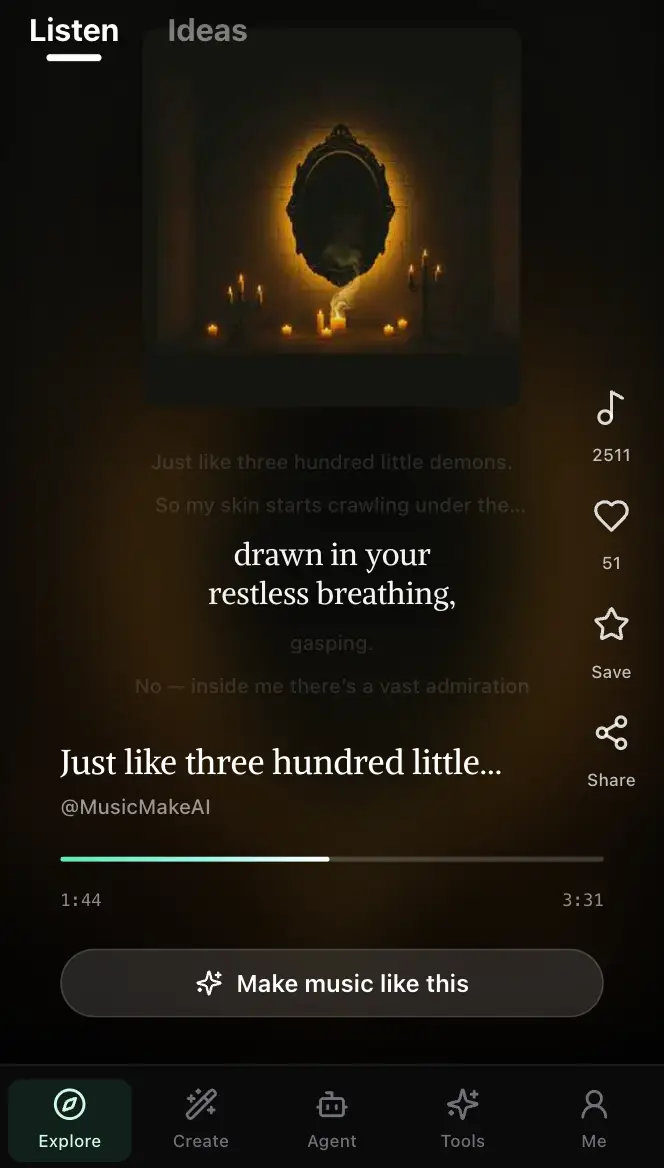
MusicMake.ai Mobile Update: Create Music From Your Phone Like an App
MusicMake.ai now gives creators a complete mobile flow for listening, generating, refining with Music Agent, opening tools, and managing songs from a phone.
AI Songwriting Guide: How to Write Songs with AI in 2026
Learn how to use AI songwriting tools to write better songs faster. Step-by-step guide covering lyrics, melody, arrangement, and production with AI assistance.
how to become a music producer with ai tools - MusicMake.ai Guide
Learn about how to become a music producer with ai tools with this comprehensive guide from MusicMake.ai.