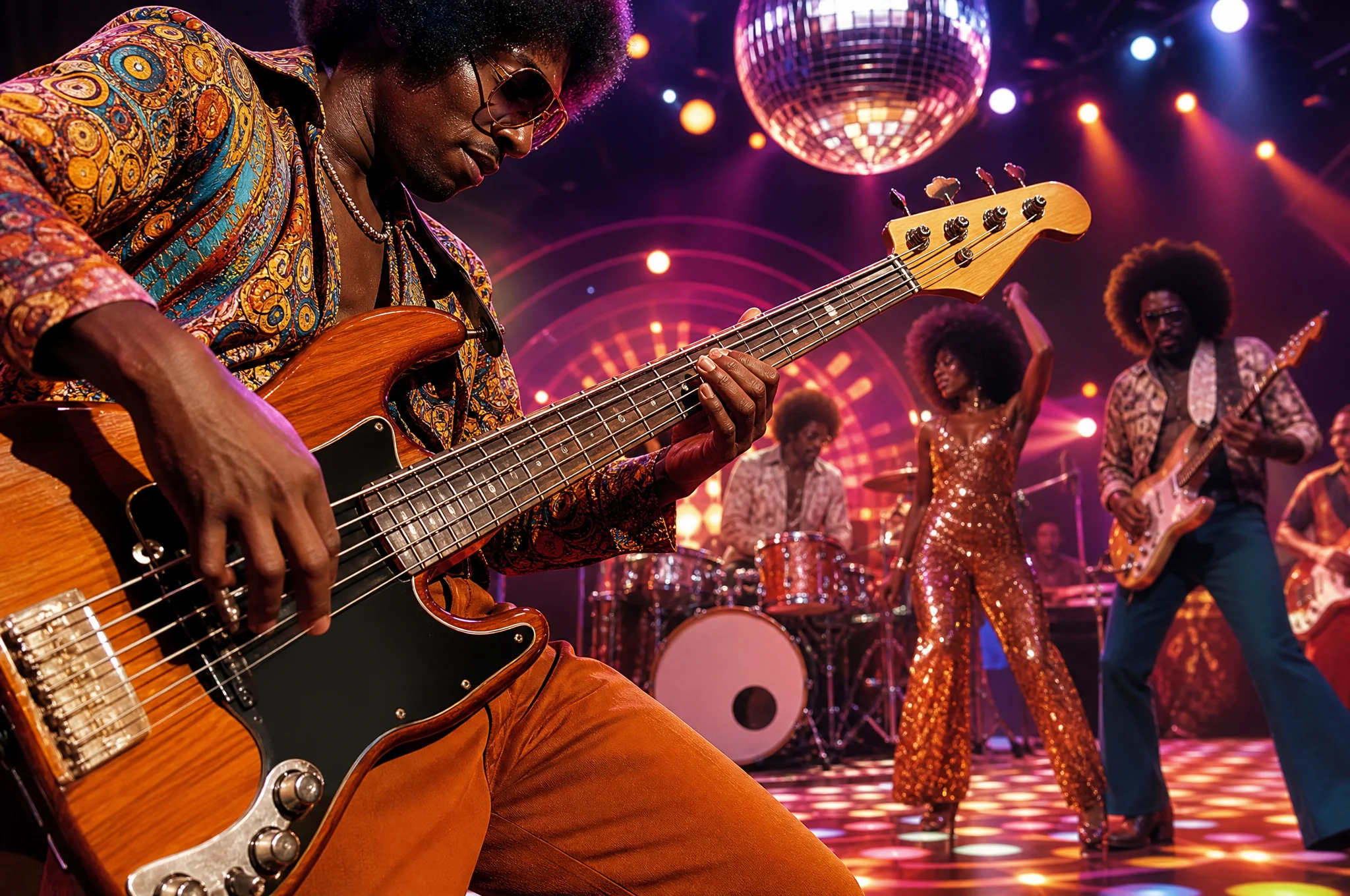
Funk Music Style: A Complete Guide to AI Music Creation
Discover funk music styles and subgenres while mastering AI music creation techniques. Use MusicMake.ai to produce professional-grade funk tracks.
What Is Funk Music?
Funk music (Funk) originated in the mid-1960s in the United States, created by musical pioneers like James Brown by blending soul, jazz, and R&B. Its core features are strong rhythmic grooves, syncopated patterns, and bass-driven low-end lines, making it a major inspiration for hip-hop, electronic dance music, and contemporary pop.
The core soul of funk music lies in the "Groove." Unlike traditional music that emphasizes melody and harmony, funk prioritizes rhythm and groove. The interplay of rhythms between the drummer, bassist, and guitarist creates an irresistible urge to dance. The concept of "The One" (accent on the first beat), established by James Brown, emphasizes the power of the first beat of each measure, becoming a hallmark of funk music.
From a music theory perspective, funk is based on a single chord or minimal harmonic progression, focusing on the complexity of rhythmic patterns. The bass plays a central role in funk; the slap bass technique, invented by Larry Graham, adds a percussive rhythmic feel to the funk bass. On guitar, the wah-wah pedal and short syncopated rhythmic patterns are signature sounds of funk guitar.
Funk music is not only a musical style but also a lifestyle and cultural expression. It represents freedom, confidence, and the ultimate pursuit of rhythm, influencing countless later musicians from Michael Jackson to Daft Punk.
MusicMake.ai's AI model has deeply learned various styles from classic Funk to modern Funk, and can generate music works with authentic funk grooves.
Core Features of Funk Music
- Strong Groove: The soul of funk music, an irresistible dance rhythm.
- Syncopated Rhythm: Extensive use of syncopation creates tension and forward momentum.
- Bass-Driven: Slap bass and complex bass lines are the low-end foundation of funk.
- First Beat Accent: The "One" concept emphasizes the power of the first beat of each measure.
- Minimal Harmony: Simple harmonies shift focus to rhythmic complexity.
- Rich Percussion: Complex drum and percussion arrangements form the rhythmic backbone of funk.
- Wah-Wah Guitar: The wah-wah pedal gives the guitar a distinctive "wah-wah" sound.
- Brass Instruments: Trumpets, saxophones, and other brass instruments add power.
- Rhythm Interplay: Rhythmic patterns between instruments interweave and respond to each other.
- Highly Danceable: Funk music is inherently made for dancing.
History of Funk Music
The origins of funk music can be traced back to the mid-1960s, with James Brown widely recognized as the "Godfather of Funk." His 1965 release "Papa's Got a Brand New Bag" is considered the first true funk song, shifting the focus of R&B from melody to rhythm. James Brown's emphasis on "The One" and the precise rhythmic interplay among his band members laid the foundation for funk music.
The 1970s were the golden age of funk. Sly and the Family Stone blended funk with psychedelic rock, creating Psychedelic Funk. Parliament and Funkadelic (led by George Clinton) pushed funk in a more experimental and cosmic direction, creating the vast musical universe of P-Funk. Earth, Wind & Fire merged funk with jazz and soul, creating a more polished and commercial funk sound.
During the same period, Stevie Wonder and Herbie Hancock combined funk with electronic instruments, pioneering electro-funk. Herbie Hancock's album "Head Hunters" became a classic of fusion funk. Bands like Ohio Players and Kool & The Gang further enriched the expressiveness of funk music.
In the 1980s, Prince blended funk with rock, pop, and new wave to create the unique Minneapolis Sound. His album "Purple Rain" became one of the most influential musical works of the decade. Meanwhile, funk music provided a wealth of sampling material for hip-hop, becoming a key pillar of Hip-Hop culture.
Creating Funk Music with MusicMake.ai
MusicMake.ai offers multiple ways to create funk music, from classic P-Funk to modern electro-funk, catering to different style needs.
Use AI Music Generator
Visit the Generate page and enter your funk music idea. The AI Style Generator can help you precisely select subgenre parameters like P-Funk, Electro Funk, Funk Rock, and more.
In Simple mode, you just need to input a simple description like "make a funk track," and the AI will automatically expand it into a full music description. In Custom mode, you can precisely control parameters such as bass type, drum configuration, brass instrument density, and more.
Use Music Agent
Chat with Music Agent and describe the funk music you want in natural language:
- "Make a classic 1970s funk track with slap bass and brass."
- "Play a P-Funk style track, with trippy synths and spacey vibes"
- "Make an Electro Funk track with 808 drum machine modern funk"
- "Get me a Funk Rock track, guitar-driven funk"
Music Agent supports multi‑turn conversations, so you can keep adjusting the groove, instruments, and rhythm based on the generated results.
Use the AI Style Generator
In the AI Style Generator, explore the many subgenre combinations of funk music. Try cross‑genre combinations like "Funk + Electronic" or "Funk + Jazz" to discover unique funk styles.
Funk Music Subgenres
Funk music has a rich variety of subgenres – from classic funk to modern fusion styles – each with its own unique musical characteristics:
| Subgenre | Description | Key Characteristics |
|---|---|---|
| P-Funk | Parliament-Funkadelic style | Psychedelic elements, cosmic themes, long improvisations |
| Electro Funk | Electronic funk | Electronic drum machines, synth bass, 808 beats |
| Funk Rock | Funk rock | Rock guitar, funk groove, high energy |
| Jazz Funk | Jazz funk | Jazz harmony, funk rhythm, improvisation |
| Go-Go | Go‑Go funk | Washington D.C. style, rich percussion, live feel |
| Minneapolis Sound | Minneapolis sound | Synth funk, pop elements, Prince style |
| Deep Funk | Deep funk | Vintage recording quality, underground style, live instruments |
| Boogie | Boogie | Electronic elements, dance beats, 80s style |
| G-Funk | G-Funk | West Coast hip‑hop, funk samples, synth melodies |
| Afrofunk | Afro funk | African rhythms, funk groove, world music fusion |
| New Funk | New funk | Modern production, diverse fusion, contemporary style |
| Psychedelic Funk | Psychedelic funk | Psychedelic effects, spacey feel, experimental |
| Synth Funk | Synth funk | Synth‑focused, electronic timbres, 80s |
| Nu-Funk | Nu‑funk | Modern mixing, DJ culture, dancefloor‑ready |
| Funk Metal | Funk metal | Heavy metal guitar, funk rhythm, high energy |
| Latin Funk | Latin funk | Latin rhythms, funk groove, rich percussion |
| Drum & Bass Funk | Drum and bass funk | Fast drum beats, funk bass, electronic fusion |
Best Practices for Creating Funk Music
- Groove is the core: In funk, the groove is everything. Make sure the bass and drums lock in tightly.
- Emphasize the first beat: "The One" is the soul of funk. The first beat of each measure should hit hard.
- Use Syncopation: Syncopated rhythms create the forward drive and tension unique to funk music
- Bass Leads: Slap Bass and complex bass lines are the foundation of funk's low end
- Interlocking Rhythms: The rhythmic patterns of each instrument should interlock to form a cohesive, organic groove
- Horns Add Power: Trumpets and saxophones add punch and color to funk music
- Keep It Simple: Funk values space — don't fill every note slot
Frequently Asked Questions
Common questions and answers about creating funk music:
Can AI-generated funk music be used commercially?
Yes. Music generated by MusicMake.ai carries no commercial risk, so you can confidently use it for commercial projects, party music, ad jingles, and more. All music created through the platform comes with full commercial licensing.
Can AI generate Slap Bass?
The MusicMake.ai AI model can generate funk music with Slap Bass techniques. You can include prompts like "Slap Bass driven" or "Bass in the style of Larry Graham" to have the AI produce bass lines with more funk character.
How can I make AI-generated funk music more groovy?
Emphasize keywords like "Groove," "Rhythm," and "Danceability" in your prompt, and specify a particular rhythmic style and instrumentation. For example: "A heavy-groove 70s funk, dominated by Slap Bass and brass." You can also set a BPM range (typically 90–120 BPM) to control how tight the groove feels.
What scenarios are best for funk music?
Funk music works great for parties, dance events, workouts, commercials, games, and any scenario that needs strong rhythm and energy. Funk generated by MusicMake.ai can be used directly in these commercial settings.
What's the difference between funk and soul music?
Both funk and soul originate from R&B, but their focus differs. Soul emphasizes emotional vocal delivery and rich harmonic arrangements, while funk centers on rhythmic groove and bass drive. Funk's harmony is generally simpler, but its rhythmic patterns are more complex, with interlocking instrumental parts being a core characteristic.
Can I earn more funk creation credits by checking in daily?
Yes, MusicMake.ai offers daily login check-ins to earn points and free credits, so you can keep creating more funk tracks.
Instrumentation for Funk Music
Instrumentation is critical to the groove of funk. Here are the core instrument roles in funk music:
| Instrument | Role | Typical Sound Characteristics |
|---|---|---|
| Bass | Groove Core | Slap technique, complex rhythms, heavy low end |
| Guitar | Rhythmic Texture | Wah-Wah effect, syncopated rhythms, short muted notes |
| Drums | Rhythmic Skeleton | Funky Drummer patterns, Ghost Notes |
| Brass Section | Color & Power | Trumpet riffs, Sax solos, Trombone low notes |
| Keyboards | Harmony & Melody | Clavinet, Rhodes electric piano, Synthesizers |
| Percussion | Rhythmic Layers | Conga, Tambourine, Cowbell |
Rhythmic Patterns in Funk Music
Rhythm is the heartbeat of funk music. Mastering these core concepts will help you create more authentic funk tracks:
- The One: The downbeat of every measure is the pulse of funk. Every instrument locks in to that first beat.
- Ghost Note: Light, ghosted snare hits that add subtle texture and swing to the groove.
- Syncopation: Placing accents on the weak beats to generate rhythmic drive and tension.
- Sixteenth-Note Groove: Funk rides on a tight sixteenth-note grid.
- Rhythmic Interplay: Each instrument plays its own independent pattern, yet they lock together to create a cohesive, organic groove.