Soundtrack Music Style: A Complete Guide to AI Music Creation
Explore soundtrack music styles and subgenres, and master AI music creation techniques. Create professional soundtrack music with MusicMake.ai.
What Is Soundtrack Music?
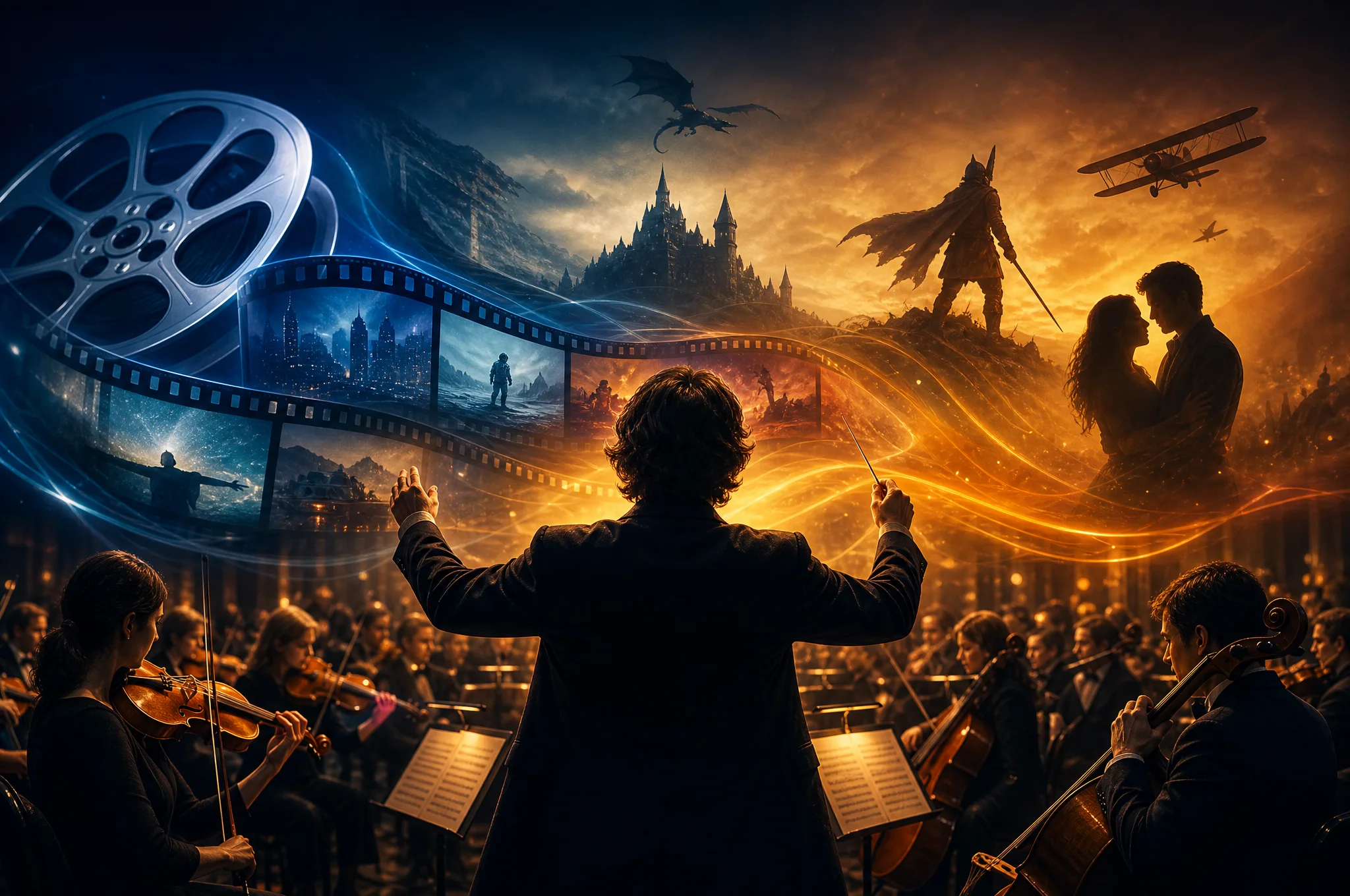
Soundtrack music is music created for visual media—including films, TV series, documentaries, advertisements, and stage productions. Its core function is to enhance storytelling, guide audience emotions, set the atmosphere, and form an organic whole with the visuals.
What makes soundtrack music unique is that it always serves visual storytelling. A great score can elevate the emotional depth of a scene, heighten dramatic tension, and even tell a story without any dialogue. From the epic themes of Star Wars to the minimalist score of Interstellar, soundtrack music has become an inseparable part of cinematic art.
In AI music creation, soundtrack music is a field with tremendous potential. AI can quickly generate scores in different moods and styles based on scene descriptions, helping independent filmmakers, video creators, and game developers achieve professional scoring effects at low cost.
Whether you're an independent filmmaker, video creator, or game developer, MusicMake.ai can help you quickly generate high-quality soundtrack music assets. From epic battle scenes to tender emotional moments, AI can precisely match the emotional needs of your visuals.
Core Characteristics
- Narrative-driven: Music serves visual storytelling, enhancing the emotional expression of the story
- Emotional guidance: Musical changes guide the audience's emotional state
- Scene adaptation: Different scenes require different styles and moods in the score
- Thematic development: Variations and development of thematic melodies enhance narrative coherence
- Instrumental diversity: Instrument choices are extremely broad, from orchestral to electronic music
- Dynamic variation: Music needs to change dynamically according to the rhythm and mood of the visuals
- Art of silence: Knowing when to let music recede into the background or fall completely silent
- Cultural expression: Conveying specific cultural backgrounds and period atmospheres through musical elements
- Timbre design: Shaping scene atmosphere through unique timbres and sonic textures, such as using low-frequency strings to create unease or clear piano tones to express pure emotion
- Rhythm control: The score's rhythm must precisely synchronize with editing pace, actor performance rhythm, and narrative rhythm, creating an integrated audiovisual experience
- Thematic memory: Great scores establish dedicated musical themes for characters, locations, or emotional states, so audiences automatically associate melodies with corresponding narrative elements
- Layered construction: By layering different instruments and timbres, simple melodies gradually build into rich sonic textures, matching the complexity and emotional intensity of the scene
History
The history of soundtrack music is closely tied to the film industry. In 1927, the release of the first talkie, The Jazz Singer, marked the birth of film scoring. Early film scores primarily adopted classical orchestral forms, with composers like Max Steiner and Erich Wolfgang Korngold laying the foundation.
In the 1960s and 70s, film scores began incorporating pop music elements. Ennio Morricone's score for The Good, the Bad and the Ugly became a classic, and John Williams' themes for Star Wars, Jaws, and other films defined the standard for modern film scoring. During this period, electronic music also began entering the realm of film scoring.
Contemporary soundtrack music shows a trend toward diversification. Hans Zimmer fused electronic elements with orchestral music, creating iconic scores for Inception and Interstellar. Trent Reznor and Atticus Ross won an Oscar for their purely electronic score for The Social Network. The addition of AI technology has greatly enhanced both the efficiency and possibilities of score creation.
In China, the film scoring industry is also developing rapidly. More and more Chinese films are paying attention to scoring quality, hiring professional composers for their scores, and the international influence of Chinese film scoring continues to grow.
The 1980s and 90s were the golden age of film scoring. This period produced a wealth of classic scores, such as Vangelis' synthesizer score for Blade Runner, James Horner's moving melodies for Titanic, and Howard Shore's grand musical world for The Lord of the Rings trilogy. Scores were no longer mere background music but became a core component of cinematic storytelling, with many film soundtrack albums achieving enormous commercial success independently of their films.
Entering the 21st century, the creation of film scores underwent a fundamental transformation. The proliferation of digital audio workstations (DAWs) enabled composers to complete scores in personal studios that previously required an entire orchestra. The quality of virtual instruments and sample libraries continues to improve, significantly lowering the barrier to score production. Meanwhile, the rise of streaming platforms has brought unprecedented attention to TV series scores, with the music from shows like Game of Thrones and Stranger Things becoming cultural phenomena.
Soundtrack Music in the Digital Age
Digital technology has fundamentally transformed the creation, production, and distribution of soundtrack music. At the creative level, composers can use MIDI controllers and digital audio workstations to write and edit scores in real time, dramatically shortening the cycle from concept to finished product. Virtual instrument technology allows a single person to simulate the effect of a full orchestra, which is especially significant for independent productions with limited budgets.
At the production level, modern mixing and mastering techniques have brought score audio quality to unprecedented heights. Spatial audio and Dolby Atmos technology deliver immersive listening experiences to audiences—scores are no longer flat but form three-dimensional soundscapes that surround the audience and convey emotion from every direction.
The introduction of AI technology is ushering in a new era for soundtrack music. AI can automatically generate score drafts based on scene descriptions, helping composers quickly explore different musical directions. Machine learning algorithms can analyze vast bodies of classic scores, extracting emotional patterns and stylistic features to provide creative inspiration. For projects requiring large volumes of score material, such as games and interactive media, AI can efficiently generate musical variants, ensuring freshness during extended playback.
The growth of streaming platforms has also created new opportunities for soundtrack music. On platforms like Spotify and Apple Music, playback volumes for film and TV soundtracks continue to rise, and scores have become an independent music consumption category. Many viewers actively search for and repeatedly listen to soundtracks after watching films or shows, prompting creators to place greater emphasis on the standalone listening value of their scores. Soundtrack music is evolving from an accessory of visual media into an independent art form and commercial market.
Creating Soundtrack Music with MusicMake.ai
Using AI Music Generator
Visit the Generate page and enter a soundtrack music style description. For example:
- "Epic cinematic score with orchestra and choir, suitable for adventure scenes"
- "Minimalist piano score for emotional scenes"
The built-in AI Style Generator can help you turn vague ideas into precise soundtrack music style descriptions.
Using Music Agent
Tell the Music Agent the soundtrack style you want. For example:
- "Create an epic score in the style of a movie trailer"
- "Generate a tense score for a suspense scene"
- "Compose a documentary score in a minimalist style"
Using AI Prompt Enhancer
In Simple mode, AI Prompt Enhancer can expand a single sentence into a complete soundtrack music description, automatically adding details about scene adaptation, emotional changes, and instrumentation.
Subgenres
| Subgenre | Description |
|---|---|
| -------- | -------- |
| Epic Orchestral | Grand orchestral scores |
| -------- | -------- |
| Minimalist | Simple yet emotionally rich scores |
| -------- | -------- |
| Electronic Score | Purely electronic film scores |
| -------- | -------- |
| Ambient Soundscape | Atmosphere-oriented background music |
| -------- | -------- |
| Action Score | High-energy action scene music |
| -------- | -------- |
| Thriller Score | Tense and suspenseful music |
| -------- | -------- |
| Horror Score | Frightening and terrifying scores |
| -------- | -------- |
| Romance Score | Tender and romantic emotional scores |
| -------- | -------- |
| Comedy Score | Light-hearted and fun comedy music |
| -------- | -------- |
| Sci-Fi Score | Futuristic science fiction music |
| -------- | -------- |
| Fantasy Score | Music for magic and fantasy worlds |
| -------- | -------- |
| Western Score | American Western-style scores |
| -------- | -------- |
| Documentary Score | Authentic and profound documentary music |
| -------- | -------- |
| Animation Score | Scoring styles for animated films |
| -------- | -------- |
| Trailer Music | Epic music for movie trailers |
| -------- | -------- |
| TV Score | Scoring styles for TV series |
| -------- | -------- |
| Commercial Score | Music for advertisements and promotional videos |
| -------- | -------- |
| Theater Score | Scores for stage plays and musicals |
Best Practices
1. Describe the Scene, Not the Style
Soundtrack music is all about serving the scene. Instead of saying "epic music," say "a hero riding horseback into the sunset." AI can generate more fitting scores based on scene descriptions.
2. Focus on Emotional Layers
Great scores have rich emotional layers. Describe the emotional progression in your prompt—such as "from calm to tension to release"—and AI will generate music with dynamic variation.
3. Use AI to Generate Thematic Variations
Use the AI Style Generator to generate different emotional variants from the same theme, for use at different stages of the same scene or as echoes between different scenes.
4. Consider Music-Visual Synchronization
Soundtrack music needs to match the rhythm of the visuals. Describe the editing pace and emotional beats in your prompt, and AI will generate scores that fit the visuals more closely.
5. No Commercial Risk
Soundtrack music generated with MusicMake.ai carries no commercial risk. You can confidently use it in films, videos, games, or commercial projects.
6. Make Good Use of Silence
The power of a score lies not only in sound but also in knowing when to be silent. Pulling music back or stopping it entirely at key moments creates powerful emotional contrast. Note in your description "leave a few seconds of silence before the climax" or "music gradually fades to silence," and AI will generate scores with greater dramatic impact.
7. Maintain Thematic Consistency
When scoring longer works, maintaining consistency in the core musical theme is essential. The same melodic motif can be presented with different arrangements across various scenes, preserving overall coherence while adapting to each scene's emotional needs.
FAQ
How can I make AI generate more "cinematic" scores?
Use specific scene descriptions and emotional progressions, such as "an epic battle scene, from tense preparation to fierce combat to victorious release." You can also specify iconic instrumentation, like "full orchestra plus choir." The essence of film scoring lies in emotional arc and narrative momentum—AI can generate music with dramatic tension based on scene descriptions.
Can MusicMake.ai generate a complete film score?
Yes. You can use the Music Agent to describe an entire film's sequence of scenes, and AI will generate a complete scoring plan for you. Each scene can have a different style and mood while maintaining overall musical thematic coherence. From opening to climax to resolution, AI can provide a complete musical narrative for the entire story.
What scenarios are suitable for soundtrack music?
Soundtrack music is suitable for films, TV series, documentaries, advertisements, games, podcasts, corporate promotional videos, and more. Music generated with MusicMake.ai carries no commercial risk and can be used freely. Whether it's an independent short film or a commercial ad, AI-generated soundtrack music can enhance the professionalism and emotional depth of your work.
How do I choose the right scoring style for different types of scenes?
Different scene types suit different scoring styles: action scenes work well with epic orchestral scores featuring percussion and brass; emotional scenes suit minimalist scores led by piano or strings; suspense scenes benefit from dissonant tones and low-frequency effects to build tension; sci-fi scenes call for synthesizers and electronic sounds to create a futuristic feel. In MusicMake.ai, you can simply describe the scene type, and AI will automatically match the most suitable scoring style.
Can AI-generated scores rival the work of professional composers?
AI-generated scores have reached a high level of technical quality and emotional expression, making them particularly suitable for independent productions, short videos, game prototypes, and commercial projects. For large-scale film projects requiring highly personalized and complex narratives, AI can serve as a composer's creative assistant, quickly generating drafts and inspiration references for professional composers to refine. MusicMake.ai's goal is to enable more creators to achieve professional-grade scoring effects at low cost.