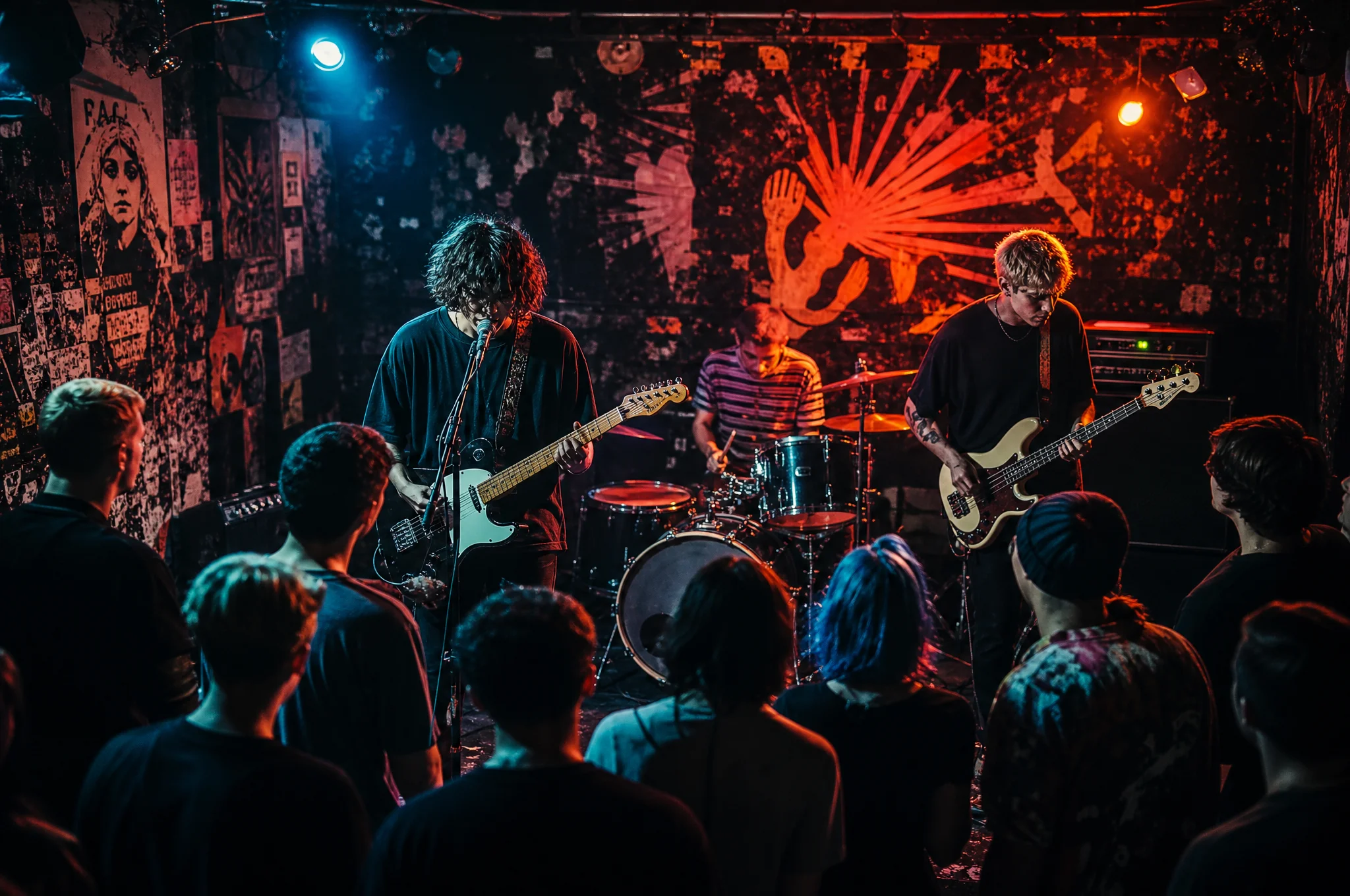
Underground Music Styles: A Complete Guide to AI Music Creation
Explore underground music styles and subgenres, and master AI music creation techniques. Create professional-grade underground music with MusicMake.ai.
What Is Underground Music?
Underground music refers to musical forms that develop independently outside the commercial mainstream. It doesn't chase mass-market recognition but instead focuses on musical innovation, authenticity, and community value. From indie rock to noise music, from underground hip-hop to black metal, underground music encompasses countless niche and unique styles.
The core spirit of underground music lies in independence and rebellion — it opposes the standardized production of the music industry and insists on artistic creative freedom and musical purity. Underground music scenes often have a strong sense of community and DIY spirit, forming an ecosystem independent of the mainstream, from independent labels to underground venues.
In AI music creation, underground music is a field full of exploratory fun. AI can simulate the unique sounds and production techniques of various underground music styles, helping creators explore niche genres or create innovative fusions between different underground styles.
Whether you're an independent musician, sound artist, or music enthusiast, MusicMake.ai can help you explore the infinite possibilities of underground music. From indie rock to noise music, from black metal to post-punk, AI can accurately reproduce the unique aesthetics of underground music.
Core Characteristics
- Independent Spirit: Insists on independent creation, refusing to cater to the commercial market
- Innovation-Driven: Daring to experiment with new sounds and modes of expression
- DIY Aesthetic: Self-produced recordings, independent releases, DIY shows
- Authentic Expression: Emphasizes emotional authenticity and artistic purity
- Community Culture: Tight-knit music communities formed around specific styles
- Anti-Commercialization: Opposes the standardization and commodification of the music industry
- Unique Timbre: Often features distinctive recording and production aesthetics
- Live Culture: Values live performances and face-to-face musical experiences
- Marginal Narratives: Lyrics and themes often focus on social issues overlooked by the mainstream, such as class conflict, urban decay, and mental struggles
- Anti-Tech Worship: Some underground scenes deliberately pursue rough production, believing that overly polished recordings diminish the emotional impact of music
- Cross-Media Fusion: Underground music often intersects with visual art, installations, film, poetry, and other art forms, creating comprehensive artistic expressions
- Decentralized Networks: Underground music relies on word of mouth, independent radio, small shows, and now social platforms to build its distribution network, rather than depending on mainstream media exposure
- Scene Segmentation: Different underground styles often have clear aesthetic boundaries, with audiences having a strong sense of belonging and identity
History
The concept of underground music can be traced back to the counterculture movements of the 1960s. The psychedelic rock and folk rock movements of that era represented a musical attitude opposing mainstream commercial culture. The punk movement of the 1970s took DIY spirit to the extreme, with independent labels and underground venues becoming important battlegrounds for musical innovation.
The 1980s and 90s were the golden age of underground music. Indie rock, alternative rock, underground hip-hop, black metal, and other styles flourished during this period. Nirvana's journey from underground to mainstream showcased the potential of underground music while sparking discussions about the loss of "underground-ness." Independent radio stations, indie magazines, and independent labels became key channels for underground music distribution.
Contemporary underground music faces new challenges and opportunities. The internet has made underground music distribution more accessible, but it has also blurred the boundary between "underground" and "mainstream." Platforms like Bandcamp and SoundCloud have become important strongholds for contemporary underground music. The emergence of AI technology provides new tools and possibilities for underground music creation.
In China, the underground music scene is also thriving. From punk rock in Beijing to electronic music in Shanghai, from indie folk in Chengdu to noise music in Guangzhou, China's underground music presents a diverse landscape.
The cultural significance of underground music extends far beyond music itself. It is an incubator for subcultures — from punk's rebellious posture to goth's dark aesthetics, each underground style has given rise to a complete visual language, dress style, and attitude toward life. These subcultural groups have created their own strongholds in urban spaces: underground bars, independent record stores, DIY venues — these are not just places for musical performance but physical vessels for community cohesion and identity.
Underground music is also a powerful tool for social critique. It provides a channel for marginalized voices, allowing groups obscured by mainstream narratives to be heard. From British punk's attack on the class system, to American underground hip-hop's indictment of racial inequality, to Japanese noise music's deconstruction of consumerism, underground music has always served a function of cultural resistance. This critical nature makes underground music a sensitive barometer of social change — when underground music of an era begins to be absorbed by the mainstream, it often signals that a new cultural shift is brewing.
Underground Music in the Digital Age
The digital age has fundamentally transformed how underground music survives. Bandcamp allows independent musicians to sell their work directly to listeners, bypassing the layers of cuts in the traditional distribution system. SoundCloud and YouTube have become launching pads for a new generation of underground musicians, with algorithmic recommendations enabling niche styles to precisely reach potential listeners. Social media has reshaped the form of underground music communities — Discord servers and Telegram groups have replaced in-person gatherings as the core spaces for fans to communicate and discover new music.
However, digital platforms have also brought new contradictions. Algorithm-driven traffic distribution tends to amplify content that already has momentum, creating implicit suppression of truly underground music. The very definition of "underground" is being reconsidered: when an indie song goes viral on TikTok, can it still be called underground music? Many underground musicians are cautious about this, choosing to release work on more niche platforms or maintaining scene independence through limited physical releases.
The rise of AI technology has opened new paths for underground music creation. Independent musicians can use AI tools to handle arrangement, mixing, and other tasks, significantly lowering the barrier to production. AI can also help creators explore unprecedented sound combinations, pushing underground music in a more experimental direction. MusicMake.ai is a practitioner of this trend — enabling more people to participate in underground music creation without expensive equipment and professional studios.
Creating Underground Music with MusicMake.ai
Using AI Music Generator
Visit the Generate page and enter your underground music style description. For example:
- "Indie rock style, lo-fi recording texture, DIY aesthetic"
- "Underground hip-hop, deep bass and experimental sampling"
The built-in AI Style Generator can help you transform vague ideas into precise underground music style descriptions.
Using Music Agent
Tell the Music Agent about the underground style you want, for example:
- "Create an underground electronic track with dark atmosphere"
- "Compose a piece of extreme music in black metal style"
- "Generate an indie folk song with acoustic guitar and vocals"
Using AI Prompt Enhancer
In Simple mode, the AI Prompt Enhancer can expand a single sentence into a complete underground music description, automatically adding details about timbre characteristics, production techniques, and scene atmosphere.
Subgenres
| Subgenre | Description |
|---|---|
| -------- | -------- |
| Indie Rock | Independently produced rock music |
| -------- | -------- |
| Underground Hip-Hop | Non-commercial hip-hop music |
| -------- | -------- |
| Black Metal | The raw aesthetics of extreme metal |
| -------- | -------- |
| Death Metal | The heavy branch of extreme metal |
| -------- | -------- |
| Punk Rock | Fast, raw punk music |
| -------- | -------- |
| Hardcore Punk | Faster and heavier punk style |
| -------- | -------- |
| Noise Rock | Rock fused with noise elements |
| -------- | -------- |
| Post-Punk | Experimental rock after punk |
| -------- | -------- |
| Shoegaze | Distorted guitars and dreamy atmospheres |
| -------- | -------- |
| Dream Pop | Dreamlike pop music |
| -------- | -------- |
| Indie Folk | Independently produced folk music |
| -------- | -------- |
| Lo-Fi | Lo-fi recording aesthetics |
| -------- | -------- |
| Experimental Electronic | Innovative electronic music |
| -------- | -------- |
| Industrial | Mechanical and dark electronic music |
| -------- | -------- |
| Darkwave | Dark synthesizer music |
| -------- | -------- |
| Gothic Rock | Rock music with gothic aesthetics |
| -------- | -------- |
| Emo | Emotional indie rock |
| -------- | -------- |
| Math Rock | Indie rock with complex time signatures |
| -------- | -------- |
| Post-Rock | Ambient and dynamic instrumental rock |
| -------- | -------- |
| Underground Rap | Independent and experimental rap |
Best Practices
1. Emphasize Timbre Uniqueness
The value of underground music lies in its uniqueness. Use keywords like "unique timbre," "unconventional production," and "DIY texture" in your descriptions to guide AI in generating music with underground aesthetics.
2. Explore Anti-Mainstream Style Combinations
Underground music encourages innovation and experimentation. Use the AI Style Generator to try anti-mainstream style combinations, such as "classical + noise" or "folk + industrial."
3. Simulate Independent Production Aesthetics
Underground music often has distinctive recording and production aesthetics. Use descriptors like "lo-fi," "DIY recording," and "raw texture" to guide AI in generating more authentic underground music.
4. Prioritize Emotional Authenticity
Underground music emphasizes genuine emotional expression. Describe the emotions the music should convey, such as "anger," "melancholy," "rebellion," or "loneliness."
5. No Commercial Risk
Underground music generated with MusicMake.ai carries no commercial risk, so you can confidently use it for independent projects, artistic creations, or commercial purposes.
6. Respect Scene Context
Each underground style has its specific cultural background and aesthetic norms. Understanding the history and typical characteristics of your target style before creating will make AI-generated music more convincing. For example, black metal emphasizes rawness and coldness, shoegaze focuses on layered guitar walls, and lo-fi hip-hop pursues warm sampling textures. Understanding these differences will help you better guide AI creation.
Frequently Asked Questions
How do I make AI generate more "underground" music?
Use anti-mainstream descriptors such as "non-commercial," "DIY aesthetic," "raw texture," and "experimental." You can also describe specific underground music scenes, like "90s Seattle grunge scene" or "New York no wave movement." AI can simulate the unique timbres and production techniques of various underground music styles.
Can MusicMake.ai generate extreme metal styles?
Yes. MusicMake.ai supports various extreme styles including black metal and death metal. You can describe the extreme timbres and styles you want on the Generate page, and AI will generate corresponding works for you. From raw black metal to technical death metal, AI can accurately reproduce the sonic aesthetics of extreme music.
What scenarios is underground music suitable for?
Underground music is suitable for independent films, art exhibitions, indie games, podcasts, fashion shows, underground performances, and more. Music generated with MusicMake.ai carries no commercial risk and can be used freely. Whether for independent art projects or underground cultural events, AI-generated underground music can add a unique rebellious quality to your work.
What's the difference between underground music and indie music?
While there is significant overlap, the two have different focuses. Indie music emphasizes independence in production and distribution — it can encompass any style as long as it doesn't rely on major labels. Underground music places more emphasis on cultural stance and aesthetic orientation — it's not just a production method but an attitude. A release on an indie label may be indie music but not necessarily underground music, while a black metal release on a major label still has strong underground attributes. The key lies in whether the music maintains its distance from and critique of mainstream aesthetics.
Will AI-generated underground music lose its "underground-ness"?
This is a thought-provoking question. AI itself is a neutral tool — what matters is the user's creative intent and aesthetic choices. When you use AI to simulate lo-fi recording textures, experimental sound design, or anti-mainstream style combinations, you're still carrying forward the core spirit of underground music. The essence of underground music lies not in the scarcity of tools but in the independence of creative attitude. The technical capabilities provided by MusicMake.ai actually lower the barrier to participating in underground music creation, allowing more people with independent aesthetics to express their own voices.