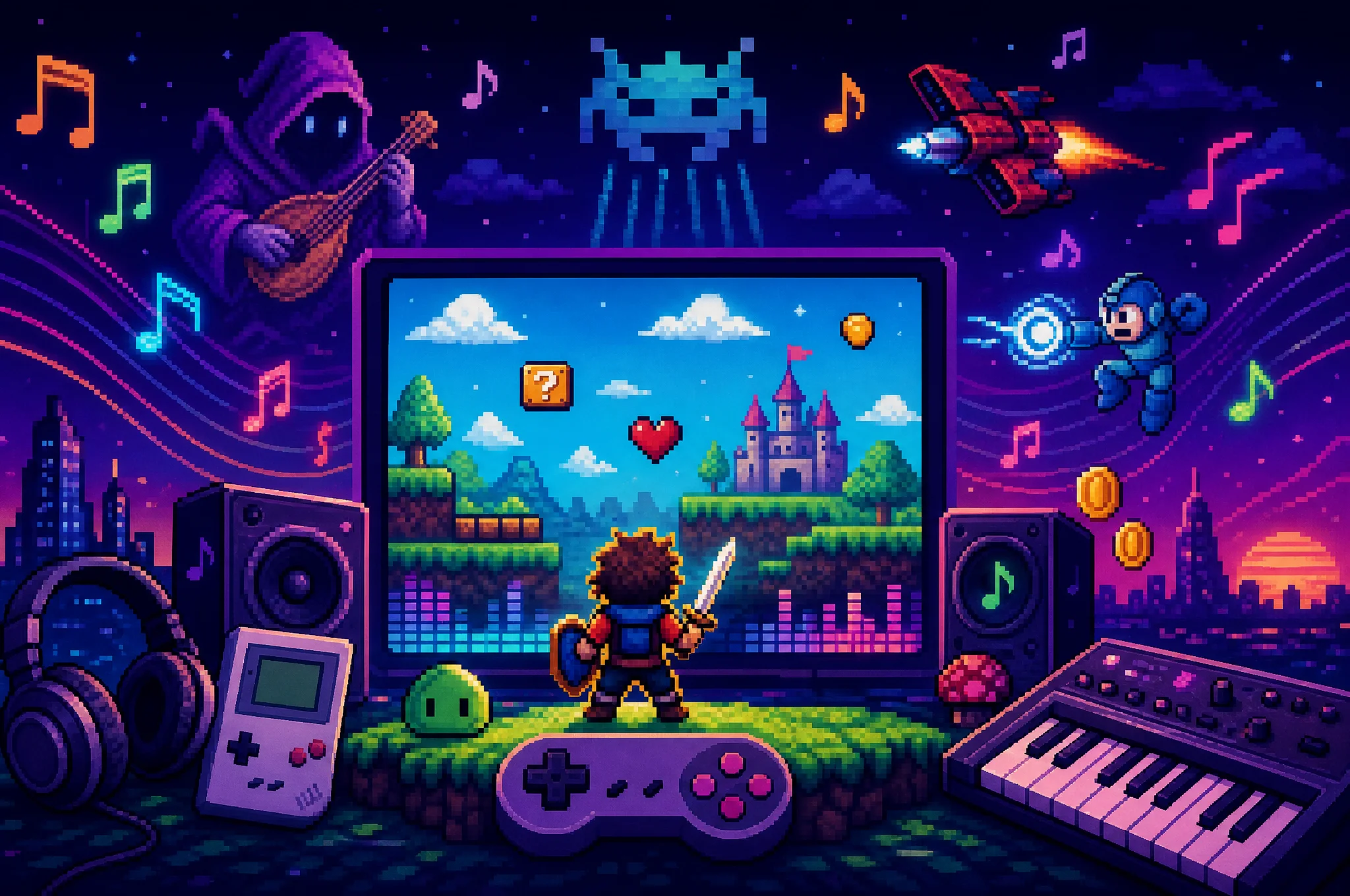
Gaming Music Style: A Complete Guide to AI Music Creation
Explore gaming music styles and subgenres, and master AI music creation techniques. Create professional-grade game music with MusicMake.ai.
What Is Gaming Music?
Gaming Music is music created for video games. It is not merely background scoring but an integral part of the gaming experience. From 8-bit chiptune to cinematic orchestral scores, gaming music has evolved into an incredibly rich and diverse genre.
What makes gaming music unique is its functional nature — it needs to serve gameplay, enhance immersion, guide player emotions, and even influence player decisions. Great gaming music creates deep emotional resonance without disrupting the gaming experience. Game music composers need to understand game mechanics, player psychology, and narrative pacing to create scores that truly merge with the game.
In AI music creation, gaming music is a field full of opportunities. AI can quickly generate music variations in different styles and moods, helping indie developers and small teams obtain high-quality game scores at low cost. AI can also adjust music in real time based on game state, creating dynamic, responsive musical experiences.
Whether you're an indie game developer, game video creator, or gaming music enthusiast, MusicMake.ai can help you quickly generate professional-grade gaming music assets. From epic RPG scores to cheerful platformer music, AI can precisely capture the essence of gaming music.
Core Characteristics
- Functionality-Driven: Music serves gameplay, requiring consideration of loops, transitions, and interactivity. Unlike film scores, gaming music's rhythm and length depend on player behavior rather than a fixed script timeline
- Emotional Guidance: Music changes guide the player's emotional state. From tense battles to serene exploration, music needs to transition naturally between different moods, helping players immerse themselves more deeply in the game world
- Diversity: A single game may contain multiple music styles. An open-world game might simultaneously need epic battle music, relaxed town background music, and mysterious dungeon atmosphere
- Loopability: Many game music tracks need to loop seamlessly. Players may stay in the same scene for minutes or even hours, so the music must remain natural and fluid when looping, avoiding listener fatigue
- Interactivity: Music needs to change dynamically based on game state. Modern games use layered music systems that adjust the intensity and instrumentation of music in real time based on player actions
- Rich Timbres: From chiptune to orchestral, the range of timbre choices is extremely broad. Gaming music is not bound by traditional music genres and can freely blend electronic synthesizers, ethnic instruments, and symphony orchestras
- Atmosphere Creation: Building immersion in the game world. The combination of ambient sound effects and music can shape a unique game atmosphere, making players feel the authenticity of different regions and cultures
- Memorability: Great gaming music often features highly recognizable thematic melodies. Themes from Super Mario and The Legend of Zelda have become iconic symbols of popular culture
- Adaptability: Music needs to adapt to different game platforms and hardware. From phone speakers to high-end headphones, gaming music needs to maintain good audio quality across all playback conditions
- Narrative Function: Gaming music fulfills narrative roles. Through thematic variations and the development of musical motifs, composers can tell stories of character growth and world-building evolution
History
The history of gaming music is closely tied to the video game industry. In the late 1970s, with the rise of arcade games, simple electronic sounds became the earliest "game music." Space Invaders (1978) used a simple four-note loop that created a progressively increasing sense of tension.
The 1980s were the golden age of gaming music. On Nintendo's Game Boy and NES platforms, composers created countless classic melodies under extremely limited hardware constraints. Koji Kondo's music for Super Mario and The Legend of Zelda is still widely celebrated today. The music of this era is known as "Chiptune."
From the 1990s to the present, as hardware capabilities improved, gaming music gradually adopted CD-quality recordings and orchestral arrangements. Composers like Nobuo Uematsu for the Final Fantasy series and Martin O'Donnell for the Halo series elevated gaming music to the level of film scores. Contemporary gaming music now encompasses everything from classical to electronic, rock to world music.
In China, the gaming music industry is developing rapidly. The scores of Chinese games like Genshin Impact and Black Myth: Wukong demonstrate the high caliber of Chinese gaming music. More and more Chinese games are prioritizing soundtrack quality, and gaming music has become a vital part of the gaming experience.
Entering the 2000s, gaming music began to diversify. The rise of indie games brought more experimental music styles — from the electronic beats of Spelunky to the pastoral melodies of Stardew Valley, indie developers told their stories through unique musical language. Meanwhile, rhythm games like Guitar Hero and Rhythm Heaven turned music itself into the core gameplay mechanic, pioneering an entirely new game genre.
After the 2010s, the production scale of gaming music reached unprecedented heights. The Witcher 3 enlisted a full symphony orchestra to record its score, Cyberpunk 2077 collaborated with renowned musicians to create original songs, and the production quality of gaming music became comparable to Hollywood film scores. The popularity of streaming platforms has also brought game soundtracks to a wider audience, and gaming music has begun to be recognized and appreciated by the general public as an independent music genre.
Gaming Music in the Digital Age
In the digital age, the creation, distribution, and consumption of gaming music have undergone revolutionary changes. The proliferation of digital audio workstations (DAWs) and virtual instruments means composers no longer need expensive studio equipment to create professional-grade game scores. Indie developers can leverage AI tools and sample libraries to complete entire game music productions on personal computers.
Streaming platforms like Spotify and Apple Music have dedicated categories for gaming music, and game soundtrack play counts continue to break records. Genshin Impact's music has achieved hundreds of millions of plays globally, proving that gaming music has become a significant part of mainstream music consumption. Game music concerts have also emerged as a new cultural phenomenon, with symphony orchestras performing classic game scores in concert halls worldwide, attracting large numbers of young audiences.
AI technology is bringing new possibilities to gaming music. AI can generate dynamic scores in real time based on game scenarios, creating truly "living" music systems. Tools like MusicMake.ai enable developers to quickly generate music variations in different styles and moods, greatly reducing the barriers and costs of game score production. In the future, the combination of AI and gaming music will create even more personalized and immersive gaming experiences.
The community culture of gaming music is also thriving. Fan-organized cover bands, game music remix communities, and music creation competitions have formed a vibrant ecosystem. These communities not only drive innovation in gaming music but also provide platforms for emerging composers to showcase their talents. Gaming music has evolved from simple background scoring into an independent art form and cultural phenomenon.
Creating Gaming Music with MusicMake.ai
Using AI Music Generator
Visit the Generate page and enter your gaming music style description. For example:
- "Epic RPG battle music with orchestra and choir"
- "8-bit chiptune style, cheerful platformer game soundtrack"
- "Tense horror game atmosphere music with low-frequency noise and dissonance"
The built-in AI Style Generator can help you turn vague ideas into precise gaming music style descriptions. You can also reference the system's style templates to quickly generate scores matching your game type.
Using Music Agent
Tell the Music Agent the gaming music style you want, for example:
- "Create a main menu theme for an RPG game"
- "Generate an intense and exciting chase scene soundtrack"
- "Compose a cheerful game track in chiptune style"
Music Agent can understand complex game scenario descriptions and generate scores that perfectly match the game's atmosphere.
Using AI Prompt Enhancer
In Simple mode, the AI Prompt Enhancer can expand a single sentence into a complete gaming music description, automatically adding details like scenario adaptation, mood transitions, and loop requirements. This is particularly useful for developers unfamiliar with music terminology — just enter a simple idea, and the AI will generate a professional music description.
Subgenres
Gaming music subgenres are rich and diverse, each with its own unique musical characteristics and application scenarios:
| Subgenre | Description |
|---|---|
| Chiptune | Retro 8-bit/16-bit style electronic music |
| RPG Soundtrack | Orchestral scores for role-playing games |
| Action Game | High-energy battle and chase music |
| Horror Game | Tense and unsettling atmosphere music |
| Adventure Game | Exploration and discovery themed music |
| Fighting Game | Intense battle soundtracks |
| Racing Game | Fast-paced and dynamic music |
| Sports Game | Energetic competitive soundtracks |
| Simulation | Relaxed background music |
| Puzzle Game | Focused and relaxing music |
| Open World | Grand exploration themed music |
| Sci-Fi Game | Futuristic electronic music |
| Fantasy Game | Medieval and magic themed music |
| Indie Game | Unique and innovative indie game scores |
| MMO | Atmospheric scores for persistent worlds |
| Retro Gaming | Classic console era music styles |
| VR Game | Immersive 3D spatial audio |
| Mobile Game | Lightweight mobile game music |
Best Practices
1. Consider Music Loopability
Game music often needs to loop seamlessly. Clearly specify the "seamless loop" requirement in your description, and the AI will generate a structure suitable for looping. It's recommended to specify the music duration when generating, such as "3-minute seamless loop," to ensure the music performs as expected in the game.
2. Match Game Scenarios
Different game scenarios require different music styles. Battle scenes need high energy and tension, exploration scenes need atmosphere and mystery, and menus need to be relaxed and inviting. Use specific scenario descriptions to guide AI generation. You can also consider music transitions between scenarios to create a smooth auditory experience.
3. Use AI to Generate Music Variations
Game music often requires multiple variations (such as normal state and tension state). Use the AI Style Generator to generate different emotional variations from the same theme. This layered music system is very common in modern games and can adjust the musical atmosphere in real time based on player actions.
4. Emphasize Memorability
Great gaming music often features highly recognizable thematic melodies. Use keywords like "memorable," "distinctive," and "thematic melody" in your descriptions. A strong thematic melody can make players remember your work long after the game ends.
5. No Commercial Risk
Gaming music generated with MusicMake.ai carries no commercial risk. You can confidently use it for indie game development, game video content, or commercial projects. All generated music comes with full commercial licensing, with no copyright concerns.
Frequently Asked Questions
How can I make AI generate game music suitable for looping?
Clearly specify the "seamless loop" requirement in your description and state the desired duration. The AI will generate music with a structure suitable for looping, avoiding obvious beginnings and endings. Loopability is a key characteristic of gaming music, and AI can ensure the music remains smooth and natural when looping.
Can MusicMake.ai generate chiptune style music?
Yes. MusicMake.ai supports various gaming music styles including chiptune. You can describe the 8-bit or 16-bit style you want on the Generate page, and the AI will generate corresponding work. From classic NES sounds to modern chiptune fusions, AI can precisely reproduce the retro charm of gaming music.
What scenarios is gaming music suitable for?
Gaming music is suitable for video game development, game streaming, game video content, esports events, game-themed exhibitions, and more. Music generated with MusicMake.ai carries no commercial risk and can be freely used. Whether for indie games or large-scale projects, AI-generated gaming music can enhance player immersion.
How do I choose the right music style for different game scenarios?
Choosing gaming music styles requires considering game type, target audience, and scenario atmosphere. Battle scenes suit high-energy orchestral or electronic music, exploration scenes suit atmospheric ambient music, and puzzle scenes suit gentle piano or synthesizer music. MusicMake.ai's AI Style Generator can recommend appropriate music styles based on your scenario descriptions.
Can AI-generated gaming music meet commercial standards?
Gaming music generated by MusicMake.ai meets commercial use standards. Advances in AI music creation technology have brought generated music to professional levels in audio quality, arrangement, and emotional expression. Many indie developers have successfully released commercial games using AI-generated gaming music and received positive feedback from players. Whether for indie games or large commercial projects, AI-generated gaming music can meet your needs.
Start creating your gaming music with MusicMake.ai and let AI breathe soul into your game world.