Rock Music Style: A Complete Guide to AI Music Creation
Explore rock music styles and subgenres, and master AI music creation techniques. Create professional-grade rock music with MusicMake.ai.
What Is Rock Music?
Rock Music is one of the most revolutionary music genres of the 20th century, originating in 1950s America and drawing from blues, country, and rhythm and blues. It features electric guitar, bass, and drums as its core instruments, characterized by a strong sense of rhythm and high-energy performances.
Rock music is more than just a genre — it's a cultural attitude representing rebellion, freedom, and self-expression. From early rock and roll to heavy metal, punk, and alternative rock, it has continuously evolved, spawning dozens of subgenres. In the field of AI music creation, rock music's energy and instrumental expressiveness are elements that AI models are particularly adept at capturing.
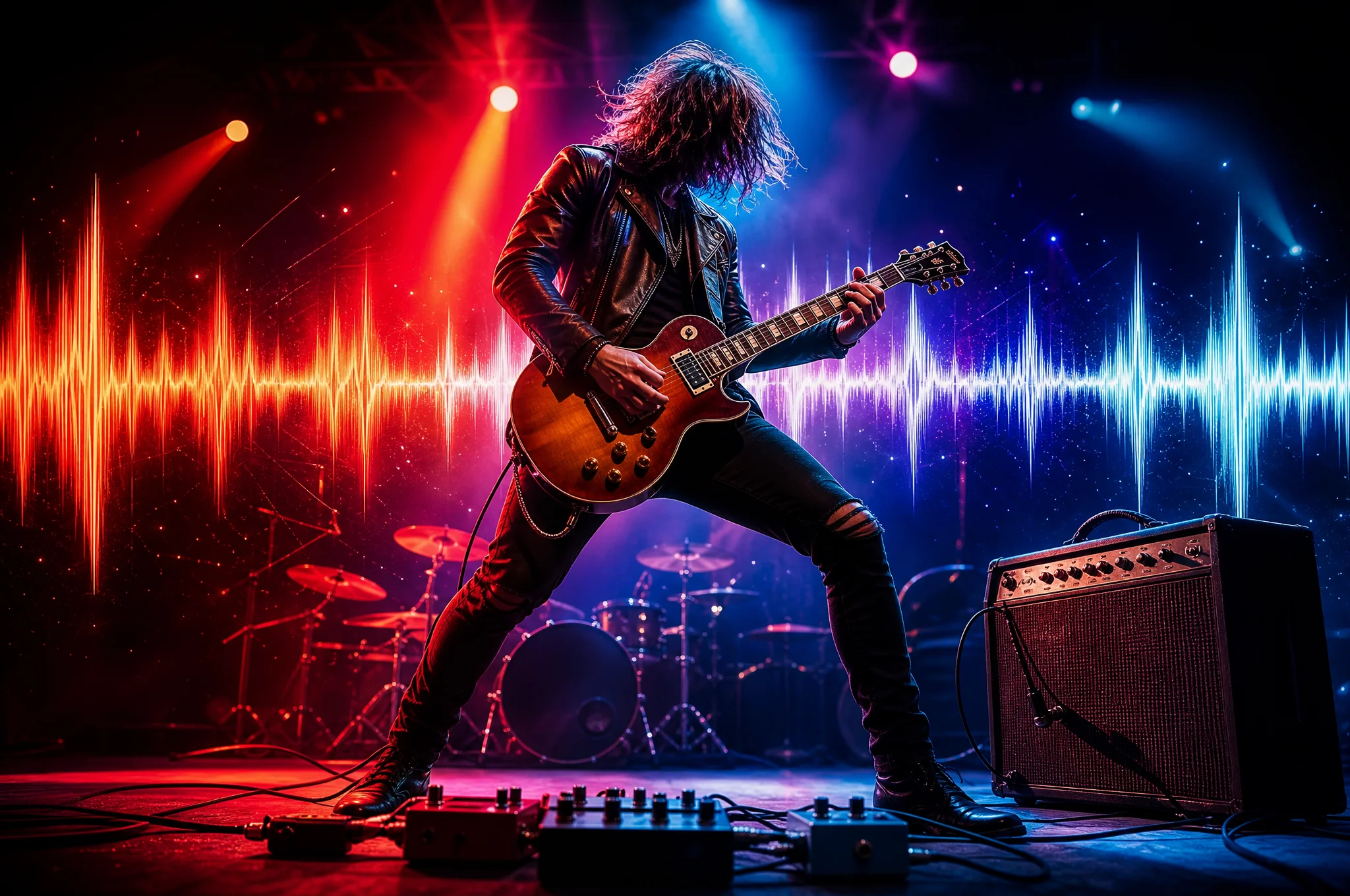
From a technical perspective, the heart of rock music lies in the expressiveness of the electric guitar. Through different effects pedal combinations — Distortion, Overdrive, Delay, and Reverb — guitarists can create a vast array of tones. Power Chords are the most fundamental technique in rock guitar, creating a powerful sound with just two or three notes.
Rock music's live culture is also a vital part of its identity. From small club gigs to stadium-level concerts, rock music is always at its best when performed live. The interaction between band members, improvisation, and energy exchange with the audience are things that studio recordings can never fully convey. AI technology is helping creators capture this live energy, enabling more people to produce music with a true rock spirit.
MusicMake.ai provides a complete toolchain for rock music creators, from idea to finished product. Whether you want to create a classic rock anthem or push the boundaries of heavy metal, MusicMake.ai's AI models can quickly generate professional-grade rock music.
Core Characteristics of Rock Music
- Electric Guitar-Driven: Distorted, overdriven electric guitar is the most iconic sound of rock music
- Powerful Drums: High-energy drum beats drive the energy of the entire song
- Bass Foundation: Bass and drums form a solid rhythmic foundation
- Distorted Tones: Guitar effects create unique tonal textures
- Dynamic Contrast: From quiet verses to explosive choruses, the dynamic range is wide
- Strong Live Feel: Rock music emphasizes the energy and interaction of live performance
- Attitude in Lyrics: Themes cover rebellion, love, social critique, and more
- Flexible Structure: From standard pop structures to experimental free-form
- Power Chord: The power chord is a foundational rock guitar technique
- Guitar Solo: Guitar solo sections are the highlight moments of rock music
The History of Rock Music
Rock music's origins trace back to the 1950s, when Chuck Berry, Little Richard, and Elvis Presley fused blues, country, and R&B to create an entirely new musical form. Chuck Berry is hailed as the "Father of Rock and Roll," and his guitar riffs and stage performance style influenced countless rock musicians to come.
In the 1960s, the British Invasion led by The Beatles and The Rolling Stones completely transformed rock music. The Beatles evolved from simple early rock to experimental later works, constantly pushing the boundaries of music. Meanwhile, Jimi Hendrix elevated the electric guitar's expressiveness to unprecedented heights with his revolutionary playing techniques.
The 1970s were an era of diversification for rock music. Led Zeppelin pioneered heavy metal, Pink Floyd developed progressive rock, and Black Sabbath established the dark tone of heavy metal. Ramones and Sex Pistols brought the punk revolution, challenging rock's established rules with simple three-chord songs and an aggressive attitude.
In the 1980s, MTV made rock music visual, and Guns N' Roses and Metallica became global icons. Heavy metal branched into numerous subgenres during this period, from Glam Metal to Thrash Metal, with increasingly diverse styles. In the 1990s, Nirvana led the Grunge movement, which upended mainstream rock, and Alternative Rock became the new dominant sound.
Entering the 21st century, rock music continues to fuse with electronic, hip-hop, and other styles. Arctic Monkeys won a global audience with their unique lyrics and rhythmic sense, Foo Fighters maintained the vitality of traditional rock, and Radiohead kept pushing the boundaries of music. AI technology is bringing new possibilities to rock music creation.
Creating Rock Music with MusicMake.ai
MusicMake.ai offers multiple ways to create rock music, from classic rock to heavy metal, catering to different levels of intensity:
Using AI Music Generator
Visit the Generate page and enter your rock music idea. The AI Style Generator can help you precisely select subgenre parameters like Classic Rock, Punk, or Metal.
In Simple mode, you just need to enter a brief description like "make a 70s rock song," and the AI will automatically expand it into a full musical description. In Custom mode, you can fine-tune parameters such as distortion level, guitar tone, and drum style.
Using Music Agent
Chat with the Music Agent and describe the rock music you want in natural language:
- "Make a 70s classic rock song with a guitar solo"
- "Give me a punk rock track — fast, aggressive, and full of energy"
- "Create a post-rock piece with gradual emotional build-up"
- "Make a heavy metal track with double bass drums and shredding guitar"
Music Agent supports multi-turn conversations, so you can continue refining instruments, mood, and structure based on the generated results.
Using AI Style Generator
Explore various rock subgenre combinations in the AI Style Generator. You can try cross-genre combinations like "Punk + Electronic" or "Grunge + Hip-Hop" to discover unique rock styles.
Rock Music Subgenres
Rock music subgenres are extremely rich, from classic rock to modern experimental rock. Each style has its own unique musical characteristics:
| Subgenre | Description | Signature Characteristics |
|---|---|---|
| -------- | -------- | -------- |
| Classic Rock | 60s–70s rock classics | Guitar riffs, blues roots, live feel |
| -------- | -------- | -------- |
| Hard Rock | Heavier, more powerful rock | High-gain guitar, powerful drums, loud volume |
| -------- | -------- | -------- |
| Heavy Metal | Extreme distortion and speed | Double bass drums, guitar shredding, high-pitched screams |
| -------- | -------- | -------- |
| Punk Rock | Fast, raw, rebellious | Three chords, fast drums, DIY spirit |
| -------- | -------- | -------- |
| Alternative Rock | Underground and indie rock going mainstream | Experimental, individualistic, non-mainstream aesthetic |
| -------- | -------- | -------- |
| Progressive Rock | Complex arrangements and concept albums | Long-form structures, classical influences, technical playing |
| -------- | -------- | -------- |
| Garage Rock | Raw, rough-edged rock | Lo-fi recording, simple arrangements, high energy |
| -------- | -------- | -------- |
| Post-Rock | Atmosphere and mood-driven rock | Gradual structures, primarily instrumental, cinematic feel |
| -------- | -------- | -------- |
| Psychedelic Rock | Musical expression of psychedelic experiences | Effects processing, experimental tones, spatial feel |
| -------- | -------- | -------- |
| Grunge | 90s West Coast rock movement | Distorted guitar, melancholic lyrics, anti-commercialism |
| -------- | -------- | -------- |
| Gothic Rock | Dark, dramatic rock | Dark tones, deep vocals, synthesizer elements |
| -------- | -------- | -------- |
| Emo | Emotional punk rock | Emotional lyrics, dynamic contrast, screaming vocals |
| -------- | -------- | -------- |
| Post-Punk | Experimental rock after punk | Synths, bass-driven, cold atmospheres |
| -------- | -------- | -------- |
| Industrial Rock | Mechanized rock | Electronic elements, sampling, noise processing |
| -------- | -------- | -------- |
| Surf Rock | Surf culture rock | Reverb-drenched guitar, fast drums, sunny vibes |
| -------- | -------- | -------- |
| Math Rock | Complex rhythm rock | Irregular time signatures, rapid changes, technical playing |
| -------- | -------- | -------- |
| Noise Rock | Noise-driven rock | Feedback, distortion, experimental |
| -------- | -------- | -------- |
| Dream Rock | Atmosphere-heavy rock | Heavy reverb, layered tones, ethereal feel |
| -------- | -------- | -------- |
| Stoner Rock | Psychedelic hard rock | Slow, heavy, psychedelic elements |
| -------- | -------- | -------- |
| Sludge Metal | Sludge metal | Slow, heavy, distorted, blues-influenced |
| -------- | -------- | -------- |
| Symphonic Metal | Classical meets metal | Orchestral arrangements, operatic vocals, epic feel |
| -------- | -------- | -------- |
| Melodic Death Metal | Melodic death metal | Melodic guitar, death growls, Nordic style |
| -------- | -------- | -------- |
| Metalcore | Metal meets hardcore | Breakdowns, screaming and clean vocals alternating, high energy |
| -------- | -------- | -------- |
| Post-Hardcore | Experimental rock after hardcore | Dynamic contrast, emotional expression, experimental |
| -------- | -------- | -------- |
| Digital Rock | Digitized rock | Electronic elements, programmed beats, modern production |
Best Practices for Rock Music Creation
- Start with a Riff: A powerful guitar riff can define an entire song, as memorable as "Smoke on the Water" or "Seven Nation Army"
- Focus on Dynamics: The magic of rock music lies in the contrast between quiet and loud, making the chorus explosion more impactful
- Hit the Drums Hard: Rock drums need to be full of power, especially the snare and kick drum tones
- Use Effects Wisely: Distortion, delay, reverb, and other effects are key to creating a unique rock sound
- Bass-Drum Lock: Rock music's groove comes from tight bass and drum coordination — make sure the rhythmic foundation is solid
- Power in Vocals: Rock singing needs energy and attitude — don't over-polish it, keep the raw power
- Guitar Tone Selection: Different subgenres require different guitar tones, from Clean to High Gain — master them all
- Dynamic Range: The dynamic contrast of rock music is its charm — learn to control the transition from soft to heavy
FAQ
Common questions and answers about rock music creation:
Can AI-generated rock music be used commercially?
Yes. Music generated by MusicMake.ai carries no commercial risk, so you can confidently use it in commercial projects, video soundtracks, and more. All music generated through the platform comes with full commercial licensing.
Can AI generate guitar solos?
MusicMake.ai's AI models can generate guitar solos with authentic rock characteristics. You can specify in your prompts descriptions like "with a guitar solo," "high-energy guitar playing," or "blues-style guitar improvisation." The AI can simulate different styles of guitar playing, from blues to shredding.
How do I make AI-generated rock music sound more realistic?
Emphasize descriptions like "live feel," "organic texture," and "real instrument recording feel" in your prompts, and specify a particular subgenre (such as "70s classic rock") to help the AI generate more realistic rock music. You can also specify recording styles like "analog recording" or "lo-fi recording" to add authenticity.
What is the typical BPM for rock music?
Rock music covers a wide BPM range. Slow rock is around 60–80 BPM, mid-tempo rock is 100–130 BPM, fast punk is 150–200 BPM, and heavy metal is 100–180 BPM. Choosing the right BPM helps the AI generate music that better fits a specific subgenre.
Can AI-generated rock music be used in short videos?
Yes. Rock music generated by MusicMake.ai is perfect for short videos, games, sports content, and other creative projects. The energy and impact of rock music can add dynamism and passion to your videos.
How do I make AI-generated rock music more powerful?
Emphasize descriptions like "high energy," "distortion," "powerful drums," and "live feel" in your prompts to help the AI generate more powerful rock music. You can also specify techniques like "double bass drums" and "shredding guitar" to increase the intensity.