Retro Music Style: A Complete Guide to AI Music Creation
Explore retro music styles and subgenres, and master AI music creation techniques. Create professional-grade retro music with MusicMake.ai.
What Is Retro Music?
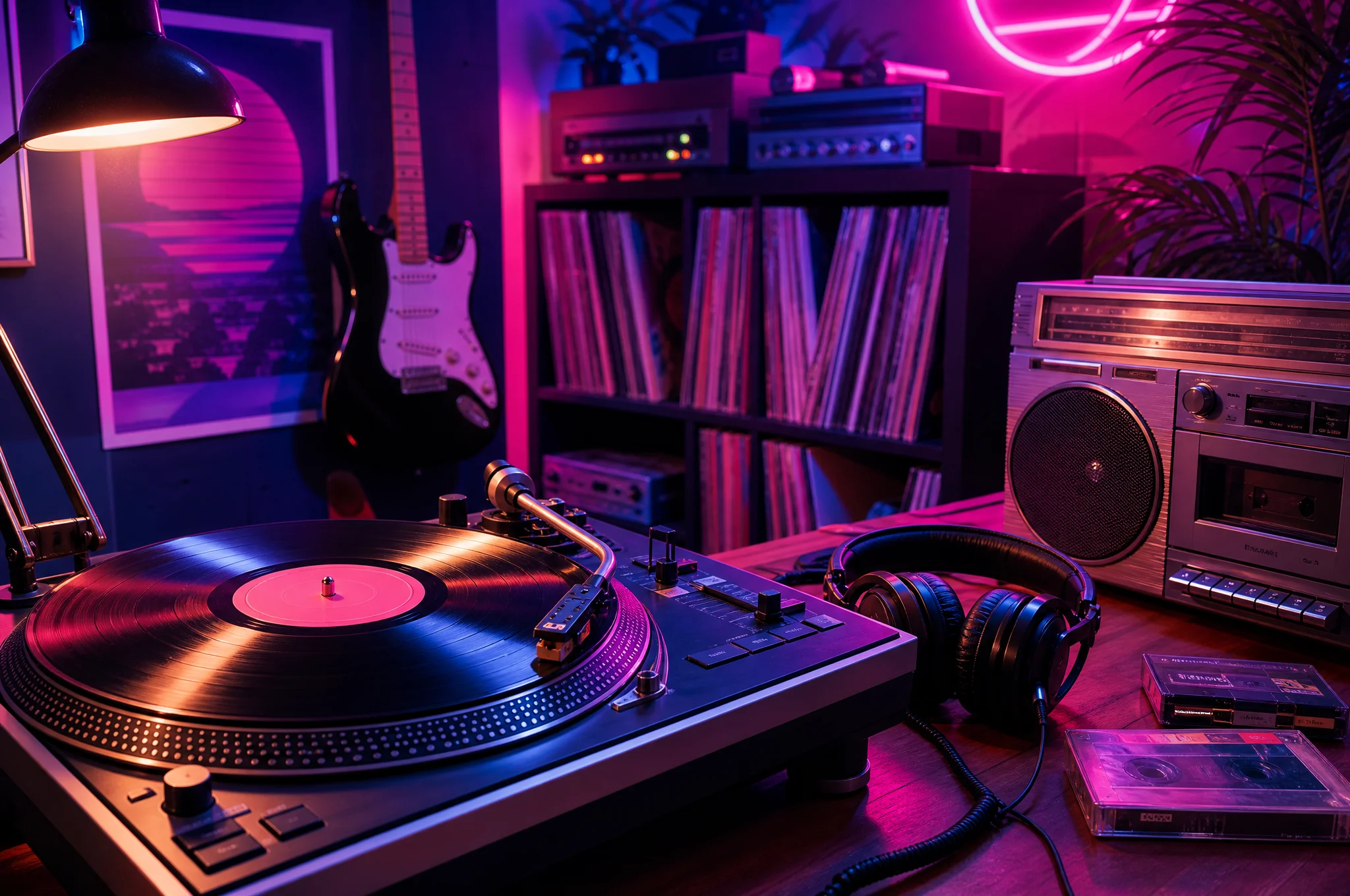
Retro music refers to musical works that emulate or pay homage to the sounds of specific past decades. It's not simply about playing old songs—it's about reinterpreting the musical aesthetics of the 1950s through the 1990s using modern production techniques. From 1950s rock and roll to 1980s synth pop, each era has its own distinct musical identity.
The core appeal of retro music lies in nostalgia—it evokes memories and emotions tied to a particular era. Whether it's the glamour of 1970s disco or the cool detachment of 1980s synthesizers, retro music precisely recreates the feel of a bygone era through its tonal palette, production techniques, and arrangement styles.
In AI music creation, retro music is an ideal genre to explore. AI can accurately replicate the musical characteristics of each decade, from the warm tones of analog synthesizers to the crisp textures of digital synths, offering creators an endless well of retro inspiration.
Whether you're a video creator, advertising producer, or music enthusiast, MusicMake.ai helps you quickly generate retro tracks with authentic period character. From 50s rock to 80s synth pop, AI can faithfully capture the musical essence of each era.
Core Characteristics
- Clear era markers: Each decade has its own distinctive sounds, rhythms, and production methods
- Tonal authenticity: Use or emulate the iconic instruments and sounds of a specific era
- Production techniques: Mimic the recording, mixing, and mastering styles of a particular decade
- Nostalgic emotion: Evoke memories and emotional resonance with the past
- Modern fusion: Blend retro elements with contemporary production techniques
- Aesthetic appeal: Retro styles are often associated with specific visual aesthetics and fashion trends
- Sound quality traits: Simulate the warmth of vinyl records or the saturation of tape
- Cultural symbolism: Carry the cultural memory and social atmosphere of a specific era
- Arrangement techniques: Follow the arrangement logic of a particular era, such as 1960s minimalism or 1980s layered production
- Vocal processing: Emulate period-specific recording styles, like 1950s mono recording or 1980s heavy reverb
- Rhythmic patterns: Each era has its signature grooves, such as disco's four-on-the-floor kick or funk's syncopated rhythms
The tonal palette is the most recognizable feature of retro music. 1950s rock is defined by the natural overdrive of guitar amplifiers; 1960s soul centers on Hammond organs and brass sections; 1970s funk relies on Minimoog synthesizers and Wah-Wah pedals; the 1980s belong to DX7 digital synthesizers and LinnDrum machines. These iconic sounds form the sonic gene bank of retro music.
Production differences are equally significant. Early recordings were mostly mono or simple stereo, with minimal separation between instruments—this "crowded" mix actually became part of retro music's charm. Multitrack recording emerged in the 1970s, making production more refined. The heavy use of digital reverb and delay effects in the 1980s gave that era's music its distinctive spatial quality. AI music tools can precisely simulate these production characteristics, allowing creators to effortlessly travel back to any desired era.
Historical Development
The concept of retro music itself is a fascinating cultural phenomenon. In the 1970s, rock musicians began looking back at 1950s rock and roll, creating works tinged with nostalgia. In the 1980s, as synthesizer technology became widespread, a "New Wave" movement emerged that deliberately emulated the sonic aesthetics of the 1960s.
From the 1990s to the 2000s, the retro trend went through multiple cycles. The Britpop movement looked back to 1960s British rock, while electronic musicians began mining the legacy of 1970s disco and 1980s synth pop. Daft Punk's Random Access Memories stands as a landmark work of retro music creation.
Contemporary retro music presents a diverse landscape. Vaporwave pays homage to 1980s-90s commercial music, Synthwave reinterprets 1980s synthesizer aesthetics, and Lo-fi Hip-Hop revives the sampling culture of the 1990s. The advent of AI technology has made it even easier to faithfully replicate the musical styles of any era.
Retro music's cultural influence extends far beyond music itself. It has profoundly shaped contemporary visual arts, fashion design, and film aesthetics. Netflix's Stranger Things, with its 1980s synth-driven soundtrack, successfully tapped into global nostalgia and helped push Synthwave into the mainstream. The fashion world has been equally influenced—from Gucci's 70s disco collections to streetwear brands paying tribute to 90s hip-hop culture, the interplay between music and fashion has never ceased.
Retro music also serves as a generational bridge at the societal level. Younger generations learn about their parents' cultural memories through retro music, while older generations find resonance in newly produced retro works. This emotional connection across time makes retro music a unique cultural bridge. Streaming platform data shows that over 40% of retro playlist listeners are under 25, demonstrating retro music's powerful cross-generational appeal.
Retro Music in the Digital Age
Digital technology has brought revolutionary changes to retro music creation. Virtual Analog synthesizers can precisely replicate the tonal characteristics of classic hardware without the expense of purchasing vintage equipment. Software plugins like Arturia V Collection and Roland Cloud have become essential tools for retro music producers.
The rise of sampling culture has further propelled retro music's spread. From Kanye West's creative use of soul samples to electronic musicians digging through old records, sampling technology has given past musical heritage new life in contemporary contexts. AI technology has taken this trend even further—MusicMake.ai can understand and reproduce the musical DNA of any era, enabling creators to produce professional retro works without deep technical expertise.
Social media platforms are also driving retro music's popularity. Retro music challenges on TikTok have sent 80s and 90s classics back onto the charts, while Lo-fi retro livestream channels on YouTube play retro-style music 24/7, attracting millions of listeners. This digital dissemination has moved retro music from niche taste to mainstream culture.
AI music generation tools are changing the barrier to entry for retro music creation. In the past, producing a track with authentic period character required deep musical knowledge and expensive hardware. Today, MusicMake.ai lets anyone generate everything from 50s rock to 90s electronic music through simple text descriptions. This not only lowers the creative barrier but also gives more people the opportunity to explore and pay tribute to those great musical eras.
Creating Retro Music with MusicMake.ai
Using AI Music Generator
Visit the Generate page and enter a description of your desired retro style. For example:
- "80s synth pop with Juno-60 and TR-808 sounds"
- "70s disco style with strings and brass"
The built-in AI Style Generator can help you turn vague ideas into precise retro music style descriptions.
Using Music Agent
Tell the Music Agent what retro style you're looking for, for example:
- "Make an 80s-style synth pop song"
- "Create a piece of music in 60s psychedelic rock style"
- "Generate a 90s R&B retro song"
Using AI Prompt Enhancer
In Simple mode, the AI Prompt Enhancer can expand a single sentence into a complete retro music description, automatically adding details about the era, tonal palette, and production techniques.
Subgenres
| Subgenre | Description |
|---|---|
| 50s Rock & Roll | The raw energy of early rock and roll |
| 60s Psychedelic | The trippy aesthetics of psychedelic rock |
| 60s Soul | Classic soul from Motown and Stax |
| 70s Disco | Glamorous disco dance music |
| 70s Funk | Powerful funk grooves |
| 70s Punk | Raw and aggressive punk rock |
| 80s Synth Pop | Cool synthesizer aesthetics |
| 80s Rock | Glam metal and arena rock |
| 80s R&B | Synthesizer-era R&B |
| 90s Hip-Hop | Golden age East Coast/West Coast hip-hop |
| 90s Britpop | British rock from Oasis and Blur |
| 90s R&B | New jack swing and contemporary R&B |
| 90s Electronic | Techno, House, and Big Beat |
| Synthwave | A modern style paying tribute to 80s synthesizers |
| Vaporwave | Aesthetics inspired by 80s-90s commercial music |
| Lo-fi Retro | The warm texture of analog tape and vinyl |
| Retro-Futurism | Past visions of the future |
| Retro Latin | Classic Latin music with a retro feel |
Best Practices
1. Describe the Era Precisely
Music styles vary greatly across decades. Use specific era descriptions like "mid-80s synth pop" or "early 70s disco" so AI can more accurately recreate the musical characteristics of that period.
2. Focus on Tonal Authenticity
Tone is the soul of retro music. Specify iconic instruments and equipment in your descriptions, such as "TR-808 drum machine," "Minimoog synthesizer," or "Rhodes electric piano."
3. Emulate Production Techniques
Production techniques are equally important for retro music. Use descriptors like "tape saturation," "analog mixing," and "vinyl record texture" to guide AI in generating more authentic retro sounds.
4. Blend with Modern Elements
Retro music doesn't have to be a complete replica of the past. Use the AI Style Generator to explore fusions of retro and modern, such as "80s synthesizers + modern trap beats."
5. No Commercial Risk
Retro music generated with MusicMake.ai carries no commercial risk—you can confidently use it in video content, commercial projects, or personal creations.
FAQ
How can I make AI generate more authentic retro music?
Use specific era and tonal descriptions, such as "80s Juno-106 synthesizer sound" or "70s Motown-style bass line." You can also describe specific production techniques, like "the warmth of tape recording." Tone and production techniques are the soul of retro music, and AI can precisely replicate the iconic sounds of each era.
Can MusicMake.ai generate music from a specific era?
Yes. MusicMake.ai supports various retro styles from the 1950s through the 1990s. You can describe your desired era and style on the Generate page, and AI will produce corresponding tracks. From 50s rock to 90s Britpop, AI can faithfully capture the musical essence of each era.
What scenarios is retro music suitable for?
Retro music is ideal for nostalgic-themed videos, film soundtracks, advertising, fashion shows, themed parties, podcasts, and more. Music generated with MusicMake.ai carries no commercial risk and can be used freely. Whether for brand marketing or personal projects, retro music adds a unique period character and emotional resonance to any work.
What's the difference between retro music and cover songs?
Retro music creates new works using past musical styles and production techniques, while covers reinterpret existing songs. Retro music can contain entirely new melodies, harmonies, and lyrics—it simply pays tribute to a specific era in its tonal palette and production style. Retro music generated by MusicMake.ai is entirely original, with no copyright concerns.
How can I incorporate modern elements into a retro style?
The most common approach is to combine retro tones with modern rhythms—for example, pairing 80s synthesizer sounds with modern trap beats, or fusing 70s funk bass lines with electronic dance structures. You can also try mixed descriptions in the AI Style Generator, such as "retro synthesizers + modern bass + lo-fi texture"—AI will find the sweet spot between retro and modern.
Start creating your retro music today! Visit MusicMake.ai, enter your desired era and style, and let AI generate a one-of-a-kind retro track for you.