Lo-Fi Music Style: The Complete Guide to AI Music Creation
Explore Lo-Fi music styles and subgenres, master AI music creation techniques. Use MusicMake.ai to produce professional-grade Lo-Fi tracks.
What Is Lo-Fi Music?
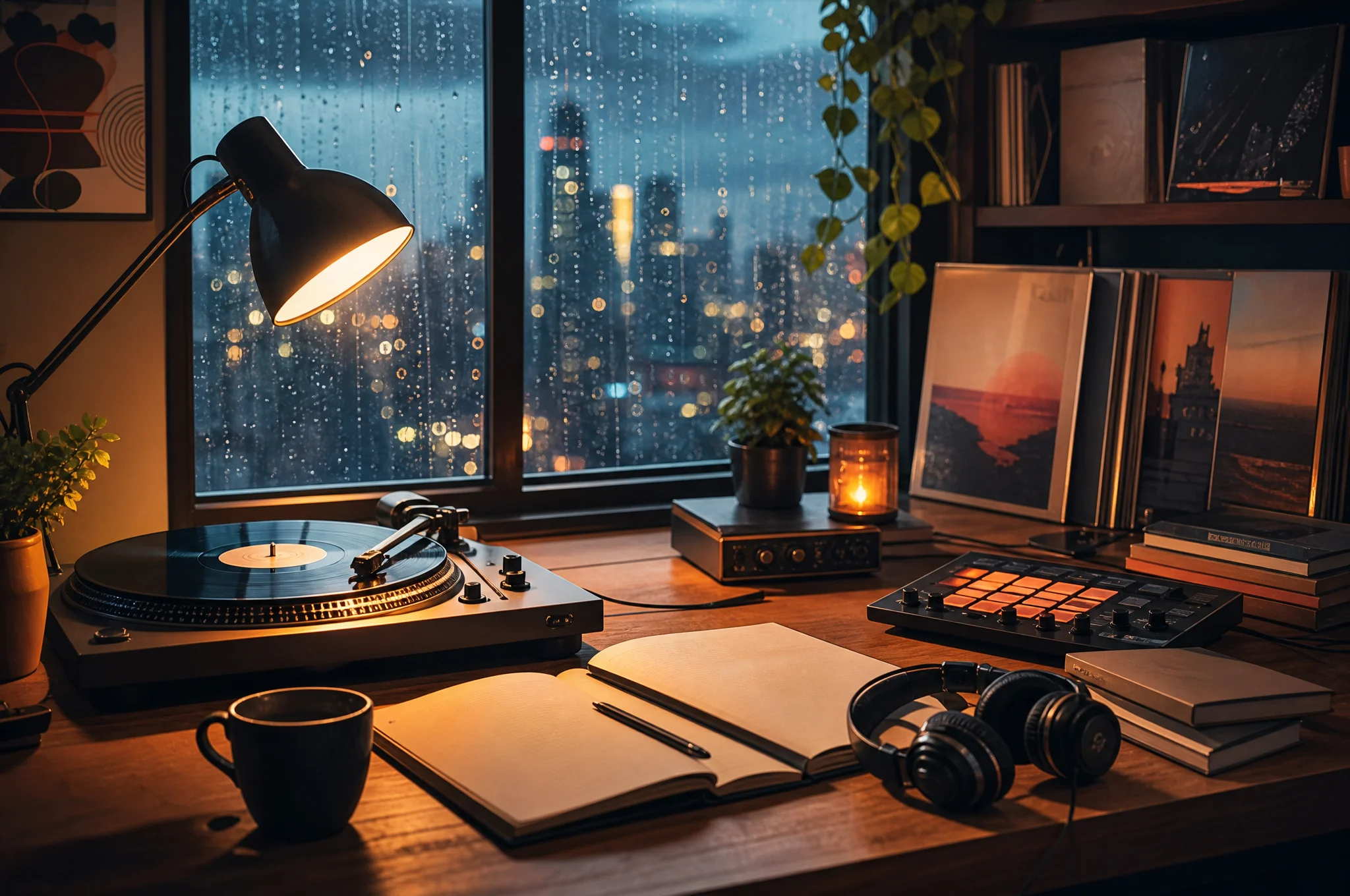
Lo-Fi (short for “low fidelity”) music is a genre that deliberately embraces imperfect sound quality, celebrated for its warm analog texture, gentle beats, and relaxing atmosphere. It typically blends jazz chords, samples from old records, and soft drum patterns to create a laid‑back, nostalgic listening experience.
Lo‑fi music is best known as a “study companion” — millions of lo‑fi livestream channels on YouTube and major streaming platforms accompany students and office workers through countless late‑night work and study sessions. What sets it apart is that it doesn’t steal the spotlight yet helps listeners enter a focused state.
From a creative perspective, the core aesthetic of lo‑fi music is “imperfection is perfect.” Vinyl crackle, slightly out‑of‑tune piano, compressed drum samples — elements considered flaws in traditional recording become the most important sonic signatures in lo‑fi. AI technology reproduces this style very naturally because it’s essentially a re‑combination of classic timbres.
Another key feature of lo‑fi music is its emotional tone — it often carries a touch of melancholy and warm nostalgia. Jazz chord progressions (especially seventh and ninth chords) paired with a slow tempo create an atmosphere that feels both intimate and distant, making the listener feel safe and relaxed.
Core Characteristics
- Analog texture: vinyl noise, tape hiss, and sample graininess are signature sonic elements
- Jazz chords: heavy use of seventh, ninth, and suspended chords to create warm harmonic colors
- Slow tempo: BPM typically between 60–90, with a relaxed pace
- Sample‑driven: often samples old records, movie dialogue, and ambient sounds
- Lo‑fi drum kit: soft kick, loose snare, swung hi‑hat
- Repetitive structure: strong loops, avoiding abrupt changes
- Ambient background noise: background noise deliberately retained or added
- Piano and guitar: soft acoustic instruments are common melodic elements
- Relaxation‑oriented: designed for studying, working, and chilling
- Minimalist arrangement: few elements, plenty of space
History
Lo‑fi music’s roots go back to the independent recording scene of the 1950s‑60s. Many musicians back then lacked professional recording gear and recorded in bedrooms or garages, and that “low‑fidelity” sound quality unintentionally created a unique warm texture. Pioneers like Daniel Johnston and R. Stevie Moore were among the earliest lo‑fi representatives.
In the 1990s, lo‑fi formally emerged as an aesthetic choice. Bands like Pavement, Sebadoh, and Guided by Voices used rough recording quality as an anti‑commercial stance. Around the same time, DJ Shadow and J Dilla brought sampling and lo‑fi production techniques into hip‑hop, deeply shaping the development of lo‑fi hip hop that followed.
In the 2010s, the iconic “Lo‑Fi Hip Hop Radio – Beats to Relax/Study To” livestream channel appeared on YouTube, pushing lo‑fi music into the mainstream. These 24/7 lo‑fi streams became the everyday background music for millions of people around the world. Brands like Chillhop Music and Lofi Girl became representatives of this culture.
Entering the 2020s, lo‑fi music has become one of the most streamed music genres on platforms. It’s no longer just a niche style but a widespread cultural phenomenon. The addition of AI has made creating lo‑fi music even more accessible, allowing creators to quickly generate high‑quality lo‑fi tracks at scale.
Lo‑fi music’s cultural influence extends beyond music itself. “Lo‑fi Girl” has become a globally recognized cultural symbol, representing focus, relaxation, and creativity. Many cafés, bookstores, and co‑working spaces have defaulted to lo‑fi as their background music — it has woven itself into the fabric of modern urban life.
In commercial applications, demand for lo‑fi music continues to grow. YouTube channels, podcasts, meditation apps, and game soundtracks all use lo‑fi music extensively. Its low intrusiveness and high adaptability make it the go‑to background music for content creators.
Creating Lo‑Fi Music with MusicMake.ai
MusicMake.ai offers multiple ways to create lo‑fi music — whether it’s a lazy afternoon study companion or a late‑night work background track, it can be done effortlessly:
Using AI Music Generator
Visit the Generate page and enter your lo‑fi music idea. The AI Style Generator lets you precisely select subgenre parameters like Lo‑Fi Hip Hop, Chillhop, Lo‑Fi Jazz, and more.
In Simple mode, just type a short description like “make a lo‑fi study track” and the AI will automatically expand it into a full music description. In Custom mode, you can precisely control BPM, sampling style, drum texture, and more to craft a lo‑fi track that perfectly matches your vision.
Using Music Agent
Chat with Music Agent and describe the lo‑fi music you want in natural language:
- "Create a Lo-Fi Hip Hop track with vinyl crackle and jazz piano"
- "Give me a late-night study Lo-Fi beat, warm and laid-back"
- "Make a Chillhop with that J Dilla swing feel"
- "Give me a Lo-Fi Jazz with saxophone and rain in the background"
Music Agent supports multi-turn conversation, so you can keep refining the timbre, mood, and tempo based on the results.
Use AI Style Generator
Explore various subgenre combinations of Lo-Fi music in the AI Style Generator. Try crossovers like "Lo-Fi + Jazz" or "Lo-Fi + Ambient" to discover unique Lo-Fi styles.
Subgenres
| Subgenre | Description | Key Characteristics |
|---|---|---|
| Lo-Fi Hip Hop | Low-fidelity hip hop | Sample-driven, jazz chords, slow drums |
| Chillhop | Chill hip hop | More polished and melodic than Lo-Fi Hip Hop |
| Lo-Fi Jazz | Low-fidelity jazz | Jazz instrument samples, improvisational feel, warm atmosphere |
| Lo-Fi Soul | Low-fidelity soul | Soul samples, vocal snippets, emotional depth |
| Lo-Fi House | Low-fidelity house | Analog-textured house beats, gritty sound |
| Bedroom Pop | Bedroom pop | Indie production, DIY aesthetic, intimate feel |
| Ambient Lo-Fi | Ambient lo-fi | Rich ambient sounds, very low tempo, spatial feel |
| Lo-Fi Beats | Low-fidelity beats | Instrumental, rhythm-focused, sample-friendly |
| Vapor Lo-Fi | Vaporwave lo-fi | 80s samples, slowed-down processing, nostalgic aesthetic |
| Jazz Hop | Jazz hip hop | Fusion of jazz improvisation and hip hop beats |
| Study Beats | Study beats | Minimal structure, low distraction, highly loopable |
| Lo-Fi R&B | Low-fidelity R&B | Slow R&B, soft vocals, intimate atmosphere |
| Nujazz | Nu jazz | Fusion of electronic and jazz, experimental |
| Downtempo Lo-Fi | Slow-tempo lo-fi | Very slow BPM, hypnotic feel, background music |
| Trip Hop | Trip hop | Dark atmosphere, sample collage, Bristol origins |
| Chillwave | Chillwave | Dreamy texture, retro samples, summer vibe |
| Dream Pop Lo-Fi | Dream pop lo-fi | Heavy reverb, ethereal melodies, hazy feel |
| Lo-Fi Ambient | Low-fidelity ambient | Minimalist, long-form evolution, meditative feel |
| Lofi Punk | Low-fidelity punk | Rough recording, DIY aesthetic, rebellious spirit |
| Lo-Fi Gospel | Low-fidelity gospel | Gospel samples, warm atmosphere, spiritual expression |
| Lo-Fi Drum & Bass | Lo-Fi Breakbeat | Slow breakbeats, deep bass, nostalgic texture |
| Lo-Fi Latin | Lo-Fi Latin | Latin rhythm samples, warm guitar, tropical vibe |
| Lo-Fi Classical | Lo-Fi Classical | Classical instrument samples, vinyl texture, elegant atmosphere |
| Lo-Fi Bollywood | Lo-Fi Bollywood | Indian music samples, sitar tones, exotic vibe |
| Lo-Fi City Pop | Lo-Fi City Pop | Japanese 80s samples, synth textures, urban feel |
| Lo-Fi Afrobeat | Lo-Fi Afrobeat | African percussion samples, looping rhythms, tribal feel |
Best Practices
- Keep it simple: The charm of lo‑fi lies in minimalism—don’t pile on too many elements; 3–5 tracks is enough.
- Focus on texture: Add analog textures like vinyl crackle and tape hiss to give the sound more warmth.
- Control the tempo: Keep BPM between 60–90, don’t make it too fast, swing feel is important.
- Use samples wisely: Old records, movie dialogue, ambient sounds are great material to add a sense of story.
- Leaving space is important: Don’t fill every frequency band—give the music room to breathe.
- Jazz chords are the soul: Use seventh and ninth chords instead of plain triads to enrich the harmony.
- Loop, don’t repeat: Keep a looping feel but add subtle variations each cycle to avoid a mechanical sound.
- Create for the scene: Adjust the tempo and tone based on the specific setting (studying, sleeping, working).
- Use ambient sounds: Rain, café chatter, page‑turning—these enhance immersion.
- Keep bass restrained: Lo‑fi bass is usually soft and warm—avoid overly heavy bass lines.
- Experimentation is key: Don’t be afraid to try unconventional sample and tone combinations—lo‑fi’s charm lies in happy accidents.
FAQ
Can AI‑generated lo‑fi music be used commercially?
Yes. Music generated by MusicMake.ai carries no commercial risk, so you can confidently use it for commercial projects, video soundtracks, podcast background music, and more. All music created through the platform comes with full commercial licensing.
How can I make AI‑generated lo‑fi music feel more “imperfect”?
Emphasize descriptions like “vinyl crackle,” “tape texture,” and “analog warmth” in your prompts, and specify a low BPM and jazz chords—this helps the AI generate more authentic lo‑fi music. You can also add emotional keywords like “lazy,” “nostalgic,” or “rainy day.”
Is AI‑generated lo‑fi music good as study background music?
Perfectly suited. Lo‑fi music is designed for studying and focus, and AI can produce low‑distraction, highly loopable lo‑fi tracks. Through conversations with Music Agent, you can precisely control how “attention‑friendly” the music is.
What’s the difference between lo‑fi and ambient music?
Lo‑fi music emphasizes analog texture and sample aesthetics, typically with a clear beat and jazz chords; ambient music focuses more on spatial feel and atmosphere, often with little to no beat. Lo‑fi works better as a study companion, while ambient is better for meditation and relaxation.
How can I get new lo‑fi music every day?
MusicMake.ai supports daily check‑ins to earn free creation credits, so you can generate new lo‑fi tracks every day. Use the AI Style Generator to try different subgenre combinations and get a fresh style of lo‑fi music daily. No commercial risk—creative freedom.
Is lo‑fi music suitable for podcast background music?
Perfect choice. The low-intrusiveness and relaxing vibe of Lo-Fi music make it an ideal background for podcasts. Opt for Lo-Fi beats with a BPM between 70 and 85 to ensure the music doesn’t interfere with spoken content while adding a warm, inviting atmosphere to your show.